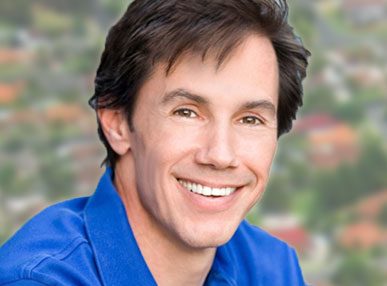
On this Flashback Friday episode, Jason Hartman chats with Jim Cramer of Mad Money and The Street.com. They talk about the advantage of being a direct investor and the problems that usually arise in group investing or pooling money and going into other people’s deals, businesses, partnerships, LLC’s, REIT’s or TICS.
Announcer 0:00
This show is produced by the Hartman media company. For more information and links to all our great podcasts visit Hartman media.com.
Announcer 0:10
Welcome to the flashback Friday edition of the creating wealth show with Jason Hartman. As he rapidly approaches 1000 episodes of this podcast, he has hand picked individual episodes that he feels is going to be good review for you to prepare you for the future by listening to the past. Let’s dive in.
Announcer 0:29
Welcome to the creating wealth show with Jason Hartman. You’re about to learn a new slant on investing some exciting techniques and fresh new approaches to the world’s most historically proven asset class that will enable you to create more wealth and freedom than you ever thought possible. Jason is a genuine self made multi millionaire who’s actually been there and done it. He’s a successful investor, lender, developer and entrepreneur who’s owned properties in 11 states had hundreds of tenants Get involved in thousands of real estate transactions. This program will help you follow in Jason’s footsteps on the road to your financial independence day. You really can do it on Now, here’s your host, Jason Hartman with the complete solution for real estate investors.
Jason Hartman 1:19
Hello, and welcome to another edition of creating wealth. This is Jason Hartman your host and I’m glad you’re here with us today listening, we want to remind you to be sure to also subscribe to our video podcast. I will be the first to admit that we haven’t been as active as we’d like to on the video podcast, but we do have some really good stuff coming up for you there. If you are an iTunes user, you can go to the iTunes Store, type in Jason Hartman and you’ll notice that two podcasts come up. One is our audio podcast that’s sort of our main foundational podcasts where most of our content is, but some of it is better said via video, so be sure to subscribe to the video podcast. You can either do that at our website, Jason Hartman calm or you can do it if you are an iTunes user at the iTunes Store. Today I’d like to talk about one of my favorite of my 10 commandments for successful investors. And that is commandment number three, thou shalt maintain control. This is probably one of the most important aspects of investing. My 93 year old grandmother A long time ago, told me a great word of wisdom here. She said, Jason, the hardest ship to sail is a partnership. Isn’t that brilliant? The hardest ship to sail is a partnership. And if you think about it, when you invest in a stock, or a bond or you invest in someone else’s deal in someone else’s venture in any way, you are basically in a way a partner in their business in their real estate deal in their financial company, if it’s a bond, for example, and you are subject to whatever they do, you are either going to be the beneficiary of what they do or you’re going to be the victim of what they do. And most of the time, as investors when we invest in someone else’s deal, we find ourselves as the victim of what somebody else does. And if you’ve ever been in a partnership, in a business with another person, you know how difficult a partnership can be, we say that you should always be a direct investor, thou shalt maintain control. So when you’re investing, don’t invest in anyone else’s deal of any kind, whether that be a stock or a real estate deal. There are many companies out there offering tenant in common investments, ticks, they call them for short t IC tick tenant in common. You know, a friend of mine came to one of my seminars a couple months ago and he’s made Money in ticks as the promoter of ticks not as an a passive investor in ticks. He said to me when I was talking about commandment number three, he said, I kind of understand why you have to bash ticks. It’s because you don’t offer them and you don’t sell them. Well, I beg to differ. We have been asked to promote ticks a zillion times. People have called me one time just one time. Several years ago, we had a tick or tenant common investment promoter come in and promote their tech deal, which is a partnership in essence, not the legal definition of partnership, but it in essence is a form of a partnership. We don’t like them. They pay commissions. They are constantly offering to come into our meetings. They want to talk to our investors. They want me to interview them on my podcast, so that they can promote their deal to you.
Jason Hartman 4:58
Remember, you’re listening to flashback Friday. Our new episodes are published every Monday and Wednesday.
Our core principle is that you should be a direct investor. Now, this may somehow change sometime in the future. But as far as I can see, I don’t think it will. So maintain control. don’t invest in anybody else’s deal. When I talk about this in my seminars, and if you’ve heard me talk about the 10 commandments of successful investing, which is a prior podcast many podcasts ago, I believe it might be number 16 if my memory serves, correct, I quote lou dobbs and Lou Dobbs wrote a book that I discovered while I was skiing in Colorado last year, and it’s called war on the middle class. You may have listened to lou dobbs or seen his program on CNN, and my mom is what I call a knee jerk capitalist. And I find that a lot of people are like this, and I am definitely a capitalist. I am all for someone making money. much money as they possibly can. However, where I am against it is when other people are paying for it. And the compensation is not fairly tied to what the investor is making if someone else is investing in their deal, their company, whatever it is, and I’ll just start off with this and I’ve got a whole bunch more newspaper articles to share with you. And then I’ve got a audio track I want to share with you that I think you’ll find interesting, but let’s start off with a lou dobbs part. He says in war in the middle class, he says median CEO compensation went from $1.8 million in 1992 to $6.1 million in 2000. CEO pay increase 340% from 1992 to 2002. That’s 10 years folks. Well, compensation for rank and file employees increased a mere 36% by 2004, the average CEO pay was $9.6 million. With 100 CEOs making more than 10,000,040, making more than 20 million in 2005, the median pay for CEOs of the 100 largest US companies increased to $17.9 million, an increase of 25% from the year before. The average employee, by the way, got a raise of 3.1%. During the same period, well with what lou dobbs is saying there doesn’t make sense that you need to set your own rules for finance and financial security in your life. Well, that’s what we’re doing here is smart, prudent conservative real estate investors. Dobbs goes on to say in the past few years, we’ve seen levels of pay for individual CEOs that is beyond most people’s comprehension, money that sounds like it belongs on a company’s revenue column, rather than on someone’s paycheck. In 2004. Terry, Semel, Chairman and CEO of Yahoo was paid 100 and $20 million. Lou frankford head of coach was paid 58 million. Robert Nardelli, who runs Home Depot made 36 million at Zander of Motorola got 32 million and Meg Whitman of eBay got $26 million. Most CEOs were paid above and beyond these salaries in stock options, which gave them an incentive to run up their company’s stock prices for their own immediate benefit at the expense of long term corporate gains. Now, I’ll stop with lou dobbs for a moment. This is me talking How many of you have ever worked for or maybe you currently work for a publicly traded company? Think about that. Now, I have a lot of friends and clients who have worked for currently work for publicly traded companies, and I’m constantly hearing them talk about how what goes on inside the company has almost no relation whatsoever. To what is going on with a company’s stock. And you know what that tells me? It says, Why do I, as an investor want to be susceptible to a market full of speculators, people trading selling stock short or long or trading options or what whatever the heck they’re doing, when the company’s core business many times has nothing to do with what’s going on with the stock. Now, I don’t know how many of you listening have ever owned your own business, or you might currently own your own business I have for the past 11 years. And I will tell you that businesses are incredibly complex creatures. There are so many things that can go wrong with a business at any given time, so many incredible complexities that influence the value of that business and its future existence at all. So Let’s go on with lou dobbs here, the standard rationalization for these astronomical salaries by CEOs, their boards of directors and their consultants. And most of those, by the way, our friends, old college buddies of the CEOs is that the seals are worth it. Because the companies they run benefit from their leadership and bring great value to their shareholders. Well, how then do they explain the fact that over the past five years, the CEOs of at&t Bell, South Hewlett Packard Home Depot, Lucent, Merck, Pfizer, Safeway, Time Warner, Verizon and Walmart, were paid an aggregate of 860 $5 million in compensation. That’s almost a billion dollars. Well, shareholders lost during the same period. Well, shareholders lost a total of 640 billion dollars. dollars. Clearly, these CEOs were not being paid for delivering value to those who held stock in their companies. You know what I found everybody. I found that a company has three audiences that it needs to please at any given time, a company has its customers, its shareholders and its employees. And so far, in my experience, I have never found a company that can consistently please all three audiences. Because these three audiences have conflicting agendas and conflicting motivations. I mean, think about it. employees want the highest pay and they want job security. Shareholders want the highest returns right now. They want instant gratification. And then customers want the lowest price and the best deal. So think about the companies. You know, I mean, I think about the big name companies that I know Think about companies that please customers. Well, Disney seems to be a company that pleases customers, Nordstrom, a company that pleases customers. Yet with those two companies, I’ve certainly heard lots of news about how employees are upset with them, suing them over wage disputes and things like this. Now, you know, this is just general data. This is not very specific. So, pardon me if I’m not exactly an expert on this, but I’ve just kind of noticed that over the years in the news. Now you look at a company that has great products like Apple Computer, and has also at least recently been very pleasing to their shareholders. So what about employees? Well, Apple has kind of a cult following, and their employees seem to love apple. Now, I don’t know if they pay them really well. I don’t know if they just love their products, or all of the above. Maybe this is a company that has succeeded in pleasing all three audiences. But then again, let’s look at Apple’s customers. While they seem to like their products, but hey, their products are expensive. I have a MacBook Pro I’m looking at right now on an iPhone. And I tell you I can get much cheaper computers and phones elsewhere, but they’re really innovative products, whatever the case. So we see how the heads of companies, the boards of directors and consultants are not being paid in relation to their shareholders. I believe that is unfair. In fact, Lou Dobbs goes on to say CEO compensation is often directly inverse to the performance of the companies they lead, because their compensation is not tied to how the business performs. Their pay isn’t a reflection of their executive ability, but an aberration. The former CEO of Time Warner, Jerry Levin, walked away with a 160 $3 million package after his last year. At what was then called AOL Time Warner, how much do you think he should have made that year if he hadn’t entered into the worst corporate merger in history? Interesting question. One that eventually led to the write off of nearly $100 billion 11 story is not unique Alford learner, the former CEO of mbna. You’ve heard of mbna. Sure, you have big credit card company financial institution made more than 190 $4 million in 2002. A $9 million salary and another 180 $6 million in options and other compensation. learner died that same year and his successor, Charles Kelly, was paid nearly $49 million. That’s nearly a quarter of a billion dollars in compensation for just two people. To people quarter of a billion dollars with such high paid Exactly. kiddos, how did you think people who’d invested in mbna fair returned to them was negative 18%. And then there’s Larry Ellison, founder and CEO of Oracle from 2000 to 2002. Larry’s personal take from the company was 780 $1 million.
Jason Hartman 15:22
That’s almost a billion dollars in just two short years. Not bad home, but shareholder return was negative 61% during the same time period. Just a reminder, you’re listening to flashback Friday. Our new episodes are published every Monday and every Wednesday. bonuses, this last holiday season were just handed out on Wall Street. In an article here January 4, this is off msnbc msn.com it says $15,000 bottle of bubbly no problem. big holiday bonuses are flooding the New York City economy. It says that a restaurant owner Michael Aaron, learned that wall street investment banks were going to be shelling out record bonuses this holiday season the savvy wine merchant uncorked his own plan to make serious dough. He paid for a double page ad in the New York Times boasting of a rare sized bottle of 1995 Dom Perignon the price tag $14,950. Then there’s a little side story here. Santa has been good to bosses, December 19. Our cushy executive bonuses and outrage are an essential part of the world’s largest economy. And then you keep going on with the story. It says jaw dropping bonuses. This is Goldman Sachs. Okay. The company reported staggering profit last week of $9.4 billion. Now Hey, Look, folks, I do not object when shareholders are making money when customers are getting good deals, two big bonuses, I am definitely a capitalist. So don’t get the wrong idea here. I just noticed that these things are not proportionate. They’re not related to each other. They were dedicating $16.5 billion for salaries, bonuses, and other benefits. The upper echelon of Goldman Sachs called the Golden 25 could get at least $25 million each. Lehman Brothers holdings incorporated and Bear Stearns companies said they would pay out about $12 billion in compensation more than $300,000 per employee Morgan Stanley, the second largest us investment house, gave chief executive john Mack $40 million in stock and options for 2006 reflecting one of the largest bonuses awarded to a wall street CEO. The bonus numbers are especially mind boggling when compared to the average sale. salaries of New Yorkers comptroller estimated that bonuses will average $137,000 in 2006. Most Wall Streeters make much more than that. excluding people working on Wall Street, the average New Yorker earned $56,000 in 2005. Wall Street accounts for less than 5% of all the jobs in the city, but more than 20% of all the wages. Now real estate is a big beneficiary of these big bonuses, as plenty of bankers look to upgrade their digs or buy their first pad. A lot of Wall Streeters have been pounding the pavement anticipating the big bonuses and they’re prepared to pay tremendous amounts of money for real estate earlier this month. One broker in New York said she sold 11 apartments. More than half of those were buyers who worked on Wall Street. She said that she has about 200 apartments for sale ranging from 500,000 to $6 million Many of those she said will go to bankers on Wall Street. The bonuses heat up the market in another way, because people anticipate them. And there they come. Now, let’s take a look at how this ties in. I can’t believe I mean I entitled this podcast, thou shalt maintain control and pools are for fools. Why? How, folks? How long does it take us to learn our lesson that we shouldn’t be investing and pooling our money? pools are for fools. We shouldn’t be investing in anybody else’s deal. We should be direct investors, we buy our own piece of property, and then we keep the profits for ourselves. We keep the benefits for ourselves. There’s a lot of bogus dealings and real estate I mean real estate is definitely not immune to this kind of stuff. You know, when you invest in these ticks, tenant in common deals, LLC, limited liability Companies set up by promoters Rietz, real estate investment trust, or any sort of fund or partnership in a real estate deal. Think about what happens. Most of these promoters of these vehicles have big fat expense accounts tied to them. Of course, they take an acquisition fee when they buy the property. They take a disposition fee when they sell it. They take a big management fee all along the way. They’re probably getting wined and dined by the property managers and getting all sorts of perks there. And then they fly out to see the project they might fly out first class on your dime, then they stay at nice hotels, folks, you just can’t control this stuff. invest in things you have control over. Now, let’s just look through the newspaper. So this is the Friday January 18. Wall Street Journal. It says on the front page of the money investing section, more zeros for investors as such Prime write downs top $100 billion Dow Industrials drop 307 points, small investors brace for more. The pool of red there’s a chart here write downs by banks, brokerage firms and others in the subprime mortgage downturn, Merrill Lynch had writedowns of over $22 billion.
Jason Hartman 21:26
Think about it. What if you own stock in Merrill? How about Citigroup? Almost $20 billion dollars UBS, over $14 billion, Morgan Stanley $9.4 billion. And the list goes on and on and on. Why would you own stock in these companies, a stock market is necessary to help a capitalist society grow. But I’ll tell you, I want to maintain control over my investments under review on the same front page, with the journal ripple effects of much harsher debt ratings. When you were watching this whole subprime fiasco unfold in this totally irresponsible lending. I was talking about this three years ago, how this would come home to roost. They package this money on Wall Street, not even disclosing what kind of debt instruments these complicated financial instruments were inside these funds that people purchased as mortgage backed securities as mortgage backed bond funds, and investors like you and me. We were victims of all of this. You look at the Los Angeles Times December 14, oh seven, just about a month ago. It says right on the front page of the California section. OC that’s where I live in Orange County again, seeing snags with Merrill investment firm blamed in County’s bankruptcy. Remember Orange County declared bankruptcy back in 90. 94 was the largest broker of newly shaky securities. You might remember that story about a guy named Bob Citron, and how he invested with Merrill Lynch. And they did all these derivatives and these really complex financial investments. That led to Orange County’s filing bankruptcy. You look at the Los Angeles Times, January 18. Just last Friday, it said broker on the front page of the business section. brokers did well in a bad 2007. The five biggest investment firms paid employees record amounts as investors struggled. It was a bad year on wall street for investors. But a great year to be a broker. Wall Street’s five largest investment firms paid record amounts and compensation in 2007. Despite the fact that three of the five firms posted quarterly losses as a result of souring investments in subprime mortgages. And then it goes on to talk about Goldman Sachs, Morgan Stanley Merrill Lynch, Lehman Brothers, Bear Stearns, etc, etc. they shelled out $65.6 billion in compensation, okay, up about 8% from last year, and investors were losing money the whole time. Same front page, some key indexes hit a bear trap. Dow drops 306 points amid recession fears, despite fed chief Bernanke ease backing a stimulus plan. Now, if you’ve been listening to my creating wall podcast, you know that all of this stuff the Fed is doing, what will it mean to us as real estate investors. It’s actually good news because it will cause more inflation. And with inflation, as we’ve talked about before, we win and not one, but two ways. We have an inflation indexed asset, real estate and the commodities that go into to building a house, or a commercial building sitting on that land, as long as you are buying very, very cheap land, but a high structural or high improvement costs, as we’ve talked about in the past, you should do very well, in this loosening of the money supply that the Fed is creating, because the ingredients to build that structure go up in value. Real Estate historically has performed better than inflation. It’s been a great hedge against inflation, that will benefit us and then in the second way, we borrow to buy real estate we use someone else’s money, OPM as much as possible.
Jason Hartman 25:43
Thank you for listening to the creating wealth show. This is Jason Hartman, your host and we appreciate you following the show. We have many, many episodes, hundreds of episodes and some of the older episodes have been archived and placed in our members section and that applies to this one. So we include a sample That’s about 25 minutes long. And then for the rest of the show, you can go to our members section at Jason hartman.com. Many of the other shows are still in their full length complete version. However, some of the shows like this one are in our members section where you can hear the show in its entirety. And again, you just need to go to Jason hartman.com. And you can get the full show there in the members section plus a whole bunch of other great members benefits and resources, whether it be documents, forms, contracts, articles, other video and audio content, just a great resource, so be sure to join as a member at Jason hartman.com. And thanks again for listening to the creating wealth show.
Announcer 26:56
This show is produced by the Hartman media company all rights reserved for distribution or publication rights and media interviews, please visit www dot Hartman media.com or email media at Hartman media.com. Nothing on this show should be considered specific personal or professional advice. Please consult an appropriate tax legal real estate or business professional for individualized advice. opinions of guests are their own and the host is acting on behalf of Platinum properties investor network, Inc, exclusively.
Jason Hartman 27:33
Thank you so much for listening. Please be sure to subscribe so that you don’t miss any episodes. Be sure to check out the show’s specific website and our general website heart and Mediacom for appropriate disclaimers and Terms of Service. Remember that guest opinions are their own. And if you require specific legal or tax advice, or advice and any other specialized area, please consult an appropriate professional and We also very much appreciate you reviewing the show, please go to iTunes or Stitcher Radio or whatever platform you’re using and write a review for the show we would very much appreciate that. And be sure to make it official and subscribe so you do not miss any episodes. We look forward to seeing you on the next episode.