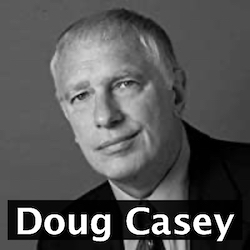
To start the show, Jason Hartman shares the proformas included on PropertyTracker.com, including the debt coverage ratio metric. He also answers a question from a listener on how to invest his savings using a VA loan. In the interview segment, Jason talks to Doug Casey where he shares his story and his predictions for the future of the US Dollar. He also explains what might happen when the Dollar is devalued.
Announcer 0:00
This show is produced by the Hartman media company. For more information and links to all our great podcasts, visit Hartman media.com.
Announcer 0:13
Welcome to the creating wealth show with Jason Hartman. You’re about to learn a new slant on investing some exciting techniques and fresh new approaches to the world’s most historically proven asset class that will enable you to create more wealth and freedom than you ever thought possible. Jason is a genuine self-made multi-millionaire who’s actually been there and done it. He’s a successful investor, lender, developer, and entrepreneur who’s owned properties in 11 states had hundreds of tenants and been involved in 1000s of real estate transactions. This program will help you follow in Jason’s footsteps on the road to your financial independence day, you really can do it on Now, here’s your host, Jason Hartman with the complete solution for real estate investors.
Jason Hartman 1:04
Welcome to the creating wealth show, episode number 879 879. This is your host, Jason Hartman, thank you so much for joining me today. Really appreciate having you here. As always, that includes our listeners from 164 countries around the world. It’s great to have you. So today I want to talk to you about several things. And we are also going to have part one of a live interview with a returning guest and that is the Oso interesting, Mr. Doug Casey, I just got back from Aspen, Colorado last night, that left wing Bastion, that beautiful place where they won’t let anybody build anything because you know, everybody who’s there wants to keep it for themselves. Hey, can’t blame them. I’m just saying be honest about it. We’ll get into that in a moment. But yeah, I was there for jazz festival. And I sort of wonder why they call these things jazz festivals. It wasn’t jazz. They just do saw Keith Urban. I think there was a third time seeing Keith Urban and my second time seeing Maroon five. And that was a lot of fun. My friend Alicia who lives there, I stayed with her and went both days, two days to the event. And it was a great time. One day we had the super ultra super swanky VIP. And that was really, really cool. Unlimited food and drinks. And oh, boy, a lot of fun. Anyway, it’s great to be back.
But well, I was in Aspen this weekend, I met with Doug Casey. And of course he’s a he’s the founder of Casey Research. And a financial writer and, you know, has been doing this stuff for decades. Very interesting guy. He’s been on the show a few times before over the years. But this was my first time meeting him in person. And after lunch, I did a live interview with him that I think you’ll enjoy. It was fairly long. So we’ll just interview or we’ll just have part one of that interview today. And then we will play Part Two on Monday, because Friday is flashback Friday. And this Friday is a special flashback Friday. Why is that? Because it’ll be shown number 880. And every 10th show, we do something of general interest, life success, not talking about real estate investing so much on those 10th episodes. And I think you’ll like this one we have coming up. So that’ll be a combo of flashback Friday, and they tend to show all in one. First I wanted to in this intro portion. I wanted to get to a couple more of your questions. I’m trying to get down that list of questions and tell you it takes a while but we’ll we will soldier through and get to all of your questions, hopefully here over the next several episodes. But before we do that, and we’ve got some good questions today.
Before we do that, I want to talk to you a little bit about these performers, these property performers. So if you go to one of my favorite places, Jason hartman.com slash properties. Jason hartman.com slash properties. If you go to that place on the internet, you will see properties that are different markets and are different performance. So I’m looking at one right now this is an Indianapolis and this property is just under 1400 square feet, it is 119,900. And going through that projected rent is 1100. So that’s pretty darn good. Projected cash flow 192 per month or just over 20 $300 per year. And that would make the overall return on investment here of 30% annually based on these projections and the income and expense ratio and so forth. But I wanted to talk to you today a little bit more about the debt coverage ratio. And look, folks, I know all of these other gurus out there and all these other snake oil salesmen, they will tell you, there’s never been a better time to invest in real estate. And that’s such BS, don’t believe that crap. It’s absolutely false. That is a complete lie. Okay? There have been lots of better times to invest in real estate. But this time a bad considering we have had quite a run-up in prices. Rents are chasing prices, as they always do, because rents always lag price appreciation. But just to illustrate how good it really still is, how good the opportunity is for you, the prudent buy and hold investor, the debt coverage ratio. Now remember, I have told you before that that metric when I look at the Performa here on property tracker, which by the way, don’t forget, and I think Zack still has a few spaces open, I’m not sure I haven’t checked with him. But we have that special offer. If you want to get on the best software for tracking your investments just got a beautiful new visual update. You can email, what was that email he gave out on a couple shows ago, it was the administrator at Real Estate tools.com, I believe, or you can just go to Jason hartman.com. and sign up on the front page, you get a one hour one free hour of onboarding, where if you get your statements together, your mortgage statements, your purchase files, you know, just bring your files to that phone call. And Zach will help get all of your data into property tracker so that you can get going I know the hardest part with a lot of this stuff is getting started. It is that inertia, that initial inertia.
And you know, that’s like everything in life, right? Whether it be exercising or eating right, which God knows America needs to exercise and eat right? It’s just, you know, it is amazing. The contrast. I spent seven weeks in Europe this year, so far, maybe I’ll even go back and spend another week there. I don’t know, probably not. But I spent seven weeks in Europe. And it is amazing how much thinner people are in Europe, Americans, we got to get in shape. Okay. But a lot of people and I’ll tell you, here’s where Americans do a lot better. A lot of people, and I don’t know if this is true or not. But they attribute the decline in smoking in America to the prevalence of obesity. They say that like 60% of America is now clinically obese. I mean, folks, look, if you are investing, and you are making a better future for yourself, be sure you’re still alive and healthy enough to enjoy it. It’s not just about lifespan, but it’s about health span. So, you know, it’s not just about being alive, but it’s about being able to walk and feeling good. And you know, getting out of bed and getting up and taking on the day no matter what you’re doing. So that’s what we’re doing here. You know, we’re taking care of the financial part. But you got to take care of the health part too, because you want to be around to enjoy the fruits of your labor, you deserve it. Don’t just leave it to your ungrateful children. Now, they’re not always ungrateful, but sometimes they are. Yeah, you know, enjoy your own money, right? Put that bumper sticker on your car that says I’m spending my kids inheritance. So you want to be able to enjoy it. So take care of your health, it’s really, really important that you do that. Not just for living longer, but for feeling better, longer. And it’s so easy, it’s really not difficult. You know, one of the things they say about people who are fit throughout their life is they take care of fitness first thing, you get the hard stuff out of the way I know it’s hard to work out, it’s hard to go to the gym, you know, but you just get that out of the way first, and then the day is yours, you own it, you’ve earned it. You know, it’s yours. So get your exercise in early in the day. And you know, I was talking to my friend, Alicia when I was in Aspen and and you know, Aspen is a very fit place because there’s a lot of outdoor activities and so forth. And people are always hiking and running and biking and doing everything’s, you know, of course skiing, and everything they do. But it’s it’s like that environment. You know, as I’ve said before, Jim Rohn talks about how your income will be the average of the five people you spend most of your time with? Well, I would say that probably applies to fitness as well. So that habit is definitely influenced by our peers, but it’s really not hard. And then and then just every time you eat something right, just look at your plate. And if it’s at least half green You’re doing well. Okay. And look, I like sweets. That is my weakness. I have a sweet tooth I love chocolate is like my favorite thing in the world. I love love chocolate. Actually, I think it’s more my favorite thing than income property. Yes, chocolate is better than income property. There you go. So yeah, I have a real weakness for sweets, I tell you, it’s I’m always, always battling that. But as long as your plate is at least half green, you know, that means you’re eating vegetables. And I always love vegetables, I really do like the taste of them. And they’re great, you know, get some veggies on your plate. And you’ll you’ll be doing well. Okay, there’s my simple amateur health plan, not endorsed by any doctor, probably completely silly.
So let’s get back to properties. So the debt coverage ratio? I don’t know how we got on that tangent. But you know, that’s what I do. Sometimes I’ll try to keep it focused. The debt coverage ratio could also be called the How likely is it that I’ll get into trouble ratio? The How likely is it? Will I get into trouble with this property ratio? That’s the debt coverage ratio. Now, way back in 2004 2005, when we were doing the same thing we’re doing today, okay. Well, I should say when I was doing it, I wasn’t doing it with the same people or even under the same company. But I was getting into the investor only business. Before that, of course, for many years, I was in the traditional real estate business. And way back, then I remember, and this is a gauge of what happened then and maybe why the market cratered to part of it, the debt coverage ratios. You know, you felt like you were doing pretty good if you were around 1%, one as the debt coverage ratio. And that means you’re basically even even Steven. So when that debt coverage ratio is there, there isn’t any margin for error. Right. Now, the debt coverage ratio on this property, this is a good looking house, too. So 1100 per month 119,900, purchase price, 75% loan to value ratio, and the debt coverage ratio here with an overall return on investment projected at 30%. The debt coverage is 1.40 1.40. And you know what? That ain’t bad. It is very easy. When you’re looking at market cycles. And you’re thinking of the good old days and how things used to be. And you might be punishing yourself beating yourself up. I know I do it to myself all the time. Okay. You might be beating yourself up saying If only I had invested then right you’re reading The Reluctant investors lament every day. And just you know, being really hard on yourself, right? But it is easy to be myopic, and only look at prices.
It is amazing to me, how many experts how many forecasters how many economists how many prognosticators how many of these Talking Heads you see in the news media, how many of them talk about real estate prices, just prices in a vacuum. They don’t talk about the interest rates at the same time. Shocking, I know, it’s shocking. Television is literally the idiots medium. It’s sound bite Ville. And unfortunately, that’s how we elect our politicians, basically, from television from little dumb sound bites. scary, but that’s the way it is. That’s the world we live in. Right. So hopefully you go deeper, because you need to look at the debt coverage ratio, this is an important metric that is not talked about enough. Now, obviously, the debt coverage ratio will change based on what how big is your mortgage, how much debt you have on the property, right? So if you put 50% down, you’re going to have a better ratio, then if you don’t, that if you put 20% down, but it also obviously varies very significantly with interest rates. Now remember the basic metric there and, and you know, this is rough, but 1% in interest rate equals about 10% in purchase price. So in other words, if the interest rate goes up, 1% the price has to go down 10% to be the same payment.
And my friend Christina, I’m she’s not very financial, and I’m pretty financial. Okay, so I’ve been helping her shop for a car, right? And she just isn’t into this at all. You know, her dad bought her her first car, she’s had it for 12 years. And so, you know, she’s This is her first time shopping for a car, you know, figuring it out by herself. And so in her helping her do this, I’m really trying to tell her don’t just look at the price of the car, obviously, look at the financing program and the dealer incentives and all of this complex stuff that you’ve got to look at. And then you equate, you know, lease versus buy, etc, etc. And that’s a whole complicated discussion. But the point is, people buy a car on a payment, almost everybody buys a car on a payment. And every home owner owner occupant, I should say every owner occupant buys a house based on the payment, they don’t care about the price of the house very much. They don’t care about the interest rate very much. They just care about the result of those two items. The result of those two things, interest rate and price, put them in the blender and say, Hey, Will It Blend? Because of this funny YouTube videos you’ve seen? Will It Blend right where they stick the iPhone in there? And in the blender? What a great, what a great ad campaign for a blender company? Will It Blend? You know, I’m glad they didn’t put any animals in there or anything that would have been pretty disgusting and inhumane, obviously. But yeah, they put like an iPhone in the blender, and you know, Will It Blend in the blender will actually do it. So crazy. Don’t try this at home, obviously, very dangerous. But that’s the blend of the interest rate versus the price, right. And so this kind of stuff goes into the debt coverage ratio.
And that’s what I want you to notice that, hey, like I always say it’s an amazing time to be alive. It’s not the best time in the world to be a real estate investor. It was better in 2009 and 10, of course site I tried to tell you, hey, go back and listen to my old podcast. I don’t know what episode would that be? Go back and listen to Episode 170, something or 200 and, you know, early 200, or something like that, right? And you’ll hear me talking about why you need to invest now. And most of you didn’t listen, but a few of you did. And you made a fortune, right? So listen to me now. Because the rents will catch up, I know it takes a few years I get it, the rents always lagged the prices, but still, given the incredibly low artificially low interest rates. It’s a pretty amazing time to be a real estate investor. Okay, and it’s, it’s gonna be that way for a little while longer. If rates tick up, I don’t know, we’ll see. We’ll see the impact of the tragic issues that have gone on with Harvey and Houston and so forth. And now we got another hurricane coming in. So, you know, we’ll hope this, this won’t be so bad. And again, you know, remind everybody if you haven’t done so yet, you know, help the less fortunate. help these people out, donate some money to one of the good charities, do your research. There’s a lot of bad press going around about the Red Cross.
Jason Hartman 18:02
And, you know, I don’t know, during 911 bill o’reilly really outed them for kind of scamming people with the donations to 911 victims and so forth. They didn’t really get there. And some people were saying that about Harvey now, I don’t know I’m talking out of school, but you know, just do your research, donate to someone you know, or some charity, that’ll that’ll be a good one. So anyway, debt coverage ratio. That’s the lesson there.
Now, let’s go and Let’s sneak in a question or two here. And then let’s get to Part One of Doug Casey. All right. I had some good questions here, too, by the way. Okay. This question comes from Andrew and Andrew says, Hey, Jason, I’m 27 years old, and currently in the military, stationed overseas, almost for the past five years back and forth. This has given me the unique ability to ability to save up some cash. Hey, that’s great. I’ve currently saved up almost $400,000 in cash, Andrew, that’s phenomenal. Hey, good for you. But now, be careful. You might get really dumb here if you’re not careful, because you shouldn’t have $400,000 in cash. Unless you are a very wealthy person, which I’m having a feeling being in the military, you’re probably not there yet. But that is an excellent discipline that you’ve saved that much money. So congratulations. But you’ve got to get that money invested, it is urgent that you get that money invested. Because again, as Doug Casey even mentions in this interview that we’ve got coming up here in a few minutes. He talks about that he talks about how he just kind of vaguely mentions it, and I didn’t press him on it. But basically the fact that when you save money, you’re losing money, which is true because of taxes and inflation. Destroying that money and attacking you’re constantly currently invested in different stocks. Yes, I know bad. That’s what Andrew says. You know what I’m gonna say right, Andrew, with about 87,000 in the Roth IRA, and the rest In brokerage accounts, so my question is, once I return next year, how do I best go about splitting up this little treasure box? Hey, it’s not that little congratulations is pretty darn good. And getting into cash flowing, generating income properties, any thoughts on the VA loan? And how I should use that one? It’s a one time option. Okay, so good question, Andrew. So first of all, on your VA loan, the VA loans are a pretty good deal, I don’t really deal with them, we don’t deal with them on the investment side. And when I was in traditional real estate, I only dealt with VA homebuyers. In the beginning of my career when I was 1920, maybe 21 years old. But then all the properties I sold were too expensive for VA and FHA. So that wasn’t the type of market I was in. But in the beginning, I did do that a lot. So the VA loan can be fantastic. Just buy yourself a good bread and butter property, use your VA loan, and then later, you can always turn that into a rental property.
However, I do want to caution you about that, you cannot buy that property with the intent of it becoming a rental property. So you know, because then that would not be legit by the VA standards, okay, they’re not loaning you money to make it a rental property, they’re loaning you the money to buy a home. But you can buy a home that would potentially in the future make sense as a rental property and live there for a few years, and then it can become one of the many rental properties in your portfolio. So I would use that. But in addition to that, just work with one of our investment counselors and, you know, we can help you use the Roth IRA funds, we can help you use the cash and the brokerage accounts, I’d say that’s where you want to go first. Because the Roth IRA stuff is probably better in the brokerage accounts. And the open cash that’s just in savings is better to use to purchase the income properties.
So I would do it in that order. Okay, so you come back, use your VA, and then buy rental properties, you can do that all in quick succession, basically, concurrently. And, you know, you get three, four or five properties total. One is the home in which you live with your VA, and your VA financing. And then the others, you just use typical Fannie Mae, Freddie Mac financing. And then the last money I would use for the properties is the IRA money, I would that if you’re going to be in the stock market, you know, they make it pretty simple to do inside the retirement plan. So I think that’s the way to go there. And then Andrews common is great, honest insight into how the real estate market works. with years of experience to back it up. insightful show guest Jason completely changed my mind on how I think about debt, and taking on mortgages to finance property. I really enjoy hearing Jason’s take on events, and the diverse set of information provided on the show. Thanks, Jason. Thank you, Andrew. I really appreciate it. And that was a good question as well. So thank you for asking that. You know what, we are going to long What a surprise not like I haven’t done that before.
Let’s get to Part One of Doug Casey. And I will be back to answer more questions. On the upcoming episodes. We’ve got a whole bunch more great questions. Be sure to get your tickets for our meet the Masters event. We’ve got about 80 tickets sold now I believe, and they are selling out very, very quickly. We’ve never sold so many tickets. So far in advance of the event that’s coming up in January in beautiful La Jolla, California, San Diego area. And, you know, if you live in the northeast or in Canada or Europe or wherever in the world, it’s cold at that time of year, you know, coming to Southern California in January. That ain’t so bad. So join us for meet the masters. Go to Jason hartman.com. Click on events and get your tickets there. Also, check out our upcoming venture Alliance mastermind event in Palm Springs, California, also Southern California and that’ll be in October. That’s going to be a fantastic event as well. And you can come as a one time guest or join on the annual membership. So the venture lines information is on the Jason hartman.com website and also a special website just for venture Alliance, which is venture Alliance mastermind.com let’s get to our guests today, part one of Mr. Doug Casey.
Hey, it’s my pleasure to welcome a returning guest back to the show. It is Mr. Doug Casey and by the way, greetings from beautiful Aspen, Colorado, that liberal Bastion in the mountains. That isolated bubble of wonderfulness, that’s where we are and so I’m live with Doug Casey we just had lunch together and it’s a pleasure to meet him in person. Last time I had him on the show. We got to talking and he said he he lived in Aspen for about half the year. And I said next time I’m there, Doug, I got to meet with you in person. So welcome back. How are you?
Doug Casey 25:04
Well, it’s a pleasure to be here and welcome to the People’s Republic of Aspen.
Jason Hartman 25:08
It is the People’s Republic of Aspen. And you know, it’s so funny being up here. It’s such a beautiful place. I’ve always loved Aspen. But, you know, when I had Thomas Sol on the show, I coined a new phrase, I called it environmental racism. And I’m sure you’ll have something to say about this. So the concept is, it’s the NIMBY concept, the not in my backyard concept. And Aspen is is a poster child for this. If you ask me, Irvine, California, and Orange County, California, where I’m from was kind of a poster child for it to where as soon as the people with the money, get into a community, they try to create all kinds of restrictions on building under the guise of protecting the environment, which you know, is part of it, I admit, but it’s not the thing. It’s once we’ve got ours, let’s not let anybody else in, you know, so any any thoughts about that?
Doug Casey 25:55
I think that’s especially true here in Aspen, because this has always been a town where the wealthy people have been drawn to. But now the billionaires are driving the millionaires out of town, down the valley. So in Aspen proper, you’ve only got the people that live in so called employee housing, welfare housing subsidized by the city.
Jason Hartman 26:19
Yeah, there’s about 3000 employee housing units. I guess,
Doug Casey 26:22
That is a shocking number, because Aspen itself only has 7000 residents. So about half of them are people that are
Jason Hartman 26:31
Surface people
Doug Casey 26:32
That are living off the tax revenue of the rich people there. And it’s not as bad as in places like telluride. But there’s an active environment of class warfare, where the people living in welfare housing, so called employee housing, want more. And they’re the ones that do all the voting because the rich guys generally just have second homes here.
Jason Hartman 26:57
Yeah, yeah. It’s a very, it’s a very interesting concept. And it’s always under the idea of Let’s protect the environment, whereas the, the general, left wing liberal idea is, shouldn’t we be more inclusive? Shouldn’t we lever that everybody in? And Shouldn’t we give people more stuff? And Shouldn’t we have diversity? That’s what they say until it comes to their own neighborhood. Aspen is like the most lily-white place I’ve ever been in my life. And you know, that’s the, you know, Barbra Streisand at her compound in Malibu, and, you know, all the rest, it’s like, Don’t drill for oil, there’s got to be more diversity, except near her, you know, right. It’s just yeah,
Doug Casey 27:31
That’s exactly right. It’s like George Clooney with his compound outside of Lake Como. And I understand he’s left that because that area of Italy is now so full of African migrants, that it’s not the como that George Clooney wants to live in anymore, or that we’d love to talk about that.
Jason Hartman 27:51
Doug, you can’t make this stuff up. It’s so ridiculous. The hypocrisy, isn’t it?
Doug Casey 27:55
No, no, it’s a it’s a dream world. I feel like I’m living in the twilight zone, sociologically. And I’m definitely living in the twilight zone from an economic point of view. Because at lunch, we were talking about what’s going to happen to the economy. And my view is that we entered a gigantic hurricane, in 2007. We went through the leading edge of it in 2008, and nine, the government has created trillions and trillions, not just the US government, all the governments of the world, Chinese Europeans, Japanese, and all the little governments have created trillions and trillions of currency units to pour oil on the waters. And I think now, as we speak, we’re entering the trailing edge of the hurricane. And it’s going to be much worse, much longer lasting, and much different than what happened in eight and nine, which was unpleasant, as you’ll recall.
Jason Hartman 28:52
Yeah, the Great Recession, certainly, certainly an unpleasant time for most people, but not those that have the right strategy. It wasn’t so bad for them. In fact, a lot of opportunities open up and in big recessionary times and discretionary times. But before we dive into a little more thoughts on the economy, and the real estate market and alternative investing and so forth, Doug, I failed to give you a proper introduction. So for those of you who hadn’t heard you on my show, maybe, I don’t know, I think you’ve been on three or four times before. Let’s kind of talk about your background a little bit. So you are the founder of Casey Research. You had a very popular financial newsletter for many years, you still own part of that company. And you’ve been involved with a Gora financial and still are involved with him and, and you, you wrote a very renowned book in the 70s, I believe, called international man, which espoused in a totally new philosophy that probably no one had thought of at that time. So you know, just give us tell us a little bit about your background, if you would, it’s a long story. Fantastic background.
Doug Casey 29:53
Well, I’m not going to start out by saying I was born a poor black sharecropper’s son. But let me say this, I’ve always believed that you don’t want to live life like a medieval peasant, where if you’re born in one place, you grow up there and you die there. I think it’s incumbent upon any free individual to make the world his oyster. So I’ve been to 155 countries so far. And I’ve lived in 10. And today, I spent most of my time in Argentina and Uruguay, but lived in the Orient, and lots of places in Europe, all over the world. I just wish that I just wished that there was someplace on this planet that was truly free country. But perhaps someday,
Jason Hartman 30:51
Yeah, yeah, that doesn’t much exist anymore. You know, once government gets us a foothold in, in a society, it just grows and grows, the nature of government is to grow and become larger and more intrusive, and more overbearing, if you will. So that’s just the way it always works, you know, until there’s ultimately a revolution and, and people take it back. And then, you know, then government builds up again, and it gets big again. And, you know, decades later, maybe a couple 100 years later, there’s another revolution, you know, it’s a cycle, isn’t it?
Doug Casey 31:20
Well, that’s right. It’s, it’s a universal law that all entities, whether we’re talking about an amoeba or an individual or company or government, they all want to survive and grow. And you survive by growing. And the problem with government is, since it’s a coercive institution, it’s the only institution that can hold a gun to your head legally. So of course, it has a tendency to grow much faster than other things in society, it’s cancerous, by its nature, and government inevitably draws the wrong kinds of people working for it, not the best and the brightest, but people that want to control other people,
Jason Hartman 32:03
Kind of like the homeowners association board. You know, those, those tend to draw these people that are kind of like little people in life, but they want to throw their weight around and control other people, when they get on that Homeowners Association Board. It’s a microcosm of government, you know, and it’s interesting, too, because years ago, I really used to be very, very deeply involved in charity. Now, I mostly just write checks to charity, different causes, I believe in but I used to be on a lot of boards, you know, in my 20s, and early 30s, I found that like, I’ve never been involved in government, thankfully. But it’s like decision by committee. Every time there was a committee meeting. Number one, nobody could ever decide where to go. Because you always have to be courteous to all the other members on the committee. You know, you just have to have one person ultimately, that’s the leader of something. That’s why entrepreneurship works so well, I think. But the other thing about it, is that, you know, if it were a cancer society meeting, the meetings were never about, let’s cure cancer. The meetings were always about how do we grow the size of our organization? How do we get bigger, more influential, get more money, it was never about actually the root? Cause it was just about getting bigger. And I imagine in government that’s that cancer is much larger than it is something on a charity board.
Doug Casey 33:20
Well, I’ve got to say, I don’t believe in organized charities to start with. Because you have the same problem there. It’s like all these NGOs.
Jason Hartman 33:30
NGOs. Yeah. Ridiculous non-governmental entity or organizations NGO.
Doug Casey 33:34
Yeah, they’re, they’re horrible. They know how to spend money. And they get people to give them money, based on guilt, or perhaps based on the outrageous dinner parties that are thrown to donors, but
Jason Hartman 33:47
Or the private jets they have to fly around in and the luxury hotel conferences they host and, yeah, it’s ridiculous.
Doug Casey 33:54
They’re corrupting for the recipients, and reset and corrupting for the donors. I mean, my view of charity is if I find somebody who is in trouble, I’ll do a deal with them as an individual, but giving it to an organization with overhead and so forth. Forget about it.
Jason Hartman 34:16
Yeah, no. Well, that’s certainly a lot to be said for that. But just give us a little more about your background real quick. And then let’s talk about the economy and what we can expect next, because you have some big views on that. And you’re always interesting to listen to, with that kind of stuff. So, Casey, research, your books. You’ve got a series of novels you’re doing now.
Doug Casey 34:33
Yeah. Well, yeah. My first book was called the International man, which was a guidebook to how to make the most of your personal freedom and financial opportunity around the world. And I wrote that book in 1976, when it was very, very unusual, among other things that became the largest selling book in the history of Rhodesia.
Jason Hartman 34:54
His river feature. Now there is a claim.
Doug Casey 34:56
Well, it is a record that is never going to be bested at this point. But my next book was called crisis investing, which came out in 1978, which was pretty accurate, I’ve got to say about the near disaster that we experienced in the early 80s, when you’ll recall, interest rates were 15 to 20%, stock market was at a historic low and so forth. But you know, now I find that there are things that you can say, in fiction, things you can say in novels that you really better not say, in nonfiction. So I’m embarked upon writing a series of seven novels. The first one was called speculator came out last year, when I’m reforming the unjustly besmirched reputations of highly politically incorrect occupations. So our hero in speculator is a 23 year old guy who goes to Africa gets involved in a gold mining fraud, not his fault, gets involved in a bush war, and makes $200 million dollars has it stolen from him by the government. And now in the current book, drug lord, these are on Amazon and stuff like drug lord, which is talking about getting into the drug business, legal and illegal, how you do it? What happens when it’s like dealing with the various government agencies? So I think people will like both of those books. Every author has to promote his his wares.
Jason Hartman 36:39
So Doug, tell us what you think is coming down the pike. I mean, you think we are in for another crash of sorts, but see, you know, when you when you hear that stuff in the news media, you really that’s a that’s a soundbite, right. And the problem is, most people don’t think deeply about anything. What does it really mean? You know, there are many flavors of quote, unquote, crashes. And some of them can be very opportunistic. If you got your assets in the right place and your head in the right place. What do you think is coming in, you know, if you can make any predictions as to timeframe, everybody would love it. But I know that’s a tough business.
Doug Casey 37:15
Okay. So what’s going to happen? And why is it going to happen? You know, what I’ve talked about the economy. Let me preface this by saying that most of what I read, and think about actually is history and science. Those are the two areas that I’m most interested in. And let me start by saying that I think Western civilization itself peaked in 1913, just before World War One. And it’s been going down since then. The United States, as a country, within Western civilization peaked in the mid 1950s, one of the world’s skyscrapers 75% of the world’s cars, airplanes, everything happened in the us then. And we’ve been going down, and that was our peak. And we’ve been going downhill in absolute terms, since the early 1970s, with Nixon devalue the dollar. And it used to be that America was something special, and different from any other country in the world. But now, the United States, which is different from America is just another of 200 countries in the world. So this is the general context that I’m talking about.
Jason Hartman 38:34
Before you go on, Doug, I just want you to elaborate on that remark you just made. The United States is different than America. Now, obviously, there’s North and South America geographically, but I don’t think that’s what you’re talking about. I think you’re talking about the original intent of our founders and the concept of America versus what the United States is today. Maybe you can elaborate a little.
Doug Casey 38:58
Yes, America was actually was exceptional. And it actually was unique, because it was the only country in the world’s history that was founded upon the principles of individualism, our freedom of speech, freedom of movement, free markets. America was a totally unique concept. But we’ve got we’ve drifted away from that. And now with what the United States, which is really just a political entity, and no longer a very stable one, either. What the what the United States has devolved into is, I’m very loyal to the concept of America, not so loyal to the concept of the US.
Jason Hartman 39:46
So what has it devolved into though,
Doug Casey 39:50
It’s actually become something of an empire, quite frankly, not an empire, like the Roman Empire or the British Empire. Actually, historically, it’s more like the Athenian Empire. We don’t actually go out and conquer countries so much, although we have combat troops in 100 different countries.
Jason Hartman 40:11
We do that in some of them. Nation building, but not all of them. But But yeah, what do we do instead? What’s the new version of that?
Doug Casey 40:18
Well, it’s actually been through controlling the world’s currency system. The US dollar is the numeraire. For all other currencies in the world, all these other central banks in the world and every other country in the world has a central bank, like the Federal Reserve here in the US, and the major asset of most of these central banks are US dollars. And the major export of the US isn’t wheat, or Boeing’s or cars, we don’t export any of that stuff in quantity anymore. That’s why we run gigantic trade deficits with the rest of the world now. Our major export is dollars, we send dollars abroad, and those nice foreigners send us Mercedes and Sony’s and cocaine, all these other things.
Jason Hartman 41:07
Okay. Yeah, you know, but Doug, see on the face of it, that seems like a pretty good deal for the US. What are you saying that ultimately, the world is really rejecting this idea, because it seems like the US is just in such a good position, to have the reserve currency of the world. But you know, and people argue that that will go away, and I could see why other countries would want to make that go away. But when you’ve got the biggest military in the world, by a longshot, and the biggest economy in the world, admittedly built on smoke and mirrors, but lots of economies are built on smoke and mirrors, not just ours. So it’s it’s really a comparison game, you know, are we ever going to lose that that reserve currency status, and that’s incredibly important, isn’t it?
Doug Casey 41:50
It’s hugely important. When you can print up dollars, or create credit in dollars at basically zero cost, and export them for real wealth, you have an artificially high standard of living.
Jason Hartman 42:04
In other words, we export the paper or the credit, and we get the real hard assets back, the Mercedes, the BMWs, the Audi’s the, you know, the all this stuff in Walmart from China, you know, we get real stuff for our fake stuff, that’s pretty good deal,
Doug Casey 42:21
Precisely, but it can’t go on forever, because there are 10s of trillions of US dollars outside the US. They’re the assets of foreign central banks. in 50 countries around the world, the dollar is used more than the local currency. But you keep doing this and the dollar is going to start losing value radically. Foreigners don’t have to accept us dollars away US citizens do. So at some point, there’s going to be a panic out of dollars, and what’s going to happen, those dollars are going to come back to the US and they’re going to buy the shares of the American companies are going to buy American real estate, they’re going to buy all kinds of American assets. So we’re going to get our own paper back and inflation is going to explode within the US.
Jason Hartman 43:13
Okay, so before you go on, let’s look at that for a moment. That was the xenophobic scare of the 80s. When Japan bought Rockefeller Center, when and you know, back then I remember studying Paul Zane pilzer, I’m sure you’re familiar with his work. And I have never interviewed him, but I’d like to. And you know, he, in one of his books called unlimited wealth, the theory and practice of economic alchemy, he talked about the Japan concept, and he talked about how that was such a good deal for us, when most people were scared and worried about it. I mean, so their dollars came back, they bought Rockefeller Center, they bought some other trophies, they bought some companies here and so forth. And then basically, like with Rockefeller Center example, they paid the property taxes on it for several years and sold it back cheap. So I don’t know, is in when you say that there’s going to be a panic, a panic By whom? Is it by governments and central banks in foreign countries? Or is it by people in foreign countries? Or is it by both?
Doug Casey 44:12
Well, look, you’re gonna have a panic right here in the United States, because it appears the statistics say, and just looking around, as I view the United States, I think it’s true that about half of the people in the US right now have no net assets, and what’s left of the middle class are basically saving dollars. In other words, what everybody tries to do, we’re genetically like squirrels. We know that we have to produce more than we consume, and save the difference. Because winter’s coming eventually. The problem is the average American only saves dollars. But if the US government destroys the dollar, it means the assets of the average American and the capitalist saved. vanishes. Poof. Smoke. So it’s very, very serious. What happens to the US dollar?
Jason Hartman 45:05
No question about it.
Doug Casey 45:07
And the dollar is losing value relatively slowly right now, because there’s a war being fought between deflation and inflation. What does that mean? It means that with the trillions and trillions of dollars of debt in the world, government debt, corporate debt, credit card debt, student loan debt, automobile debt, lots of kinds of debt, the people that have borrowed are having trouble, even with record low interest rates, artificially low interest rates, they’re having trouble paying that debt back. Now, what happens? If you default on a, a billion dollar bond, let’s say, or any of these things I’ve just been talking about? What happens to the assets represented by that debt goes poof, it disappears, it dies, it goes to money heaven, and is that money vanishes, the remaining dollars become worth relatively more. So you could have a deflation, like what happened in 1929, where there’s a stock market crash or bond market crash, a real estate crash, and that’s a deflation, not the same thing as a depression. Or if the government keeps printing up more and more and more money to allow people to service this debt by taking on more debt, then eventually the dollar loses all value. And that’s even worse than our deflation either way, we’re headed for a depression, a period of time when most people’s standard of living drops radically.
Jason Hartman 46:42
Thank you so much for listening. Please be sure to subscribe so that you don’t miss any episodes. Be sure to check out this shows specific website and our general website Hartman. Mediacom for appropriate disclaimers and Terms of Service. Remember that guest opinions are the rain. And if you require specific legal or tax advice, or advice of any other specialized area, please consult an appropriate professional. And we also very much appreciate you reviewing the show. Please go to iTunes or Stitcher Radio or whatever platform you’re using and write a review for the show we would very much appreciate that. And be sure to make it official and subscribe so you do not miss any episodes. We look forward to seeing you on the next episode.