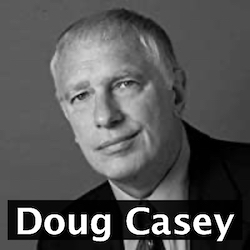
Jason Hartman welcomes Ed Babkes to the show to talk about insurance. Ed explains the differences between weather-related insurance coverage and how to remove the need for your property’s flood insurance. In the second part of the show, Jason finishes his interview with Doug Casey. They talk about technology and its role in keeping the US lifestyle status quo in the face of inflation. Jason and Doug also discuss the welfare or the warfare state, the upcoming depression, and why inflation is much worse than income tax.
Announcer 0:00
This show is produced by the Hartman media company. For more information and links to all our great podcasts, visit Hartman media.com.
Announcer 0:13
Welcome to the creating wealth show with Jason Hartman. You’re about to learn a new slant on investing some exciting techniques and fresh new approaches to the world’s most historically proven asset class that will enable you to create more wealth and freedom than you ever thought possible. Jason is a genuine self made multi millionaire who’s actually been there and done it. He’s a successful investor, lender, developer and entrepreneur who’s owned properties in 11 states had hundreds of tenants and been involved in thousands of real estate transactions. This program will help you follow in Jason’s footsteps on the road to your financial independence day. You really can do it on now. here’s your host, Jason Hartman with the company leet solution for real estate investors.
Jason Hartman 1:03
Welcome to the creating wealth Show episode number 880 181. This is your host, Jason Hartman, thank you so much for joining me today. And we have got part two of Doug Casey. I think part two was even more interesting than part one that is coming up here in a few minutes. quote for the day, though, comes from Well, a president that changed the country in a not so good way if you asked me but, you know, he had some things to say. And the quote is, I liked what he said about real estate though, no matter what he said, real estate cannot be lost or stolen, nor can it be carried away, purchased with common sense, paid for in full. Now that’s wrong. But at the time, he said that, that ideal was not so bad. I’ll explain in a moment and manage with reasonable care. It’s about the safest investment in the world. Franklin D. Roosevelt said that and I’ve got my friend here, Ed Baptists. With me talking a little bit about insurance in light of all the stuff that’s been going on with these treacherous storms and hurricanes. We’re going to talk about that and welcome. How are you?
Ed Babkes 2:11
I’m doing real well. How you doing today, Jason?
Jason Hartman 2:13
Good, good. So So when Franklin Roosevelt said that quote, and that’s a good quote, paid for in full, I think that was decent advice. I’m not saying it was great advice. I’m saying it was decent advice at the time. And the reason I say that, is that in 1971, as we all know what happened, we went off the gold standard when Nixon finally closed the gold window. And that allowed the government to just inflate forever indefinitely. Then the rules of the game changed. You know, our parents and our grandparents always, you know, sort of have this mentality this depression era mentality that said, pay things off don’t have any debt debt is bad, but I say debt is my favorite. four letter word as long as it’s investment grade debt meaning not consumer debt, of course, but debt tied to an investment, especially the real estate investment, because, you know, you when two ways inflation comes along and debases the debt or devalues the debt, as the dollar becomes worth less, or the Euro becomes worth less, or the yen or whatever currency you’re dealing in doesn’t matter. And then the real estate itself is composed of commodities, which have intrinsic value that aren’t tied to any one currency. And so commodities have always been a good hedge against inflation, especially lately, commodities are doing well. Well, not all of them. Of course, it’s a mixed bag, but the real estate oriented commodities, and then the debt goes down. So I call it the double inflation arbitrage where you actually win both ways. And we haven’t even talked about cash flow or anything else. Yeah. Those are just two components of the multi dimensional equation but, you know, I agree I agree with what he said. Now some might take issue with that quote today because they look at the floods in Houston and we’ve got another hurricane bearing down now we’ll see what happens there with Key West and some parts of Florida hopefully it won’t be too significant invite by the way we’re recording this episode in advance so by the time people hear I can you know, of course, it that will have been known.
Jason Hartman 4:25
But Ed, there’s some confusion in the insurance world and you’re an insurance guy you’ve been doing this like, I don’t know, 30 years or something. What is just explain for our listeners the difference between insurance coverage when it comes to flooding versus rain or especially wind driven rain, and what this means and then I want to also ask you about how it opinions of whether flood insurance is required. Number one, because required is one issue. That video From lender to lender, depending on how they interpret the flood maps, these things are not black and white, are they? And then secondarily, some people might choose to get flood insurance even though it’s not required. So let’s kind of speak to a few of those issues if we could, you can take it wherever you want.
Ed Babkes 5:17
Oh, I think it’s great topic matter with what just occurred, of course with Harvey and what, as you say, is pending at the moment, but we’ll know a lot more information by the time of the recording. But you know, the easiest way to sum up wind and rain versus flood is, is the problem coming from above or is a problem coming from ground level or below. So with a flood like Harvey in the streets are flooded and people are traveling around in boats, the water is rising so the water is coming from the ground or below the ground on up. So that’s flood insurance. We have water that’s going above staircases into homes. And that flood, or water damage that’s created by the flooding is a surge of water or all the water that is coming down from the sky. Whereas wind driven rain if your house is not flooded, but you have water coming from your roof because of a hole in the roof or some sort of crack or deterioration of the roof material, or just the severity of a windstorm, finding every crack it possibly can in a home No matter how well constructed or how new The roof is, and water is somehow coming through the side of the house or the roof of the house. That would be wind driven rain and water damage and that would be covered under a traditional homeowners policy or landlord or investor policy for their real estate investment. So the side or the upper portion of the home water damage file the claim when driven into the home, file declines If it’s from the ground coming up, that’s going to be flood insurance. And for that you’re going to need a policy, usually written through the National Flood Insurance Program, which unfortunately is our government. And our government is trying to figure out what to do with the ceiling debt right now and what to do with Harvey, and how much they want to expand upon it. And that has all sorts of ramifications for the investor. Okay, so what are those ramifications? Well, a big negative one, unfortunately, is because the government has played the role of insurance company with flood insurance. And for many, many, many, many years. undercharged, if you will, just to to identify the component of the risk, the government would constantly borrow, which means going to the taxpayer for more money, so that the National Flood Insurance Program can be solved. And most recently, in what I do say most recently, I’m talking About 18 months ago, what they did is they started increasing rates in for investors mind properties in flood zone areas. What they saw was a surcharge of 25 to 30% per year on their flood insurance premiums. And the homeowner, his rates, her rates were going up less gradually because they own the home, but they really took it to the investor community.
Jason Hartman 8:28
Okay, so in other words they didn’t charge as higher rate for homeowners when when we say that we should call it when it is owner occupants versus investors, right.
Ed Babkes 8:38
Yes
Jason Hartman 8:39
And so there was a premium for investor own properties, which, you know, I think that’s reasonable as long as the premium is reasonable. The idea being that sometimes the investors aren’t, you know, what, they’re certainly not there. And if that property is like vacant between tenants, you know, there is a little bit higher risk component, I would think.
Ed Babkes 9:02
But anyway, you know, that can be debated all day long. Yeah, well, this really wasn’t the risk based increase. This was simply a political way to get more money into FEMA, Federal Emergency Management and to simply try to get the NFIP a little more solvent in politically so you know,
Jason Hartman 9:26
Don’t use acronyms. What’s the NFIB?
Ed Babkes 9:29
I’m sorry. the National Flood Insurance Program. And FEMA, the Federal Emergency Management Agency.
Jason Hartman 9:36
Well. That one most people know FEMA. But yeah, go ahead.
Ed Babkes 9:39
So, so unfortunately, again, if a homeowner’s if an owner occupied property is a is 25% increase in one year the investor on property would be 40%. They were they were taking large bites on the investor owned rental properties to really try to get more money into into FEMA.
Jason Hartman 10:06
So Ed, I was just asking about private markets versus the government doing, you know, being involved at some level when the insurance I guess I should say, because it’s always complicated. But maybe you can quickly speak to that. And then I want to ask you about flood certificates, the map issue, I guess, you say it’s more consistent than it appears to be, and then elevation certificates that might get someone to break or make them buy a smarter property. So go ahead and private market question.
Ed Babkes 10:34
Absolutely. Lloyd’s of London the big insurer has definitely gotten involved in the sale of flood insurance in the private market. And there are agents, including our office that does offer obviously, this is all yet to be seen now after Hurricane Harvey and perhaps we’ll see what happens with Irma and but there are private markets available that can help Potentially lower the premiums maybe not significantly, but some sort of discount? Yeah, yeah, sure. Okay. So
Jason Hartman 11:06
why is there? Well, maybe there’s not, but my impression is or at least years ago, it was weird. A client would buy a property. And sometimes the lender would say, you got to have flood insurance. And then another client would buy the property, you know, just a couple doors down on level three, and say you don’t need flood insurance. I mean, is there some, like interpretation that goes on with these flood maps and flood certifications or, or not?
Ed Babkes 11:38
Theoretically, there’s very little interpretation. The problem is that the government in their quest to raise money and I’m not being cynical, is revising flood maps.
Ed Babkes11:50
Okay, I’m being a little cynical, but
Doug Casey 11:52
a lot of truth, unfortunately, is there’s map revisions. Perhaps people have heard of letter of map revision letter. Map amendment, the government is constantly remapping with the quest of getting more properties into flood zones. So determining on the timing of when the latest map revision is, could have an impact on why you have to have flood insurance in or you don’t have to have flood insurance. And two years later, your neighbor does have to have flood insurance.
Jason Hartman 12:23
You know, when this is almost like gerrymandering, you know, with the Democrats and Republicans fighting over how they’re going to draw the district so they can influence the way people vote. And, you know, we’re going to draw it, you know, here’s a city block and we’re going to draw, we’re going to skip these two houses because we know they’re not in our political party, or whatever.
Doug Casey 12:43
It’s a great analogy. It’s a great analogy.
Jason Hartman 12:47
Ridiculous, okay. So then we come to the issue of elevation certificates. Now, the elevation certificate may get someone out of having to pay for flood insurance because one property, maybe slowly Need more elevated than another or maybe it would influence their decision on which property to buy. Tell us about elevation certs.
Doug Casey 13:07
Elevation certs are a way when a property is not necessarily in the city a little bit more rural setting where a house is built higher up on the lot so if you have a lot that maybe is an acre in the house is sitting towards the the peak of that lawn versus towards the bottom of the lot in elevation and certificates can certainly help out by avoiding the cost of flood insurance all together. Many times a flood elevation certificate will eliminate the the the need in its entirety for flood insurance.
Doug Casey 13:42
And you know, in looking
Jason Hartman 13:44
at the estimates for just what’s happened so far with mostly Houston and the just the tragic losses there of course life and then property as well. I mean they’re they’re all over the board, but this is this is getting into work. Talking, you know, one fifth of a trillion dollars potentially some of the estimates I’ve seen how are how is the government and how are the insurance company’s gonna pay for this? I mean, how much of that falls on private versus public markets and and wow I mean this is just staggering the losses here
Doug Casey 14:23
it is staggering and that’s a great word unfortunately the taxpayer is gonna is going to be the the brunt of it just to identify from, from my perspective, because we have the National Flood Insurance Program which is insolvent for all intensive purposes, they’ve been raising rates forever and that doesn’t seem to get it done. And you don’t have everybody that was in a flood zone who got flooded. So you have a lot of people who didn’t even think to buy flood insurance, in their properties are now for all intensive purposes, worthless and need to be totally rebuilt. As a consequence, the government aid is going to be the bailout when it really comes down to it. And while this is just amazing, the way what the tragedy here, the losses are staggering, rebuilding is going to take a long, long time.
Jason Hartman 15:18
And I hope they rebuild better because it it I really want to put some of the blame for this on to government and the lack of good planning and, you know, water management and so forth. It’s just shocking that this could even happen. You know, it’s it’s just same with Katrina in New Orleans, of course, to ranking, a lot
Doug Casey 15:40
of a lot of moving pieces. One is allowing builders to build below sea level. And that’s, that’s a problem in of itself. The cities want the tax revenue and the property tax revenue. And how often do this do these things occur? They’re already saying this as a one In 1000 year recurrence, we can go into all the debates about climate change and say, is this going to be more than norm? Is it not going to be more than norm if we don’t see a flood like this for another 20 years? And it certainly isn’t the norm. So, once in a 1000 year occurrence, do you stop building in areas that are below sea level? It’s, it’s a bait unto itself. I don’t know if you’re gonna be able to control that type of activity.
Jason Hartman 16:28
And well, you know, this is what we have when we have incentives that are all aligned or misaligned. And I was talking about this in 2003 2004. With the coming mortgage crisis, I knew that was coming. It was obvious, nobody was paid to put the brakes on that. You know, and that’s the subprime problem that we had. That, you know, was a huge contributor to the Great Recession, but it wasn’t the whole thing. Of course, there’s a lot of Wall Street stuff behind that. But But everybody was Getting paid all along the way from the you know, the incentivizing the homeowner to the loan rep, to the bankers, the Wall Street, folks, you know, just everybody was making money all along the way. Why would anyone stop it? Right? You know, no one was gonna say, hey, there’s gonna be a problem here. Right? So that’s exactly exactly the scenario you just described, you know, the cities want the revenue that developers want to build, when everybody else will kick the can down the road and pay for it later. You know,
Doug Casey 17:29
we’ll kick the can down the road. I don’t think anything epitomizes that more than that statement. So
Jason Hartman 17:34
it’s all too common in American life, but probably true around the world anyway, as well. Okay. Hey, thank you for sharing some of this stuff. Anybody can get a hold of you by talking to our investment counselors. We all know you’ve spoken at a couple of our meet the Masters events over the years and it’s always great to have you on the show and pick your brain and bad insurance stuff. Before we get to our guests. I’ve got a couple of housekeeping items. I want to take care of number one We are going to have a new contest. Let’s give away another Amazon Echo. And that’ll be at Jason Hartman comm slash contest Jason hartman.com slash contest. Of course we’ve got our venture Alliance event coming up in beautiful Palm Springs, California in October venture Alliance mastermind.com or Jason Hartman calm in the events section either place and of course while you’re there in the event section tickets are selling like hotcakes for our meet the Masters event that isn’t till January of 2018 but boy this events gonna sell out far in advance I just I have feeling it will because we’ve never had ticket sales go so briskly but of course, we got some good earlybird prices for you. Maybe that’s part of it. So register for that at Jason hartman.com. In the event section as well get your early bird pricing for meet the masters. It’s gonna be a phenomenal event. We’ve actually expanded it, it’s going to be three days this time, not two days as normal. And I think this is our 20th meat masters event. We used to do it twice a year. Now we only do it once a year. It’s a lot of work to put this event on. It’s in beautiful La Jolla, California in January. And it’s just a gorgeous property. We’ve never done an event before this property, but it’s just a phenomenal property. You’ll get the discount, hotel booking information and all of that stuff after you register. And then oh, gosh, what else did I want to tell you? Yes. Short term rentals. Thank you to all of you. went to Jason Hartman, calm slash str. Jason hartman.com slash str you can still go if you haven’t yet. And that stands for short term rental STR and we are putting together this council of short term rental property investors who are experienced in the art and science of short term rentals and we’d love for you to apply So just go to Jason hartman.com slash STR and we’d love to hear about your experiences and learn from you and have a help impart your wisdom to our other clients and listeners. So that’s Jason hartman.com slash str. And let’s get to part two of Doug Casey, live in Aspen, Colorado when I was there last week, and here it is. Okay, so, if that second scenario happens that you just described, that means there is inflation, right? So you can have a deflationary depression you can have an inflationary reset or recession or depression that’s just a matter of degree or you can have a like the 70s the stagnation airy Right. I mean, that’s kind of the the misery index that you know, Carter really was the guy behind that one. But
Doug Casey 20:56
that’s that’s what they have in Zimbabwe. And Venezuela right now.
Jason Hartman 21:02
So so the the, the definition of depression in in this kind of anecdotal sense that we’re talking about it, if you will, is really just a decline in standard of living, right. I mean, we can talk about all kinds of economic things and stuff, but that’s really what it is at the end of the day, right? So you think there will be a decline in the standard of living? And I agree with you on every point that you mentioned, except one, and that’s the wild card known as technology. Technology is standard of living, improving, and is deflationary. Okay, so, things in so many ways because of the marvels of technology we’re producing. It’s just incredible, seem to be getting better. But the interesting thing about it done is when you look at like kind of the hard assets let’s look at a typical person or family right in the 70s that person could buy a home or in the 50s post World War Two baby boomers right could buy a home in, you know, Lakewood, California. Okay, I used to live in Long Beach. And it was on a quarter acre of land and admittedly the home was only 1000 square feet. It wasn’t very big, but it had a lot of land. Now everybody’s crammed in like rats in high density living right. And so, but you know, our houses and our lives are full of these gadgets nowadays that make things a lot more convenient. We certainly can travel easily. You know, travel is cheaper since reagan deregulated the airlines and so forth. So there’s there’s all this like good stuff and bad stuff at the same time. It’s hard to tell it’s confusing, isn’t it? But certainly, people don’t own these big beautiful homes anymore like they used to. I mean, you could buy a home in the early 70s in Newport Beach and a beautiful place called harbor view homes for 40 grand and you were on a quarter acre lot and you had a 2000 square foot home in a beautiful neighborhood. Just a gorgeous neighborhood that today will cost you millions of dollars. So it’s a little money fusing, isn’t it for most people?
Doug Casey 23:01
Well, you’re absolutely correct. And you brought up a couple of very interesting points in the first place, you’re quite correct of that. Technology is greatly increasing people’s standards of living. And hopefully that trend is gonna continue because there are more scientists and engineers are alive today, and have lived in all Earth’s previous history put together, and they’re making wonderful innovations. And there are various areas, not just computers, but genetics and biotech,
Jason Hartman 23:34
and environment. And this is why the environmental alarmists should not be upset about population growth. These people are resources. They’re not just a cost on the environment, they are resources they they solve problems,
Doug Casey 23:48
if that’s true, although the fact is is that world population is peaking the only place in the world where the population is growing significantly is Africa. In the developed world, the population is dropping. Actually, Japan is a harbinger for what’s happening in the rest of the world, with the exception of Africa a different story. But yes, I’m very optimistic for the future because of all the scientists and engineers that are alive today. What if you have a financial catastrophe that can set you back economically and then sociologically, and then it can lead to all kinds of consequences, perhaps militarily?
Jason Hartman 24:35
So Doug, we’re talking about how there are so many scientists and engineers alive today more than ever in history, and how they’re just creating incredible life enhancing technologies. So as I always say, it’s an amazing time to be alive. But the central banking cartel and the governments of the world will try and screw that up as best they can. They always do. And, you know, it’s just a question of which force will be More Powerful ultimately, will technology when creating a future that’s more affordable and and the higher standard of living? Or will bad government and monetary and fiscal policy create a future that you know where currencies plummet, and inflation is rampant and the standard of living declines. I don’t know who’s gonna win that game. But
Doug Casey 25:21
what other thoughts do you have? Well, I see government as being a problem in and of itself. In other words, it’s not a question of who’s in the government. It’s the entity itself. Why? Because there’s no volunteerism about government is based on coercion. You do what you’re told you go to jail. So it’s unique in society in that regard, and it’s not a good thing. A civilized society is based on voluntourism and cooperation, not coercion, and unfortunately, all over the world today, without exception, our governments all over the world are far more powerful. than they’ve ever been in the past. And I might point out that almost every government in the world is seriously bankrupt. And that’s very dangerous. Because their first rule of Sir, of existence is to survive. And if a government is going to survive, it’s going to take whatever it needs from a subjects, I think taxes are going to tend to go up and inflation is going to go up because inflation is really money printing, it’s a great way for governments to generate money for themselves by just printing the stuff up of course, it devalues the dollars that you haven’t saved. But this is a point that I know you’re gonna make. This is a good reason to own real estate. Because especially with debt against that is your debt is owed to a bank is going to be inflated out of existence by your property itself will edge up gradually it has utility value. So as a market speculator which I am not sure if I’m very interested in real estate from that point of view right now. But from the long term point of view, which I know interest you, yes, I’m very interested in it. And I own a lot of real estate, although mostly International.
Jason Hartman 27:14
Yeah, good stuff. I call that the double inflation arbitrage. Because what happens is, the debt is debased by inflation. And since real estate is just it’s a commodity in and of itself, of course, the land is, but the structure is built of a whole basket of commodities, copper wire, petroleum products, lumber, concrete, glass, steel, you know, labor, of course, and and those things are indexed to not any one currency. They’re globally traded, they have intrinsic value. They don’t depend on any currency or government, Fiat, or anything like that. They have intrinsic value to every human being on Earth. Because you know, there’s the old saying goes, there’s three things everybody needs food, clothing and shelter. And so I say let them rent that shelter for me. You know, that’s, that’s what I like about real estate. So, um, and then, oh gosh, there was something else I was gonna say. The interesting thing when you talk about government and volunteerism, I love that point, the way you put that is so succinct, because my friends on the left wall was talking about how we need a new law, new regulation. You know, the reason the Great Recession happened is because the markets weren’t regulated enough. We need barney frank and you know, who has absolutely no experience in financial anything except what he got in government, of course, to come in and regulate more, right. And the interesting thing about it is number one, every law and every regulation ultimately devolves into one concept. If you disobey it, first, you’ll get a letter in the mail. Then you’ll have police show up with guns at your door, and then after that, you’ll be imprisoned and your freedom will be taken away. That’s how that’s the net result of any law. Okay, that’s exactly the way it goes. Or maybe the letter will include a fine. So first, you’ll be asked for a fine and then it will be the people with guns at your door and then you know, hauled off to prison. And, and so that’s certainly not volunteerism, and the government has that monopoly on violence, as we talked about earlier and design land, so succinctly wrote about, but what you know, there’s all these unintended consequences of this additional regulation. And so many people, they only kind of see the first layer of that they never peel the onion back enough to see how it goes deeper. You know, can you speak to that for a minute?
Doug Casey 29:37
Well, it’s a matter of psychology. Actually.
Doug Casey 29:42
Look, I’m a social person. I enjoy the company of other people. But the problem is, is when you get a few people together, it easily degenerates down to the lowest common denominator and Kind of the animal instincts are the animal spirits that people come out. And I prefer to sort of solve things rationally and logically as opposed to using force. And I can’t emphasize enough that the essence of government is for us. So I’d like to see it limited in our lives. This isn’t while you’re Republican, I say no, I’m not a Republican. The Republicans are actually more dangerous than the democrats at this point, which is pretty hard to believe.
Jason Hartman 30:32
And they’re pretty much like them, they both come to the same. They’re both in the same party. They’re just the flip side of the coin.
Doug Casey 30:38
Yes, it’s the question of the welfare state or the warfare state. And even there, the two parties will reverse positions with each other. So look, I’ve been a libertarian for all of my life. And I’ve actually gone beyond that at this point, where I don’t believe that government serves a useful purpose. So I’m actually an anarchist. libertarian. And I believe that as technology, and society evolves more that government is going to be left behind and the disgraceful artifact of the past.
Jason Hartman 31:13
Yeah, I think that’s really interesting. You know, I’ve read a lot about how government can really become, I mean, obviously, so much more efficient through technology, you know, talking
Doug Casey 31:24
about we don’t want to, we don’t want to make the government more efficient. You want to make it more like Nazi Germany, they were very efficient.
Jason Hartman 31:31
That’s not what I mean. I mean, efficiency, creating smaller government with less power. But I’d like you to address the concept we talked about at lunch, the files concept for a moment, you know, it used to be all about the land. So it sort of made sense that governments would be created out of geography, right. But nowadays, it’s more about sharing ideas and ideologies and philosophies of how people should live and how communities should live. So maybe you know, when you say government It could be left behind as an artifact. I think that’s really moving in that direction, isn’t it? What is the files concept?
Doug Casey 32:08
Well, there’s an excellent science fiction author still alive. Neil Stevenson has written a number of really good books. My favorite is called diamond age where he explains how in the near future, say 50 years from now that governments will largely have just blown up, dried, dried up and blown away, and people will organize themselves in files. In other words, I don’t really see anymore my countrymen as being people that I share government ID with, or people that live in my geographic area, which is simply accidental. My real country men are people that I share values and interests with and they can be anywhere in the world, any race, or, or anything anywhere. And the world is going to with the internet And the jet plane and so forth, you can find that your real countrymen, people that you have something genuinely in common with can be anywhere in the world. And they’re going to act as, let’s say, mutual, beneficial societies that will ensure each other will protect each other. And that’s the way the world is evolving, I think.
Jason Hartman 33:24
Yeah, I think you’re right. I think that’s gonna take a long time to play out because the folks in government in government control around the world, they will not relinquish that power freely. Well, they
Doug Casey 33:35
Well, the amazing thing is, is that people voluntarily and very stupidly, give up their sovereignty to the government, which is just a fiction. The state is just a fiction. People are relying upon it. They’re so corrupted by the so called free benefits that they got from it that they think it’s a cornucopia, they think it’s something for nothing. But this is one of the good things about the coming depression, which I think we’re entering upon right now, incidentally, is that these governments are all going to go bankrupt, they’re desperately going to try to keep themselves in existence by inflating the currency, more taxing more regulating more to keep things together. But as this goes away, I think that people will have to become more self reliant in a high tech world. And that’s where I think this concept of files comes into play.
Jason Hartman 34:31
Very interesting. You know, what I meant to mention a few minutes ago when you were talking about taxes and inflation, and you just mentioned it again. It’s interesting, and there was a very scholarly article on this decades ago. I can’t remember who it’s by or anything, I’m sure you’re familiar with it. But you know, when when government controls the monetary supply, or a pseudo governmental entity, like the Federal Reserve or any central bank, why would it ever need to tax because it can tax through inflation. You don’t you don’t need to have both And it’s interesting that the Federal Reserve and the IRS came about in the same year, I believe. I mean, that’s just shocking. That’s no mere coincidence by any means. But why should you Why should you have a double tax inflation is a tax. So either either you have sound money that can’t be inflated away, or and you have taxes, or you have no taxes, and you just tax through inflation. Either way, that would be fair, there just be one tax, but now we have at least two I’m sure we have more obviously, we have many kinds of taxes, obviously. But what are your thoughts on that?
Doug Casey 35:34
inflation is a much more destructive and deadly attacks than even the income tax. And it’s much more sneaky to Yes, it is. It’s much worse because I don’t know if we have time to go into this probably not. But it creates inflation and the destruction of the currency by creating because what happens when they inflate the currency is that it’s not like they deposit $1,000 in everybody’s bank account. On a Sunday night, and idiotically, there was a politician named George McGovern back in the 60s that actually advocated that you have $1,000 to everybody on a Sunday night doesn’t create any more wealth. But it does create distortions, and it reduces the remaining of the value of the remaining number of dollars. The problem is when the government inflates and this is why the rich have been getting richer at an accelerating rate. In recent years, it’s the some people get the money before other people get it. They get to spend it before other people and the rich people are the ones that get to borrow more, to take advantage of inflation. And they can hire the tax attorneys and the accountants to
Jason Hartman 36:39
play the games
Doug Casey 36:40
and play the games which the middle class guy can’t. And this is why the middle class is diminishing. In the US. It’s because of inflation. And worse than that. Inflation, in addition to those things, create the business cycle. Can’t go into that now. But it’s an artificial cycle of boom and then bust That also plays into the hands of the rich people. So we’re developing an atmosphere of class warfare in the US. And I hope it doesn’t turn into something resembling a civil war. I don’t think it’ll be a civil war because the average American is too fat, to lazy, and to drugged out on Prozac and Ritalin and so forth. And an Adderall. Yeah. And anybody, nobody uses guns anymore. So it’ll be a different kind of civil war. I don’t know. It’ll be interesting to spectate. I’ll be watching this from my stance here in Argentina.
Jason Hartman 37:40
Yeah, very interesting. Well, Doug, let’s wrap it up. This has been fascinating, but you know, the takeaway is that you believe this next crash or collapse, if you will, will be an inflationary crash, right, because there’s multiple flavors of that. And I like income producing real estate for that, you know, bare necessities, houses. That’s the, you know, basic stuff, not the expensive stuff. I definitely agree with you about the diminishing middle class and that scares me greatly. I love the middle class, because the middle class equals stability. I like a big middle class in a country but I think more and more of the US is turning into Banana Republic with rich and poor and the middle is disappearing, unfortunately. So I hope that trend reverses but you know, any other just takeaways and you know, tell people you know, any reading recommendations or books of course, website, whatever you want.
Doug Casey 38:29
Well, we have a couple of websites. One is the international man calm, free website, lots of good articles on it. Casey Research comm lots of different good articles on that also free, but any author of books wants people to buy their books, and I think my books are extremely well done. So go on Amazon, and look up Doug Casey speculator which is last year. novel and the second series this year is drug lord a second and hold on to your hat. Because assassin is coming next year, and we’ll see how our hero Charles Knight engages in that
Doug Casey 39:14
dispersed occupation
Jason Hartman 39:16
of being an assassin. I can’t wait to hear more. That’s fantastic. Well, Doug Casey, thanks for joining us again. It’s always great to talk to you and have you on the show. And it’s really fun to have had lunch with you and spend a couple hours with you here in Aspen, Colorado.
Doug Casey 39:31
Let’s do this more often.
Jason Hartman 39:35
Thank you so much for listening. Please be sure to subscribe so that you don’t miss any episodes. Be sure to check out the show’s specific website and our general website heart and Mediacom for appropriate disclaimers and Terms of Service. Remember that guest opinions are their own. And if you require specific legal or tax advice, or advice and any other specialized area, please consult an appropriate Professional, and we also very much appreciate you reviewing the show. Please go to iTunes or Stitcher Radio or whatever platform you’re using and write a review for the show we would very much appreciate that. And be sure to make it official and subscribe so you do not miss any episodes. We look forward to seeing you on the next episode.