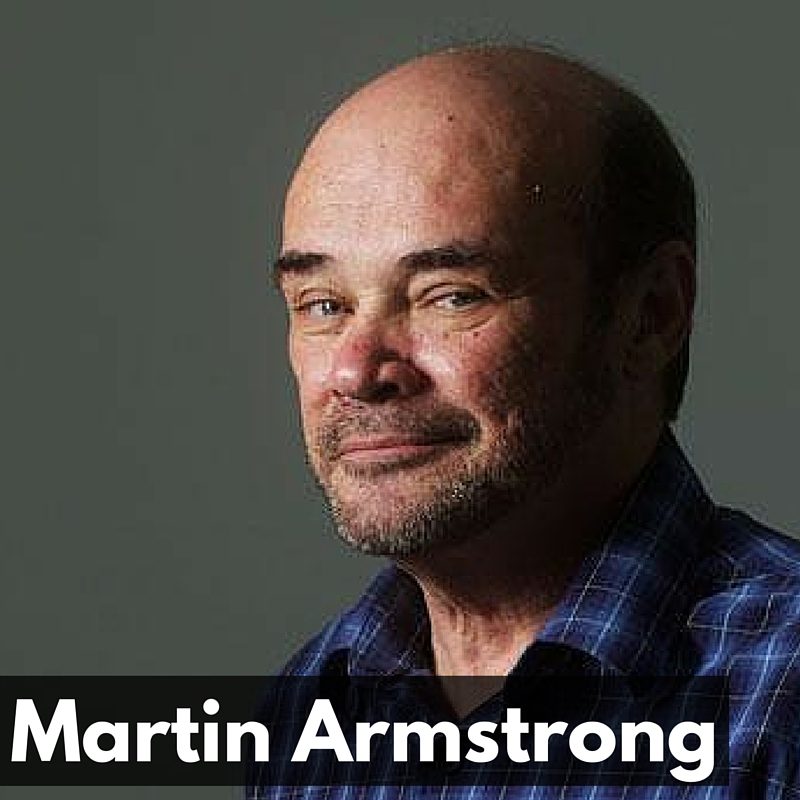
Jason Hartman interviews Martin Armstrong on this Flashback Friday episode. Martin Armstrong is the former chairman of Princeton Economics International Ltd and the developer of the Economic Confidence Model based on business cycles. Martin talks about Putin’s plan to put the Soviet Union back together and his belief that it’s not inflation that destroys an economy but rather deflation. Other topics they covered are: American dollar being a de facto international currency, why the US will never enter hyperinflation, an economic implosion in pension funds, and the real reason behind the recent huge influx of foreigners buying real estate investments in the US.
Announcer 0:00
This show is produced by the Hartman media company. For more information and links to all our great podcasts visit Hartman media.com.
Jason Hartman 0:09
Hey, this is Jason Hartman, thank you so much for joining me. Do you know what day it is? Yes, it is flashback Friday, where you hear the best of the creating wealth show and you hear some good prior episodes, some good review. Remember, we’ve got almost 500 episodes out. And you know what? iTunes doesn’t even hold them all if you’re an iTunes listener, if you are listening on Stitcher, thank you for joining us. So we want to bring you some good review stuff. Now. What’s interesting about flashback Friday, it’s a little scary for me. I got to be very, very candid with you on that. Because you the listener, you get the chance to hold my feet to the fire. Did I make any predictions? Was I right? Was I wrong? I’ve been right about a lot of things, but I’ve been wrong about a few. So you can give me a hard time about that if you wish. But it’s flashback Friday, and we will give you the uncensored Best of the creating wealth show with a prior episode. So let’s dive in. Here we go. Remember, this is not current. It’s flashback Friday.
Announcer 1:22
Welcome to the creating wealth show with Jason Hartman. You’re about to learn a new slant on investing some exciting techniques and fresh new approaches to the world’s most historically proven asset class that will enable you to create more wealth and freedom than you ever thought possible. Jason is a genuine self made multi millionaire who’s actually been there and done it. He’s a successful investor, lender, developer and entrepreneur whose own properties in 11 states had hundreds of tenants and been involved in thousands of real estate transactions. This program will help you follow in Jason’s footsteps on the road to your financial independence day. You really can do it on Now, here’s your host, Jason Hartman with the complete solution for real estate investors.
Jason Hartman 2:12
It’s my pleasure to welcome Martin Armstrong to the show, he heads up a fantastic website with all sorts of fantastic economic data. And his tagline is comprehending the true monetary history of the world. And it’s an essential understanding of the evolution of money for the future. Martin, welcome. How are you?
Martin Armstrong 2:31
Oh, thank you very much. Not too bad. The weather is actually starting to warm up a little bit. Are you
Jason Hartman 2:37
Yeah, yeah. Yeah, this year has been a tough year for global warming. Of course, that’s a snarky comment. Are you coming to us from New Jersey by chance? Or where are you?
Martin Armstrong 2:47
Yes, in New Jersey.
Jason Hartman 2:48
Good. Good stuff? Well, you know, first of all, before we dive into some economic stuff, it’s always intertwined. Of course, Martin, but the big headlines now are Russia and the Ukraine. And, wow, Mr. Putin is an aggressive guy, what what’s your take on the whole situation?
Martin Armstrong 3:03
Well, you have to understand that Putin came out and he said that he thought that the greatest tragedy of the 20th century was the collapse of the Soviet Union. He’s still very old school, in the sense that he thinks that the strength of a nation is how much territory it has. So he is actually even said before all this started that he wanted to see the all the satellites returned to Russia, by 2020. And this is largely his agenda. And, of course, he has a the economy of Russia, is declining along with the other emerging markets. So when you get into a situation like that, honestly, a head of state has two choices. I mean, either he’s going to be booted out by his own people, because the economy is going against them, or he has to find external enemy. And that’s what he’s doing.
Jason Hartman 3:58
And so I mean, finding an external enemy. Is that is that really it? Or is it more just about a land grab?
Martin Armstrong 4:04
It’s, it’s basically it, it’s both at the same time. One, the economy is going against him. So he needs to do that. But two, he actually believes that restoring all this area to Russia will will impress the world. And actually, Adam Smith really said it well and is in his wealth of nations. And the wealth of a nation is not how much gold it has, how much land it has, or anything like that. It’s really the total productivity of the people. And proof of that is Japan. Japan was a tiny little island though, natural resources, and it rose to the second-largest economy in the world. So I mean, if Putin was really economically smart, he would basically let the country you know, boom, and go. But you know, unfortunately, communism fell. And but it was only replaced by oligarchy. So where you have in Russia, if you’ve been there, I mean, yes, there’s plenty of big modern restaurants, etc, but their own, all owned by oligarchs. And you can’t start a small business to compete with mokoia. So you basically just replaced the government with a mafia, and you don’t still have an entrepreneurial atmosphere. And that’s what the Ukrainian people were largely rising up against. I mean, we had three staff members from there. So we know, pretty good connections with Ukraine for for some time, and they were upset about corruption. That’s what it was. And because, you know, the former presidents, two sons were basically trying to bring Russian style oligarchy to Ukraine. And Ukraine, you do have a lot of small businesses in Kiev. And they’re walking in and like the old mafia days and you pay us or you’re out.
Jason Hartman 6:07
You’ve got a, you’ve got, you’ve got to pay the toll. You know, I remember Martin about so six, maybe six, seven years ago, I had a couple of housekeepers, a couple, man and woman who would come in and, you know, they’d clean my house, and I got to talk to them, you know, in depth one day, and then they were Polish. And they said that they owned three very successful nightclubs in Poland. And I said, Why did you leave? I mean, they, they spoke good English. They impressed me with their intellect. And they said, they both had degrees in engineering. And then they own these nightclubs. And basically, the thugs, the mafia thugs said they’d destroy their business if they didn’t pay the toll. And so that’s just the way it’s done. So they, they were fed up with it, they came to US.
Martin Armstrong 6:50
Yes, this is the the core of the Russian way of doing things. I mean, I honestly had a Russian girl that worked for us. And she was going to go back to her mother and she and for the visit for Christmas, and she wanted to go get a fake large diamond ring. I said, what for? I mean, something like, you know, like 10 carats. And she said, if she had that on a ring, then everybody on her hand, everybody would leave her alone, because they would think that she was engaged to some oligarch.
Jason Hartman 7:22
it’s funny, you you would normally think that would be dangerous to have something that looks valuable on you.
Martin Armstrong 7:26
Well, it’s something that big, they would assume somebody important had to give it to her.
Jason Hartman 7:33
Very interesting.
Martin Armstrong 7:34
There’s an interesting boy. Man to laugh at that one. But
Jason Hartman 7:38
Remember, you’re listening to flashback Friday? Our new episodes are published every Monday and Wednesday. Yeah. Well, talk to us about the war cycles. You talk about a 25-year cycle, I believe?
Martin Armstrong 7:52
Yes, war is connected directly into the economy. And there’s been a creation of what it was called the Wheeler Index, which you can see on our website. But we were basically took everything back to about 600 BC, all the activities, how many countries involved? How many people proportionately etc. And so we were able to put that into our computers, and then really develop models often to say, okay, fine, when does this actually occur? And it occurs at a very regular intervals about 25.03 years. And we were able to split it between civil unrest, domestic disputes, revolutions, whether it’s internally within the country, and externally, like in between, you know, international war. And what’s interesting is that this is the first time those two cycles are converging. And they both turned up here in 2014. And so we just had a big conference in Philly. And people flew around the world for this thing. It’s the first time this has occurred in 300 years
Jason Hartman 9:11
The first time what is occurred exactly?
Martin Armstrong 9:13
This convergence between these two models. Last time was in the 1700s, where we had the overthrow of monarchy. So there’s a rising trend globally. Ukraine is just you know, one aspect of it but all Southern Europe, you’ve got down to Brazil, Thailand, etc. What is the common bonds, all these countries starting to rise up and Turkey as well, and it’s corruption. People are fed up, they’re really just fed up with government. And we’ll see more of it here. Our economic confidence model and are predicting again, the next recession should start basically from about October 15. And then that will go down into 2020 so we’re going to start seeing more of that here. And all of Europe is pretty hard too.
Jason Hartman 10:07
I just want to make sure everybody’s following. Seeing more of what here?
Martin Armstrong 10:11
Civil unrest.
Jason Hartman 10:21
Okay, civil unrest. So, people, so you’re saying people are fed up with government around the world. And really government is a proxy for being the environment in which organized crime, whether it be directly government it be done directly by the government, or it’s done by proxy, through the mafia, which the government allows to exist or, in fact, through its policies, encourages, in many ways.
Martin Armstrong 10:36
Yes, like banking and such.
Jason Hartman 10:39
Yes, the banksters and Wall Street and you know, here in the US, we just institutionalize it and make it look so much cleaner. Hardly anybody ever dies, but a few do. We can talk about banker suicides or strange stories like that.
Martin Armstrong 10:54
We don’t call it corruption. We call it lobby.
Jason Hartman 10:56
Right yeah. We call it lobbying. And so by and large, it’s, it’s sort of institutionalized and what kind of white collar here, but around the world? It’s, it’s a little more thuggish, isn’t it?
Martin Armstrong 11:05
Yes. I mean, particularly in Russia, and behind the Iron Curtain, it’s still very much, very thug, you know, mafia type type thing. And they walk in or break your bones. Right?
Jason Hartman 11:18
So so people are fed up with this, but in the US, we seem to be welcoming more government.
Martin Armstrong 11:23
That’s debatable. But I think largely what we have, we have many different conflicting trends developing and in Europe, the taxes just keep rising. I mean, France seems to be insane. But the thing that people are not paying attention to is that we also have like a collapse in education. And in Europe, you have over 60% of the youth, and that’s defined as under 25, unemployed. Cannot find a job. Forbes magazine reported that, you know, 65% of the American students that go to university, they come out with their degrees, and they cannot find a job in what they went to school for.
Jason Hartman 12:07
Right. And when the first question is, why are we allowing maybe it shouldn’t be a government policy? Because I hate to see more government in anything, but just sociologically, why are we allowing students to go get these silly liberal arts degrees that are just useless, they can’t use them? I mean, you know, nobody’s, nobody’s hiring.
Martin Armstrong 12:25
And honestly, it, I’ve, you know, read advise a lot of major corporations around the world, I have met with CFOs of everywhere, and the vast majority, you will find our engineers not trained in with no MBAs. Engineering seems to be the best, because they least teach them how to think out of the box.
Jason Hartman 12:49
And they create real stuff. I love it.
Martin Armstrong 12:53
Right. In economics, they say here are the rules. And that’s it. And if you disagree, you flunk. Most of your social sciences teach you just not to think. Only engineering seems to. And so most of the CFOs that I’ve encountered, have engineering degrees, and it’s almost pointless to go spend all this money to go get a very nice degree in economics or finance and then you have to be retaught.
Jason Hartman 13:21
You know, that’s so interesting that you say that, Martin because I was just watching an interview with Elon Musk, one of my favorite CEOs. And the interviewer asked him, What How do you, What do you consider yourself? Do you consider yourself a CEO? Do you consider yourself a startup guru? And he says, No, I really consider myself an engineer. That was, it was a telling comment to me. That was interesting.
Martin Armstrong 13:45
It is. An engineer is basically taught to solve a problem. How you solve a problem? Well, every time is a different problem. So there’s no set rules, per se, you have laws of physics, etc. But other than that, you know, you have to figure out a way out of this thing. And the other or other sciences do not. And I mean, even, it’s pretty pathetic, but I mean, if even if you look in archaeology, for example, Heinrich schliemann, anybody that’s gone on a tour of Europe, whatever, he’s the one who found Troy, Mycenae, most of the ancient cities. Why? Because the academics said that Homer Oh, it was just a fairy tale written for children. Nobody got up and went out to prove that statement. Schliemann said, No, I don’t think you’re right. And he took Homer went to the place Homer said they set sail to go to Troy. Walks in says, anybody heard of Troy? Yes, over there.
Jason Hartman 14:52
Just a reminder, you’re listening to flashback Friday. Our new episodes are published every Monday and every Wednesday.
Martin Armstrong 14:58
You know, and I mean, I’ve taken home where you walk into my scene. And it’s a basically says turn right and Agamemnon’s buried in a shaft grave down the bottom. And you go there, and that’s where it was. His mask is now in the Athens museum. But you know, your academics that were in Harvard, and Yale and Oxford, they all declared without ever stepping out that it was just a book for children.
Jason Hartman 15:29
Very interesting. Very interesting. Well, you know, Martin, our time is somewhat limited here. But why don’t you talk a little bit more about the economic confidence model, if you would, and kind of drill down on that and, and tell us where we are and what we can expect and, and then I want to ask you a little bit more about some things we might expect before you go
Martin Armstrong 15:49
A bit larger, as everybody has conceded from every even paul volcker wrote a book on it rediscovering the business cycle, he said, and he concluded was about eight years, we’ve basically defined it, it’s 8.6 years to be precise,
Jason Hartman 16:06
Which is the business cycle is eight points.
Martin Armstrong 16:09
It’s a cycle in general. Now, the way it functions is that people largely just, it is really confidence that makes something boom or bust. Like interest rates have been down, you know, virtually zero in Japan. And honestly, the economy doesn’t turn until somebody sees higher interest rates and expects inflation. As long as the average person thinks is going to be cheaper tomorrow, they hold off. As soon as they think it’s going to cost them more. Now they get up and they start going out.
Jason Hartman 16:42
And this is one of the reasons, by the way, that I say that deflation is so dangerous to an economy, as much as I like to rail against fiscal policy. And monetary policy, especially inflation really, as long as it’s somewhat moderate is kind of a good business plan for governments.
Martin Armstrong 17:00
But well, you do need inflation, to keep pace with population growth. That’s mandatory, I think, because if you had $10 in 10 people, in theory, everybody could have $1. But if you now have 20 people and still only $10, as deflation,
Jason Hartman 17:17
We only have 50 cents each,
Martin Armstrong 17:19
Right. So I mean, you have to have, you can’t have it both ways. You can’t have your home improving and value. You’re going to get a raise every year, etc. And at the same time, money’s going to be flat and always have the same value. It’s impossible. Because assets rise, then the value purchasing power of money has to decline, you’re on the opposite side of the seesaw. So it’s it’s always a boom and a bust back and forth. With each cycle that we go through, it moves from real estate one time, then stocks the next time, and bonds the next time commodities next time, then it will go right back again and start all over again, real estate.
Jason Hartman 18:02
That seems to be by design. Yeah, it seems to be by design that it runs that way. You know, it’s like get the people off one. I mean, Greenspan. It just, it seemed like exactly the way he designed it, get them off one thing, get them on another, you know, this thing’s failing. So let’s just switch the gears here.
Martin Armstrong 18:19
Well, the other thing with monetary policy that people you know, I think are not appreciating is that the dollar is the reserve currency. And I know a lot of guys, they owe hyperinflation and such that they’re only looking at United States. And most your third world country issue bonds in ours. Why? Because they can’t sell their own currency. And you have basically Europe is a basket case. China’s really out has surpassed Europe, even in trade now. And but where do you put your you know, where is money? Russian still want dollars? They don’t want rubles.
Jason Hartman 19:03
Can you blame them?
Martin Armstrong 19:06
No. So there is a demand for dollars that is actually beyond our borders. So yes, the Fed could increase money supply and everybody goes, Oh, you know, this got to be inflationary. No, if you look at what China did, they said thank you very much. They had a bond portfolio of US assets that were long term. They sold all the long term and they brought it down to under five. So now they’re below five years. And they said thank you very much. So that’s why the Fed and QE one stood up and said okay, fine, we’re going to help the real estate market by buying in 30 year bonds, that will in theory, create more money, but it will create a shortage in long term. So therefore the the private sector will start buying the real estate and they didn’t. Because they assume that they’re buying the 30 year bonds from an American was trying to assign up to them. So the money went straight out the back door, you know, the global economy is very porous. So, you know, you can’t necessarily run this on theories that were from long time ago, because things have changed. And you can have inflation with no change in money supply. And if there’s a shortage of goods, you know, storm, like Katrina’s something, and the same thing that you you’ll see with anything, if they start getting very bullish on anything, they just decide to start buying, it doesn’t require the Fed to increase the money supply. So it’s a lot more complicated than people suspect. There’s there’s more going on. And it’s global. And we have to look at this as our money supply is actually International. And actually, if you were coming out with the new hundred dollar bills, you flew International, they would have little ads coming on, you know, the old hundred dollar bills are still good, but you don’t have to worry.
Jason Hartman 21:11
Right, right. Right. Yeah, very interesting. Well, I mean, but that’s nothing new, that America has been for a long, long time, the so-called Brinks Truck of the world. And the dollar has been certainly the reserve currency for a long time. And, you know, people debate whether that’s a legit,
Martin Armstrong 21:29
Well, the name, the biggest problem is not how long it has been. The problem is what’s happening to the all the other players?
Jason Hartman 21:36
Yeah, right. Right. That’s why I say it’s relative. It’s a race to the bottom with these, right?
Martin Armstrong 21:41
So basically, they’re collapsing first. US will eventually have its problems. But the same thing in the Great Depression you had in 1931, you had all of your basically default, except for France, Britain went into a more moratorium. I’m talking about permit defaults on their on their bonds, most of South America defaulted, and so do China. So the US is the last one largely standing in the tower went up dramatically in value. And US politicians didn’t understand what was going on. So that’s that started protectionism. And then the dollar, Roosevelt when he finally realized, oh, okay, fine, it’s ours to over to overpriced because everybody else was down. That’s when he basically devalued the dollar and confiscated gold. So that brought the dollar down. But if we have that same problem going on globally, right now, so it’s, it’s largely an issue of. Europe got rid of all these individual currencies, and they went to the Euro, but then they didn’t have a national debt, they left every country with their own, and that was crazy. And that’s why that’s been falling apart. So by default, the dour is becoming almost the only world currency. Because you, you largely have problems. I mean, you can’t use the one, you can’t use rubles. Europe never created a currency, a single currency that would last because you have to have a single national debt in order to absorb money. And that’s what the whole problem is with Europe. Canada, Australia, they’re just two tiny markets. So you know, unfortunately, the only place to go is the dollar, and we have a large national debt. True, but that means also that capital can be absorbed, you can call up Britain and say, Gee, I want to buy you know, $2 trillion worth of bonds, you know, they just don’t have it. So the Dower ends up becoming being pushed up as it was in in the Great Depression. And as that happens, that creates more deflation. And so it’s actually deflation, that that destroys the economy, not inflation. The idea of hyperinflation, etc. But if you look at that, that really only goes to revolutionary-type governments. Like Germany was right after they got rid of the Rose, a Bolshevik, basically revolution. United States, we had it right after, you know, that was the Continental currency, French, etc. So that largely comes after war. And its hyperinflation is associated largely means that the government prints because it cannot sell bonds. Nobody will trust it. So we’re not at that stage.
Jason Hartman 24:42
Well, people say your people say we’re getting close to it. I mean, you know, at some, at some point, why don’t we have a boycott on our bonds? Because in the reason just to make sure people understand this, at least from my perspective, but chime in, is that if you buy a US bond and the dollar is inflated, its value is inflated away, then you get paid back on that bond in cheaper dollars. So it’s a bad deal for the investor in the bond, or a lender of any sort, which really is all a bond is alone. So is there any real fear of people not buying our bonds? Or is that just a long way off?
Martin Armstrong 25:21
Not yet. That, I mean, and what you’re saying is basically applicable to everything. And it’s been that way since World War Two, but hyperinflation is more is defined as 400% per month. So we’re not we’re not anywhere close?
Jason Hartman 25:38
Well, because I, you know, I’ve been searching and there’s just no academic definition for hyperinflation. But 400% a month, mind you, that’s still a lot lower than Zimbabwe was. Yeah, that’s amazing.
Martin Armstrong 25:51
Yeah. I mean, you had Hungary, you had Germany, and there have been, but they’re all Third World type countries. You don’t have the core economy, which is the United States go into hyperinflation, because what would happen is, is that, number one, the corrupt bankers would prevent it. But our problem is deflation. And, and why I say that is that what’s happening is they keep raising taxes, and the raising enforcement. So for example, the 2011 law that they put in, and Americans had been thrown out of banks everywhere. And that forces them to also bring their capital back home. So you can’t invest overseas. Unless you’re a multinational. You can even start a business over there.
Jason Hartman 26:41
Oh, no, I agree. I mean, if you’re an American, and you try to do business overseas, which means you’ve got to form an entity probably and open a bank account. It’s like you have a scarlet letter. Nobody wants to let you,
Martin Armstrong 26:52
They will not let you open in the bank. Yeah.
Jason Hartman 26:55
And so so that really has created not only, you know, a way for us to tax more, and to make sure that there’s not a lot of tax evasion, but also to repatriate your dollars.
Martin Armstrong 27:09
Well, I think that the bureaucrats aren’t quite that smart. They’re just looking at for taxes, and they assume anybody doing anything overseas is illegal. And they don’t realize what they’re doing is they’re destroying the world economy, the velocity of money has been collapsing since 07. And it has not turned back up. So that’s part of the deflationary cycle. And so what we have is really serious problems here, you have, you’re going into deflation. And, you know, you had the head of the IMF come out and say that your problem is low inflation, they have to, you know, actually increase money supply, but that’s not going to change it. You’re going to increase the money supply. The question is confidence. If people don’t believe that they’re going to be able to do something with it in the future, it doesn’t matter. We ran correlation studies, for example of interest rates and the stock market. So okay, fine, dude, higher interest rates, prevent the stock market or make it peak? Answer’s no. 1899 call money rates peaked at nearly 200%. The biggest stock market rally was 1929. And they and they peaked at 6%. What it is, is that it’s the differential that counts. If you think the stock market is going to double next year, and I say, Well, I want 20% interest, you’ll pay it. But if you think the stock market’s going to go up 5% and I say I want 5%, you’re going to say no. So it’s what there has to be something left on the table that you think you’re going to make an order to borrow. And that’s the key, is when the expectations reach whatever level of interest rates are, then the market will crash crash. So that’s why the stock market’s never peaked with the same level of interest rates twice in a row. It’s always different.
Jason Hartman 29:06
So is it fair to say that you’re somewhat bullish on the dollar?
Martin Armstrong 29:10
Well, yes. But what’s happening, you have to understand is what actually makes the economy go down. And that’s deflation. And what is deflation? deflation is the rise in the purchasing power of the currency. So as the capital from this new taxation haunted they’ve been going on, Americans having to pullback their money and pushing the dollar up, will actually create what a lot of people keep saying, oh, there’s a collapse a class, but the class doesn’t come from inflation. It goes from deflation. That’s where how all the great empires collapsed, Rome included. And if you look, for example, like the difference between gold and other assets is quite significant. And in a hyperinflation, everything goes up. All right real estate, art, whatever, and but the society, the entity still lasts, it’s still there. So Germany collapse, but okay, fine, the country was still intact. The difference is, is when the country is not intact, alright, for example, like the Russian Revolution, etc, That’s when gold becomes rises when the others don’t. And the difference is it’s a movable asset. And this is what happened to Rome, they kept raising taxes and taxes and taxes, to the point that people just walked away from the houses. You can’t take it with you, where you can at least take gold or something like that with you is that that’s the distinction that people have to understand. So gold is the hedge against government. But it’s not the hedge per se, against inflation. Everything becomes the hedge against inflation, including your wages. So there’s
Jason Hartman 31:05
There’s an end, you know, within and I want to say something, you know, what the best hedge against inflation is, it’s not gold, it’s debt. Long-term fixed-rate debt attached to a commodity. And the one I like is real estate in terms of income property that produce income, because that debt is debased by inflation, so you pay the debt back in cheaper dollars, but the debt is, is also tied to commodities. And when you look at the commodities that are the ingredients of an apartment building or a single-family home, that you rent to somebody else, number one, you’ve outsourced the debt to somebody else, so you don’t even pay your debt, the tenant does. But number two, inflation pays the debt off for you so that tenant and inflation are both paying the debt. And number three, the commodity, the ingredients, the lumber, the petroleum products, the copper wire, the glass, the steel, the concrete, you know, all of those things, as well as the energy it takes to build them all, are hedged against inflation pretty well.
Martin Armstrong 32:09
Yes. I mean, this is why the big institutions can’t buy gold. Gold is more for the retail market, mainly because it doesn’t pay interest.
Jason Hartman 32:19
Right? It has no income. And so let me just contrast
Martin Armstrong 32:22
Right. They need income.
Jason Hartman 32:23
Yeah, exactly. And that’s a very good point. Martin, I love that you mentioned that. Because when you look at the real estate asset class, and when I say that I mean income property only not one’s own home that they pay their own debt for. In a deflationary environment, it also works well, because in a deflationary environment, you know, investors are running anywhere they can to get yield, and you just can’t get yield. Of course, gold doesn’t produce income. Silver doesn’t produce income. But we’re in an in an era era where, you know, interest rates are zero to 1%, which is what we have now, where are you going to get yield, you got to get it from somewhere. And cash flowing real estate is about the only only real place.
Martin Armstrong 33:04
This is also why the stock market’s rising. Because the pension funds were based upon models where they anticipated they needed a percent where long-term bonds used to be. And they’re mostly going into insolvent. And we have a think after 16, you’re going to see the next crisis won’t be real estate will be pension funds,
Jason Hartman 33:26
Or student loan debt
Martin Armstrong 33:28
The most of our. Well, most of them are basically insolvent. But that’s why long-term debt has collapsed in price because there’s too much money out there and pension funds trying to lock in something long-term. So they bid interest rates to the point, they can’t even function anymore. So now, they need to go out. And that’s why you start seeing the stock market rising and real estate. exactly the type of property you’re talking about. I’m not talking about the homes in Detroit, but you know, income-producing, you have foreigners coming in buying the top properties in New York, Florida, California. But that’s largely because they’re trying to get capital off the grid outside of Europe.
Jason Hartman 34:10
Right. They’re looking for the Brinks truck called America.
Martin Armstrong 34:13
Yeah. And you have the Chinese doing the same thing. And so they’ve been buying up and South Americans property in Australia, all the foreign property, things of this nature. So they’re hedging into their currencies. And this is part of the whole issue here that emerging markets look like they’re going to continue to go lower into about 2020. And the more geopolitical problems we have emerging with Korea, we have China and Japan rattling sabers back and forth at each other. And then you have Putin on this quest to reestablish the Soviet Union. The only other place for for capital go is United States. That’s what happened with World War One. And it happened again in World War Two and looks like it’s happening again. And people should keep in mind that United States was actually bankrupt in 1896. That’s when JP Morgan became famous, he organized a loan for 100 million dollars in gold. So from 1896 to 1914, World War One, we became the number one, number one economy. And then at the end of World War Two, we ended up with 76% of the entire world gold reserves. So we were the breadbasket and the arms dealers.
Jason Hartman 35:34
The breadbasket and the arms dealers of the world. Love it.
Martin Armstrong 35:37
And it looks like it’s coming back again, the one just, you know, advantage of the United States is that we really cannot be invaded by land. Okay, they got to get a lot of people on boats. And so that has always tended to be the difference. Whereas Europe, you know, if Russia wanted to, you know, run tank down the powers, they can probably do it in less than a month.
Jason Hartman 36:07
We’ve got, we’ve got the luck of geography, but we’ve also got the largest military on earth by a longshot. And, you know, as much as it, you can argue that it’s built on a house of cards, we do still have the largest economy. But you know, other economies are built on a house of cards, too. It’s not like we’re the only one
Martin Armstrong 36:24
This is largely, it’s like, you know, the question is, who’s the the prettier of the two ugly, you know, the twins, that’s about it. And we’re, we’re, we have the largest economy, we still do have the lower tax rates, which has been improving it. But that’s been our primary advantage. And we’ve been less socialistic over the years, as far as determining who can open up businesses, anybody’s free to open up a business. I mean, now it’s can you afford it with all regulations, but nobody’s there to come in, like in Russia and say, No, you can’t do it.
Jason Hartman 37:02
Right. Right. And technically, even though the regulatory burden is higher, technology has made it a lot less expensive, and a lot more accessible for more people. So it’s, it’s like you trade one for the other?
Martin Armstrong 37:14
Yes. Well, I mean, our own business, I mean, you know, wherever we were, we tend to be counted as the most expensive in the world, largely because, yes, when we began, our reports, were going out by telex. So it was 50 bucks, in Russian union fees to send a telex from here off to Europe. So it was very expensive back then. So only the top institutions could even subscribe to it. And then faxes came, so it goes from 50 bucks down to three quarters. And now, you know, basically, it’s out by email. So, now we have, you know, clients all over the world, that the cost of communications is gone from 250 grand a year, just to access us, we’ll forget what you’re paying us to zero.
Jason Hartman 38:09
Well, very, very good points. So the website is Armstrong, economics. Armstrong, economics dot com. And this has been a fascinating conversation. Just anything you want to say in closing before you leave us.
Martin Armstrong 38:21
Now. I think that pretty much is it. I mean, it’s it, we just have to realize that it’s a global economy, we are all connected. And one change in something over in China does impact us and impacts Europe, so it’s not purely domestically driven.
Jason Hartman 38:39
Very good points. Well, Martin Armstrong, thank you so much for joining us today.
Martin Armstrong 38:42
Oh, thank you for inviting me.
Announcer 38:50
This show is produced by the Hartman media company All rights reserved for distribution or publication rights and media interviews, please visit www dot Hartman media.com or email media at Hartman media.com. Nothing on this show should be considered specific personal or professional advice. Please consult an appropriate tax legal real estate or business professional for individualized advice. opinions of guests are their own. And the host is acting on behalf of Platinum properties, investor network, Inc. exclusively.