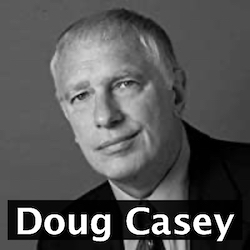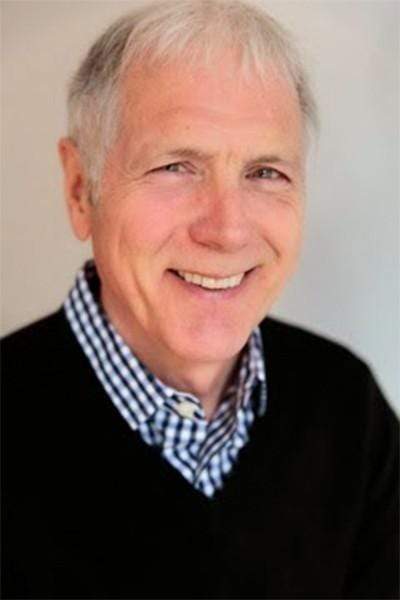
In this Flashback Friday episode, Jason Hartman describes the different real estate investor markets, comparing Little Rock, Arkansas, to Chicago and New York. Then, he welcomes Matthew Hart, author of Gold: The Race for the World’s Most Seductive Metal. Matt shares his opinion on the gold rush and analyzes the use of technology in gold prospecting and diamond manufacturing.
Announcer 0:00
Welcome to this week’s edition of flashback Friday, your opportunity to get some good review by listening to episodes from the past that Jason has hand picked to help you today in the present, and propel you into the future. Enjoy.
Announcer 0:16
Welcome to creating wealth with Jason Hartman. During this program, Jason is going to tell you some really exciting things that you probably haven’t thought of before and a new slant on investing fresh new approaches to America’s best investment that will enable you to create more wealth and happiness than you ever thought possible. Jason is a genuine self made multi millionaire who not only talks the talk but walks the walk. He’s been a successful investor for 20 years and currently owns properties in 11 states and 17 cities. This program will help you follow in Jason’s footsteps on the road to financial freedom, you really can do it. And now here’s your host, Jason Hartman with the complete solution for real estate investors.
Jason Hartman 0:58
Welcome to the show. This is your host Jason Hartman. This is episode number 419. Our guest today will be Matthew Hart, as we talked about gold, the race for the world’s most seductive metal. I like to talk about this kind of stuff, because it’s such a good barometer for so many things when we deal with dollars when we deal with euros when we deal with yen, when we deal with any currency, any fiat currency, that is a fluctuating thing. And it is not a very consistent measuring stick. But we actually love this. It’s great because we exploit this to our advantage as real estate investors. So that is a wonderful, wonderful thing. And I’m coming to you today from Little Rock, Arkansas. It is Sunday evening. And we just finished our weekend property tour had a great time. This was kind of a smaller tour for us, you know, it’s a small market, a small city. So it didn’t attract the normal 4050 people that come to a property tour we have I think 22 people at this one, it was just an awesome time. So Saturday, we did the creating wealth seminar, we spent several hours going over all these different scenarios that might impact our financial future, whether they be inflation, deflation, or stagnation, and how we can play the game correctly to win regardless of the economic scenario that we face. So that was very interesting and very enlightening. And we had a great time doing that. And then today’s Sunday, we went out and we looked at a whole bunch of properties. And we shared a bunch of meals together. Yesterday, we had breakfast, lunch dinner, we had a great dinner last night and then a great lunch today. At a Japanese restaurant. I thought it was kind of funny. Here we are in Little Rock and we’re going out for Japanese food. Not exactly what Little Rock Arkansas is known for what it is known for as being the most landlord friendly real estate market in the country. It’s the most real estate investor friendly market. Yesterday, we had the property manager come in and speak to us for I don’t know, maybe about 2025 minutes or so she talked all about how it is very, very landlord friendly, and talked a little bit about the audio that I played on a podcast several episodes ago about how Arkansas is the only state in the country where a tenant can face actual criminal charges for non payment of rent while they’re holding over the property.
And I think that’s pretty harsh. I wouldn’t recommend that any landlord pursue that type of thing. However, it does work as a lever to get people to behave and fulfill their agreements. And if someone isn’t paying the rent, they got to get out. Society is based on people keeping their word and living up to their agreements. If we don’t have that, we have chaos, we have anarchie. So that was very interesting. And we got the real scoop the real details on how that happens. And it was just amazing how low the vacancy rates are. And the corollary, how high the occupancy rates are here, and how easy it is to get properties rented, and how easy it is to have cooperative tenants because they pay their rent here what a concept and if they can’t pay, they move. That’s very refreshing. When a lot of our clients come from much more socialist markets where the landlord doesn’t get any respect. You know, the landlord is looked at the big evil investor they must be super mega rich, they must be a billionaire because they own a property and God forbid they expect their tenant to actually pay them as they agree to in the lease. What a concept, right? those markets where it’s very, very tough to do business for landlords are playing is like California, New York, the City metro area of Chicago. Those are places among others. There are others in the northeast and so forth where landlords just don’t have any rights. And one of the things we look for besides a good diversified employment base, a good appreciation, potential and nice community, all of the factors that I present in the creating wealth seminar, as what I call the lucky 1313 is generally thought of to be an unlucky number. I’ve identified 13 characteristics, you can get this in my creating wealth home study course, if you haven’t been and come out to see us live at one point, you can get those lucky 13 there and really learn about those factors that make a market desirable for investment for landlords for real estate investors. And little rock it just such a pleasant, clean, wonderful town. Last time I was here, I felt the same way I did this time. Friday night, I went out to just a wonderful dinner if this gorgeous new restaurant called cash. It’s brand new, it’s absolutely stunning. I went out with one of our clients on Friday evening, and after just a fantastic dinner, we walked around and we went to the waterfront area, and it’s just beautiful here, it’s so clean, I cannot get over how clean it is. And the comparisons that come to mind are one place I used to live in. That’s Irvine, California, a super, super clean city. Another one is one I’ve been to twice and I just visited a couple of months ago, and that is Singapore, Singapore. If you if you spit on the sidewalk, you’re going to get a $500 fine. I don’t know maybe you’ll go to jail or get a lashing.
Remember that story about what was it that what was his name Michael Fay, I think years ago that during the Clinton administration, he was some crazy kid who vandalized some cars there and they lashed them. Listen, I think that’s barbaric, obviously, but it shows you the reason Singapore is so clean, and everything is so orderly, it’s because they take this stuff seriously. And I would have those three cities Irvine, Singapore, two of the cleanest cities in the world, I would put little rock right up there to just a gorgeous, gorgeous, smaller city really had it just a wonderful time here this weekend hanging out with our clients, learning, looking at properties, discussing issues. Be sure if you haven’t done this, come to one of our events, meet our clients, we have lots of repeat clients that come to these events. And you can talk to them, you can hear the good, the bad, and the ugly, we’re very transparent about all this stuff. And it really gives you a chance to meet our clients. So here’s what I’ll say about that. We’re gonna see if we can get one more creating wealth seminar and property tour in before the end of the year. I’m not sure where it’ll be yet, but we’ll announce that as soon as we get it figured out and get it planned. And then of course, in January, as usual, we’ll have our meet the masters of and our annual event, where providers and experts on a variety of topics fly in from all over the country. And that’s a two day event. Lots of speakers. And that’s the one where you I’m not speaking the whole time. The experts are I’m sort of the emcee. And I’m introducing people and I’m doing two or maybe three sessions, three of the speeches, two or three of the speeches during the meet the Masters event, but mostly it’s other people, it’s our experts in our providers, you’ll get to meet the masters at that event. And we’ll announce that soon. And that should be slated for January as usual. So please come and join us for one of those. Now, before we get to our guest today. This just broke. This is a big, big story.
Okay. If you listen to NPR as a couple of our clients do, I’m not a huge NPR fan, I do listen to it sometime, you know, I find it a little bit slow and wonky for my taste and not kind of fast and hard hitting enough. But they do have some good stories from time to time, some good in depth stories. And on their program, This American Life. They talk about the secret recordings of Carmen ciguatera. And I will see if we can get Carmen on the show in the future. But this is really mind blowing. When you look at the relationship of these, basically, and I’m gonna say it Wall Street, the modern version of organized crime. And, you know, it’s really hard to debate me on that because we all know it’s true. Even all of the guests I’ve had on prior episodes, who are Wall Street people, they know it’s true. It’s just disgusting. What goes on at the highest levels of our government. Our central banking system at Wall Street and Harmon went in She felt a bunch of things were wrong. And what she did is she went and she recorded secretly a bunch of these meetings where she thought things were inappropriate and things were wrong. And it just, although I haven’t had time to fully digest this yet, I’m just diving into it this afternoon. But she really, really discovered a lot of things about this cozy relationship of how the Fed and the banks are basically conspiring together. There’s just no real oversight. And I gotta tell you, this is true in a lot of industries. In the Bar Association, the Bar Association bills itself, I guess, as an agency that is there to protect consumers to give consumers a recourse against bad apple attorneys that do bad things. And what you find in reality a lot of times, is it’s nothing more than a club to protect these lawyers. Okay, you find arbitration, who I that I think is a complete scam, and we’re going to talk about that more on upcoming episodes. And you’re going to learn about why you want to avoid potentially, these arbitration clauses and contracts and how you lose a lot of your rights.
So look for more coming up on that. But there are so many of these things in our society, where you don’t even realize your rights and your recourse and your prosperity. And you know, all kinds of things are just being taken away from you, left and right. So we’re here on the show, as good investigative journalist to expose these Shams so that you understand them, and you can act accordingly to protect yourself, let the buyer beware. And the buyer is really anyone it’s all of us. in society. we’re engaging in transactions, with companies, with businesses with other people. And we don’t realize how our rights are being diminished, and our recourse is being diminished. So this Carmen signera thing is really, really mind blowing. It’s a big, big story. Okay, so more on that on future episodes. Let’s get to our guest today. Without further ado, going along here, let’s talk about the economy, and the metals, and why they are important and why it’s important for us to understand this stuff, as investors and really just dive into it. Okay, so we will do that. Let’s get to our guest today. We got a lot of great stuff coming up on future episodes, too. So keep listening. And here is our guest.
It’s my pleasure to welcome Matthew Hart to the show. He is the author of gold, the race for the world’s most seductive metal, as well as some other books on diamonds and gold. Matthew, welcome. How are you?
Matthew Hart 12:48
I’m very well, thanks.
Jason Hartman 12:49
Thanks for having me. Good. My pleasure. And you’re located in New York today, right?
Matthew Hart 12:53
Yes, I am.
Jason Hartman 12:53
Fantastic. Well, gold certainly is a seductive metal. It’s just so visually appealing, so unique in its yellow color. You really chronicle the mining issues or around the world. And I want to talk to you about whether or not we’re in a gold rush. And what’s the state of the world as far as gold goes nowadays?
Matthew Hart 13:12
Well, when you say, reading a gold rush, I believe that we’re ending, what was the greatest gold rush in history, because there was gold exploration everywhere in the world on every continent except Antarctica. Now when we think of a gold rush, we generally think the classic Gold Rush like California, in California, they mined 850 tons of gold in 10 years. Today, we produce 150 tons of gold in three or four months. And there’s a ton of the California Gold Rush. That was a stupefying amount of gold 150 tons. today. You know, it’s a drop in the bucket gold is a $20 trillion a year business. But I call it a gold rush because there was unlike California, it was the sort of classic gold rush that people in the in the business call an area play. In other words, someone finds gold in a given area, and then everybody else rushes there and big Sybil here. It was price driven. So it was that the price converted all kinds of marginally perspective, land in various parts of the world into suddenly heartland because where gold was worth $800 an ounce. In, say 2008. At the time, Lehman Brothers collapsed. gold price shoots up, and in less than three years, it’s worth 19 $100 an ounce. So that makes all kinds of gold targets all over the world. All of a sudden, grounded was not worth exploring before, is suddenly very worth exploring. And that’s what created this phenomenal Gold Rush where they were drilling everywhere. They were going back to old mines that had been closed and reopened and the technology is so much better
Jason Hartman 14:57
nowadays. You know when you made the comparison to the The amount of gold being mined today, within three or four months versus 10 years during the California Gold Rush, it made me think of I couldn’t help but go to the oil and natural gas situation in my mind and think of fracking has made so much more of those commodities accessible to us. And I think ultimately will drive down the price, we might for the first time really become a major major exporter of those products. What’s going on with technology in terms of gold mining,
Matthew Hart 15:29
some of the biggest advances in technology for gold mining have to do with recovery in the last year, the 20th century, they developed to a very large extent, the heap leaching, and heap leaching very low grade ore is profitable, because it doesn’t have to be treated in a plant. They just keep it up and leach out the gold was cyanide, a cyanide solution leeches out the golden then the capture the cyanide and put it in tailings pond. And it’s I know, it sounds very horrifying cyanide but but it degrades in sunlight quite quickly. And I know in Nevada where they do a huge amount of heap leaching. In fact, you could say that Nevada, the success of the Carlin trend is to a large extent because of heap leaching, which made a lot of the margin lower, very, very profitable, or in the fact that the environmental people in the state, they’re the land and water, people in the state have told me that it’s just not a problem. They don’t have an issue with cyanide, they have other environmental issues. Most they have to do with dewatering. Because the mines go deeper, because they have to pump them out. And a lot of that water doesn’t get back into the aquifers it’s pumped from it just evaporates. So there’s a lot of water loss from the Great Basin. And I think that’s the environmental issue. But to me, that’s the big one that heap leaching has made marginal, low grade or profitable.
Jason Hartman 16:56
And is there anything else on the horizon? I don’t know if you ask someone in the the oil industry before the advent of the newer technologies, if they knew that, because of course, we’re always somewhat surprised about the next technology. But is there anything that’s foreseeable Matthew? Well,
Matthew Hart 17:12
I guess some exploration techniques are better. But I think you might be looking at different locations for finding gold, for example, under the sea, there are companies now that have developed submersible prospecting systems and the Chinese, in fact, for building a bunch of these small submarines. And again, the Chinese have licensed a very large area, some ridges, I believe, in the Indian Ocean, that they’re going to explore. But there’s a Canadian company called Nautilus aside of, they’re located in Toronto, and they had target somewhere near Papua New Guinea, I believe they are under their sort of volcanic fence under the sea, and very rich in certain minerals. And they had a gold target there. That was very, very rich. And in fact, I think they had a mining plan that they’ve got on angles to reach an agreement. The latest I read with the local government, there’s Anyway, there’s gold under there. And the fact that the Chinese are interested means that if it’s if it can be got out, it will be got out because they are now the world’s biggest gold consumers, as well as the world’s biggest coal producing country.
Jason Hartman 18:21
Do you have any concern? And I know you made the disclaimer before we started, Matthew, that you’re not a gold bug, per se. But obviously, you’re very interested in the topic, having written two books about it. Do you think any of these new exploration or mining technologies will put some downward pressure on the price of gold?
Matthew Hart 18:37
No, I don’t. Because I don’t think that’s what we put pressure on the price of gold, because we’re always consuming the supply. We’re always giving up their reserves. So mines are always becoming potentially less rich. With every day they mined, so you have to find new reserves all the time. I think the gold price is a is driven by human affairs. I mean, yes, I know, there are technical analyses of the gold price and very qualified people who measure the amount of gold, you know, gold supply coming into the market and markets demand and all that but I think fundamentally brush that aside and get down to the core driver of Gold’s value, because why should it be worth anything at all? It’s this feeling that ultimate that it’s an absolutely indestructible asset, because we’ve always thought it’s been an asset man has always regarded gold as valuable. And I don’t see that changing. What started the bull run in the first place. The big bull run in the price was a general failure of confidence in other asset values, such as mortgages, equities, even currencies, so that when by the time Lehman Brothers collapsed in 2008, and really keep the afterburners on under the gold price. The goalposts had already been rising for like five years. So I could see that happening again, if you get into a six tuition. Well just look recently what happened when the Dow plunged because all of a sudden investors were very nervous about the emerging economies. The economies are developing countries that seem to be rather uncertain right now. So what happened? Well, the equities all fell down, gold went up again. $15. So I think gold is a measure of where we are in our feelings about how the world is going. If people are tranquil, then gold tends to steady down. It’s the fear investment. And it’s also the lack of faith and currency investment.
Jason Hartman 20:36
So no question about that. I agree with you. What do you think has been the effect of ETFs there are many people out there saying and I don’t know if you have any of these slightly conspiratorial thoughts about it. But that the ETFs this is kind of a Ponzi scheme, because the gold isn’t really there, you know, the physical gold,
Matthew Hart 20:53
no conspiracy theorist about it. But I don’t think you have to be a conspiracy theorists to look at the ETF scene as the corner of your eye. Because the ETFs bring a lot of volatility to the market, simply because they allow so much gold to be traded so quickly. For one thing, they allow people to buy in quickly enough people that sell very quickly. So full price seems to be just as a real price starts to go down, it’s easy to sell, it’s easy to unload your position. Let’s say you have a holding like a spider, well, then at the end of the day, the ETS have to rebalance. And by the way, the report is ETF selling brings down the price. And then at the end of the day, the ETS have to rebalance by actually buying or selling the amount of bullion selling in the case of sellers to rebalance their share position. So it matches up with the bullion they have. So then they sell bullion. And that’s what you just dumped into the market in one go. Because that’s what they have to do. So that tends to intensify the swing, it doesn’t cause it, but it intensifies price movement. So price movement, I believe anyone in the gold market would agree price movements are intensified by the ETFs. Now whether they have the gold or not, does the spider have the gold, they say it’s all unallocated accounts, meaning that their gold is held separate from any other goals. And you can go online, of course and onto their website and navigate through and see what purports to be a picture of their gold. And then you can also look and see the bar numbers have it all. If you believe in conspiracy, then you think that’s all bunk? And have I actually looked at it No. And Has anybody gone in there and drilled the bars to make sure that they’re still go? No. So you know, it’s, I understand people have misgivings, probably rightfully so
Jason Hartman 22:41
whatever Wall Street gets involved, it creates so many smoke and mirrors in any equation that everything becomes murky and engineered. And it seems like the simple basic laws of economics, like supply and demand, they become very masked by these products, these financial innovations as they call them. Talk to us a little bit, if you would, Matthew about what you think makes gold so fascinating. And so fickle.
Matthew Hart 23:07
You alluded to that before. Well, fascinating. It’s only quite recently, reasonably recently that we had any ideas the antiquity of our fascination with gold, and in 1972, a backhoe operator in a town of Varna, on the Black Sea coasts of Bulgaria, on earth and Neolithic tomb by accident. Now, he was just a backhoe operator, he was digging the foundation as you put an apartment building, when by accident, as I say, he enters his tomb and I said for the archaeologists, they opened it up. And inside was this treasure of beautiful little gold objects and any of your listeners can just go online type in Varna var na necropolis or Varna gold. And you’ll get all kinds of images of what they found. I had a catalogue from the little museum that they built out upon a museum. It’s got these beautiful little gold nuggets, they dated them 6000 years old, Neolithic men and women. Were treasuring these gold ornaments and making beautiful little ornaments. 6000 years ago, that’s at the dawn of our civilization. That’s before writing. It’s before Egypt, you can get going, the very Dawn of our tradition of civilization, people character. So you can go back to this question. Why do we value it? writer after writer has struggled with this, including great economists and thinkers in the best integrated motherhood, which seem always to have, it seems to be hardwired into the human brain. I mean, the gesture from the economist at Berkeley who wrote the golden constant, the book that studied the relative purchasing power of gold over over centuries, that he thought it was a race memory. So somewhere back there, somewhere back there, glittering this impression that gold made on our very distant ancestors. In probably a brutish world when they just picked it up this little lump of something that never corroded or rusted, was malleable, they can shape it into anything they wanted. So that hasn’t gone away. I wonder if Bitcoin will stand the
Jason Hartman 25:23
test of time like that?
Matthew Hart 25:26
Somehow, my feelings? No, I don’t have anything against Bitcoin, it’s it’s what it is. I don’t have the interest in it. It just doesn’t have this huge cultural range goals,
Jason Hartman 25:38
these companies that are talking about sending probes to asteroids to mine them. This seems like the most far fetched, incredibly expensive idea ever. But apparently, it’s maybe it’s not a spacecraft that would go and mine metals from heavenly bodies and bring them back to Earth. That just blows my mind. I’m sure you’ve read about this. I mean, there’s one company that’s raising money. And I don’t know if they’re near an IPO stage or not, or if they’re, they’ve already done it. But it’s, it’s amazing to me, I mean, I can’t believe that would actually pencil out?
Matthew Hart 26:17
Well, I don’t I have no idea. I’ve never seen that sort of the math on it. But things I guess, tend to seem less absurd, the further we get on in time, certainly if they do manage to figure out some way that they can retrieve this very heavy metal, I guess it wouldn’t be heavy in space, what they were doing nothing to get it back into earth without at all just sort of blowing up or something. Or there’s a lot of goals out there that we do know. I mean, NASA, just in June, released this very interesting thing. In fact, one of the one of my interviewers told me about it, I went up and looked it up, look it up online. And NASA had observing this distant stellar event in which stars had collided, or there was some kind of explosive event Far, far off in the galaxy. These very, very, super heavy metals were created, and including gold. And the they could measure this, how exactly I’m not sure, but they have ways of measuring matter in this space. And the scientists said it would be the equivalent of 15 Earth sized planets, but solid gold for that difficult price. Wow,
Jason Hartman 27:32
that is amazing. Investors and speculators alike, they really have to consider this, don’t they? This may not actually be that far off, there may just be a massive abundance of this. The thing that makes it valuable is its rarity. Maybe gold isn’t the thing for the next 20 years, it might be the next thing for the might be the thing for the next five years.
Matthew Hart 27:53
I think the space mining is probably a fairly long way out. But looking at other sources like undersea mining, that’s not so far. But on the other hand, other other big deposits will run out. I mean, look at South Africa. So that’s what you know, the Witwatersrand gold deposits 40% of all the gold ever produced in the history of the world comes from that single deposit. And they’re certainly running down. So these big gargantuan deposits come to an end. I don’t know what the I don’t know what the predictions are for the life of the carbon trend. Certainly those mines are big Navy announced a year bruisers down there. But how long can they go? eventually they’ll have mined the last ounce of gold Well, I
Jason Hartman 28:34
don’t know if the last ounce of gold are the last barrel of oil will ever be mined? Because it’ll cost $2 trillion for the last piece,
Matthew Hart 28:42
well there you are also becomes a totally a function of price, doesn’t it? I mean, what, whether we run out of gold or not depends on the price of gold that gold has filters up to $10,000 an ounce put us an awful lot of ground here that sell a sudden becomes a goldmine. Yes, that’s for sure.
Jason Hartman 28:59
One more issue along those lines along the supply lines I’d like to ask you about is you wrote a book about diamonds. What is the title of that book?
Matthew Hart 29:07
It’s called diamond. The history of a cold blooded love affair
Jason Hartman 29:10
you profiled a new diamond discovery in Antarctica isn’t that correct?
Matthew Hart 29:15
in the Arctic in the in the in the Canadian Arctic? Okay, the Arctic wrong polar cap.
Jason Hartman 29:20
Everybody has long criticized De Beers for monopolizing the diamond market and so forth. But one thing that’s interesting is I was reading an article a few years ago about how they’re making diamonds in the laboratory now and they’re the real mean they’re not you know,
Matthew Hart 29:34
fake.
Jason Hartman 29:35
This is an actual diamond. It’s just made in a laboratory. Any thoughts about that?
Matthew Hart 29:39
Well, the the main use for industrial diamonds it’s a very big business in fact appears is involved in it. And they certainly don’t control the diamond trade anymore. They used to but they haven’t for quite a while. The industrial diamonds. The biggest maker of industrial diamonds is General Electric. They have a big get press in. In Ohio. I forget exactly. name of the place. I think it’s word intended. For town, it sounds like that anyway, it’s you know file they make, they’re generally used for industrial uses, like drill bits and things like that. The actual making gemstone diamonds. They’re always been stories about this generally about the Russians how the Russians are making high quality gem diamonds manufacturing number, I was asked to comment on that by an interviewer recently in England. And I just said, Well, I guess if they could actually do it, and you couldn’t tell the difference. So far as you can tell the difference between them, then would destroy the value of gem diamonds because their value is based totally on, Rarity hasn’t so far. And it wouldn’t be, it would be very expensive to do, you would be destroying the market you were developing this technology for. So I don’t know anybody who, you know, unless they could figure out a way to do it cheaply. And but other than that, it’s it’s not complicated. You needed sort of a little seed of carbon. And then it’s just pressure and heat. And it’s a diamond, you’ve compressed into a very short period, what nature takes us longer to
Jason Hartman 31:10
do your book, we’re talking about the gold book now gold, the race for the world’s most seductive metal. In your book, you have a chapter on the camp, David Kuh. What is that about?
Matthew Hart 31:18
Well, that’s about the basically the end of the gold standard. In 1971, when the Nixon government came to power, and ended the ended the gold standard wasn’t really a gold standard at the time it was, it was the remnant it was the land was a
Jason Hartman 31:34
pseudo gold standard.
Matthew Hart 31:36
It was the last version of the gold standard, the United States dollar, at the end of World War Two, the United States had 75% of all the monetary gold in the world, roughly, that’s generally accepted. So that would be about 20,000 times. So the other countries after the war, they couldn’t be on the gold standard. Because they didn’t have enough gold, the US had all the gold. So other countries tied their currencies to the US dollar, and the US dollar was convertible to gold. Now what happened?
Jason Hartman 32:07
Isn’t that interesting, though, and then we and then we backed out of the deal, so we could inflate our way out of our spending problem? Well, you
Matthew Hart 32:14
backed out of the deal, because it wasn’t working. What happened was the economies of other countries improved after the war. And so Americans started buying Japanese cars, German cars, more foreign electronics, all things like that. But they weren’t buying the same kind of amount of American goods. So what happened was American dollars flow to the country to buy these other goods, US dollars pile up in these foreign countries. But they don’t need the foreign dollars to buy us products. So they just take them to the Treasury and cash them in for gold. By the time Nixon came to power, this outflow of gold and turned into a gusher. And from 20,000 tons of gold in the United States was down to 80,000 tons of gold. And Nixon put a stop to that, as we know, by simply canceling the whole deal and saying from now on the paper is paper. That’s how you get
Jason Hartman 33:11
paper is paper. But we will still be the bully of the world and retain the world reserve currency status. So we can control the value of that paper, and the amount that we want to create a thin air that had to be the best deal the US ever got in history. We’ll see if we can hang on to it. It’s bothering people all over the world
Matthew Hart 33:33
quite substantially, completely the best deal good. Well,
Jason Hartman 33:36
Give out your website, if you would,
Matthew Hart 33:37
Yes. It’s Matthew heart, Ma, t th e w h, ar t dotnet, Matthew hearts when that’s got buttons for buying my book, and you can read a little about what I’ve done and my background, and it’s got reviews and articles that I’ve written. It’s pretty comprehensive.
Jason Hartman 33:52
Fantastic. Well, Matthew Hart, thank you so much for joining us today.
Matthew Hart 33:55
Well, thanks for having me. I really enjoyed it a lot, Jason.
Announcer 33:58
I’ve never really thought of Jason as subversive. But I just found out that’s what Wall Street considers him to be.
Announcer 34:05
Really now How is that possible at all?
Announcer 34:07
Simple. Wall Street believes that real estate investors are dangerous to their schemes? Because the dirty truth about income property is that it actually works in real life.
Announcer 34:18
I know. I mean, how many people do you know not including insiders who created wealth with stocks, bonds and mutual funds? those options are for people who only want to pretend they’re getting ahead.
Announcer 34:30
Stocks and other non direct traded assets are a losing game for most people. The typical scenario is you make a little you lose a little and spin your wheels for decades.
Announcer 34:41
That’s because the corporate crooks running the stock and bond investing game will always see to it that they win. This means unless you’re one of them, you will not win.
Announcer 34:50
And unluckily for wall street. Jason has a unique ability to make the everyday person understand investing the way it should be. He shows them a world where anything less than a 26% annual return is disappointing.
Announcer 35:06
Yep. And that’s why Jason offers a one book set on creating wealth that comes with 20 digital download audios. He shows us how we can be excited about these scary times and exploit the incredible opportunities this present economy has afforded us.
Announcer 35:20
We can pick local markets, untouched by the economic downturn, exploit packaged commodities investing and achieve exceptional returns safely and securely.
Announcer 35:31
I like how he teaches you how to protect the equity in your home before it disappears and how to outsource your debt obligations to the government.
Announcer 35:39
And this set of advanced strategies for wealth creation is being offered for only $197
Announcer 35:46
To get your creating wealth encyclopedia book one complete with over 20 hours of audio go to Jason hartman.com forward slash store.
Announcer 35:55
If you want to be able to sit back and collect checks every month, just like a banker. Jason’s creating wealth encyclopedia series is for you.
Announcer 36:14
This show is produced by the Hartman media company All rights reserved for distribution or publication rights and media interviews, please visit www dot Hartman media.com or email media at Hartman media.com. Nothing on this show should be considered specific personal or professional advice. Please consult an appropriate tax legal real estate or business professional for individualized advice. opinions of guests are their own. And the host is acting on behalf of Platinum properties, investor network, Inc. exclusively.