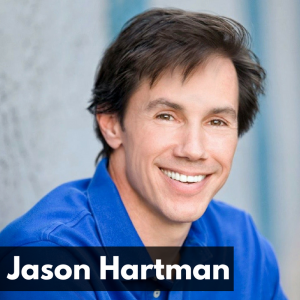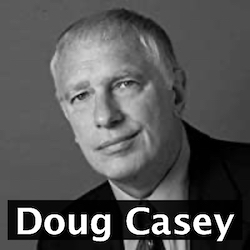
Jason Hartman is joined by Doug Casey of Casey Research on this Flashback Friday episode to talk about America’s economic state. Doug shares that the US government is bankrupt and that pension funds are in trouble and are nothing more than the government’s scheme to finance its debt. Jason and Doug agree on not investing in the stock market, with Doug adding buying real estate only if it’s with a low-interest, fixed-rate mortgage. He also shares his forecast of a Greater Depression.
Announcer 0:00
This show is produced by the Hartman media company. For more information and links to all our great podcasts, visit Hartman media.com.
Jason Hartman 0:09
Hey, this is Jason Hartman, thank you so much for joining me. Do you know what day it is? Yes, it is flashback Friday, where you hear the best of the creating wealth show and you hear some good prior episodes, some good review. Remember, we’ve got almost 500 episodes out. And you know what? iTunes doesn’t even hold them all if you’re an iTunes listener, if you are listening on Stitcher, thank you for joining us. So we want to bring you some good review stuff. Now. What’s interesting about flashback Friday, it’s a little scary for me. I got to be very, very candid with you on that. Because you the listener, you get the chance to hold my feet to the fire. Did I make any predictions? Was I right? Was I wrong? I’ve been right about a lot of things, but I’ve been wrong about a few. So you can give me a hard time about that if you wish. But it’s flashback Friday, and we will give you the uncensored Best of the creating wealth show with a prior episode. So let’s dive in. Here we go. Remember, this is not current. It’s flashback Friday.
Announcer 1:22
Welcome to the creating wealth show with Jason Hartman, you’re about to learn a new slant on investing some exciting techniques and fresh new approaches to the world’s most historically proven asset class that will enable you to create more wealth and freedom than you ever thought possible. Jason is a genuine self made multi millionaire who’s actually been there and done it. He’s a successful investor, lender, developer, and entrepreneur whose own properties in 11 states had hundreds of tenants and been involved in thousands of real estate transactions, this program will help you follow in Jason’s footsteps on the road to your financial independence day. You really can do it on now. Here’s your host, Jason Hartman with the complete solution for real estate investors.
Jason Hartman 2:12
Thanks so much for joining me today. And it is December Wow, where has the year gone? And where are the last 10 years gone? It is amazing how quickly Time flies, isn’t it? I mean, I know you all feel that way. It’s just in credible, how quickly life passes us by and you know, that really brings up an interesting point. So many people out there are drawn to those quick fixes those get rich quick schemes and scams out there. And it is amazing. I think you see this more in a down economy where people are in a lot of different network marketing things. And you know, some of those are very good companies, but a lot of them are hokey, to say the least. And you see these people switching around from deal to deal and you’ve all got friends like this, maybe you’re one of those people, I’ve been tempted before myself. So I do understand that. But what is so interesting about time is that no matter what it passes, doesn’t it and you know, if you just get on board, and either start or expand your real estate investing career with a good old proven buy and hold strategy, that buy and hold strategy that just it just works in real life, then you don’t have to spend all that time going from one thing to another flitting in and out of this deal, and that deal waiting for your ship to come in. So many people have that mentality that gamblers mentality. And when you look at it, here it is. It’s almost Christmas, it’s almost New Years, it’s almost 2012 and Time passes so quickly. And as prudent buy and hold real estate investors, the people listening to the creating wealth show where the real they all we’re really doing this in real life, as opposed to all of those schemers and scammers out there that have the the sort of flavor the week and the get rich quick scheme.
The time passes so quickly. And I mean, we’ve shown you in prior shows how our refi till you die plan is such a tax-efficient vehicle for achieving wealth and harvesting wealth through income property investing and how quickly seven years pass. It’s been interesting since my move to Arizona in living in a community that is got so many young people and that’s one of the things I love about it and so many people that are in college or just recently graduated from college and you know, they’re fretting about their future and it aged 22 or 25 and in your early to mid 20s It seems like it takes so long to do this stuff. But you know, you let a couple of years go by and time passes faster and faster and faster. You know, I remember when I was a kid and I go shopping with my mother, for example, and we’d be in a store and all I would want to do is leave 20 minutes seemed like a year didn’t that when you were a kid? Remember, you’re listening to flashback Friday. Our new episodes are published every Monday and Wednesday. I guess the reason time just sort of goes faster and faster. I mean, our perception of it obviously is what I’m referring to goes faster and faster as the years go by as we age as we get older is because our reference point is so much longer. When you’re young. I mean, think about it, a 10 year old has such a small point of reference. And they say that the teenage brain just literally doesn’t understand things, you can see this in your own children, right and young people that you talk to, you just don’t understand things when you don’t have enough time. And that’s fine when you don’t have enough point of reference enough time behind you as a point of reference. But what’s really sad is to see people that are in their 30s, their 40s, their 50s, their 60s, and they’re still looking for that get rich quick scheme, they’re still waiting for their ship to come in, they’re still chasing this deal. And that deal. And they might be going to the casino, they might be going to the stock market, which is just another kind of casino, frankly, but a more fraudulent one than the one in Las Vegas, because at least they’re you know, you’re going to lose, or they’re chasing one business deal after another one network marketing deal after another. And it’s really sad. It’s fine to experiment with things when you’re younger, and you don’t have much to lose. But it’s some point, folks, we all need to become mature, especially when it comes to financial stuff we meet need to become financially mature people and as financially mature people.
What do we do? Well, we plan we execute, and we act, we make decisions, we make prudent decisions, but we don’t get the paralysis of analysis where we never make a decision because those people are the ones who suffer the most the people. And I have to say the more. Unfortunately, many times the more education the more formal education we have, that really can hurt us. Because certainly I’ve seen and you’ve seen and maybe you are one of these people, people that have advanced degrees, master’s degrees doctorates, we’re that thinking where you become so analytical, it really paralyzes you. Sometimes it doesn’t do it to everybody. But it does it to a large majority of people with a lot of formal education, I’d say. And that’s why many times people with less formal education have a huge advantage in today’s world. Now, of course, it hasn’t always been that way. I talk with one of my employees once in a while, and this particular person who will remain nameless, but this particular person kind of looks back once in a while and sort of bothered by the fact that they didn’t finish college. And of course, neither did Steve Jobs, Bill Gates, Fred Smith, and the list goes on and on. Yeah, a lot of people didn’t. And I would say, look, if it’s 1970, or 1975, or 1980, or even 1985. Yeah, back then the prudent advice was finish college, maybe get a master’s degree, and go on to higher and higher education. Sure. But in today’s world, I don’t know, I think today’s world depends a lot less on formal credentials, and a lot more on self education, and action. And we are really judged, not by what we know, because we’ve all heard the know it all person who’s at the dinner party or at the dinner table and is talking and the person who just knows everything, but has done nothing with their life.
I remember I went to this course, years back, and it was a self-development course. And I really liked this particular course that I’m referring to. And I got my girlfriend at the time into the course. And you know, she liked it, too. And a few years later, we were kind of reminiscing about it. And and I said there are people who are the big winners in the course and the name of the course and people who are actually the big winners in life, the real course right? And when you look at time and how time goes by, I guess my point here and rambling on about this is that start your plan. If you’ve already started your plan, expand your plan, get more good properties and let time go by because Time passes so quickly. Before you know it, you wake up and you’re 3650 days older. And that’s about 10 years, isn’t it? I mean, I’m not counting leap years in there, but it’s about 10 years 30 650 The days huh 365 times 10. And before you know it, that income property that you purchased 3650 days earlier, has turned into some real wealth creation that allows you to do bigger and better things with your life. So income property, it’s obviously the way to go. It’s the most historically proven asset class in American history, if not in all of human history.
Frankly, today, we have a great interview with Doug Casey, and this interview is fresh, I just did it today. Actually, he was in Buenos Aires. You may have heard of Doug, Casey’s rather famous as an author, and he’s a bear. He’s a pessimist. But I think you’ll learn a lot from this interview. And it’ll be it’ll be really interesting to you a couple of things before we get to the interview with Doug, though, who came to us from Buenos Aires, Argentina, a country that has been riddled with economic crises and corruption. And I think you’ll find that interview very interesting. But of course, what do we have coming up on January 7, we have our creating wealth boot camp in Phoenix. And that will be a fantastic boot camp again, the first one where you will get to not only meet with local market specialists, but to or properties with them. So what we decided to do, because a lot of you are asking about the tour is this is not a formal tour the way we’ve had market tours like we did in Phoenix earlier this year, like we did in St. Louis, just recently, it’s not as formal as that, however, we did set a time. And that is Sunday morning, January 8, that’ll be the morning after our creating wealth boot camp, which is all day Saturday, January 7, we will have at 10am, we will leave the hotel. And by the way, I’ll be giving you venue information on future shows and anybody who’s registered, we’ll email it to you. But we will leave the hotel to tour properties in the Greater Phoenix area. And we will probably do this with two of our different local market specialists with two different companies potentially showing you some different types of properties. And speaking of local market specialists, we recently well, not that recently, but about a month ago hired a new area coordinator. And I tell you, she is really knocking them dead by bringing on some new local market specialist. And these aren’t necessarily in new markets. In two of the cases, we’ve done some overlapping. And in one of the cases, we opened up an old market that we want to open up. But we didn’t want to do that with our prior provider because we think we found a better local market specialist in that market. So look forward to that.
We’ve got some new news coming up there. We’ll have them interviewed on future shows and so forth. But some great new local market specialists coming on board again, one of the things that was set at the last meet the Masters event that we had in Irvine, California last October was that this industry is really becoming a mature industry. And what do I mean by that? I don’t mean the real estate industry, the real estate industry is a extremely mature industry. I mean, the National Association of Realtors, I think has been around for over 100 years now. So I don’t mean that when I say mature, I mean the investment property industry. And we’re finding better and better local market specialists all around the country that are buying properties in bulk at auction or through various banking relationships. A lot of these relationships come from local community banks, not the big banks. Oddly enough, the big banks, a lot of times you just don’t get the great inventory from them. They’re so disorganized, they’re such a mess, most of them. And no, I hate to talk about Bank of America that way. But it’s not just Bank of America. Many of them are but a lot of these are from local community banks and their Oreo or real estate owned inventory. And the local market specialist will just get this inventory through relationship with individual people on a on a much smaller scale by the inventory, rehab that inventory and bring it to you, our client, again, we’ve been really working on some new local market specialists and new markets too. But we like the markets we’re in pretty darn well. And I know that may seem kind of boring to you that we haven’t been adding a lot of new markets, but our markets are good, they’re working. Why upset the applecart but we are constantly looking for slightly different price segmentation, product types and sub markets within those markets. So more coming on that in the near future.
Someone also asked me recently kind of an interesting question. They said something along these lines, Jason, some of these guests you have on your show, they don’t really seem to agree with your philosophy. And that’s true. They don’t A lot of times, I get guests on because you can learn from parts of their philosophy and piece parts of this person’s philosophy part of that person’s philosophy and piece them together like a puzzle. And really, really create something powerful in terms of investment philosophy.
Just a reminder, you’re listening to flashback Friday, our new episodes are published every Monday and every Wednesday.
But you know, this is one of the few shows where we actually have a philosophy where I actually have a cohesive philosophy and where we’ve put it all together, rather than just chasing the Deal of the Week or the deal of the month type philosophy. And this person asked me, Why do you have that guy on once? You didn’t talk about it on your show, but I went to his website afterwards. And he’s talking about this infinite banking thing. And it’s kind of interesting that someone asked me this, because I was talking with one of our other guests about that particular guest. And they were just saying that they have a lot of wealthy clients. This is a financial advisor who we’ve had on the show, and I don’t want to mention the name here, but I was having a conversation with him about it. And he was saying, I have very, very wealthy clients from all over the world, and they don’t do infinite banking. A lot of these things are gimmickry. Folks, this is not the simple, by the way. I think a lot of times, gimmickry and scams and schemes are passed, one way they pass them through is through complexity, because at some point, the mind just sort of gives up trying to understand and they just, the mind gets a little lazy on us, and just kind of says, Okay, look, I’ll just do it. And that’s one way that a lot of experts really give bad advice. And and they they use gimmickry they use complexity. They use overgeneralization or just downright fraud. And I think downright fraud is the one we see largely in these pooled investments on Wall Street. And a lot of that fraud is frankly legalized, I think the whole lobbying industry is, frankly, kind of fraudulent. I think a lot of these accounting schemes that are totally legal are frankly, rather fraudulent the way assets and liabilities can be booked and special purpose vehicles can be used thinking back to Enron, and so forth, a lot of this stuff isn’t actually illegal when you look at the real fine points of it, but it should be. And it’s not illegal because of lobbying. And because of all of these different ways that these big companies with massive resources get around it. And I heard someone interesting.
The other day on the radio talking about Wall Street, actually, it was yesterday, I was listening to money radio, and then we’re talking about Wall Street and just saying that looking at all of these different fund managers, mutual fund managers, hedge fund managers, and talking about how their record, just almost never, when you allow or differentiate for luck and take a little bit of luck out of the equation, a little bit of waiting for luck, when you do that. They really rarely ever beat just the standard, the indices themselves. I mean, it’s it’s ridiculous that people pay all this money to these fund managers, and they rarely beat them. And they were just talking about how Wall Street is nothing more than a distribution platform for junk assets. And, you know, I have to agree, be a direct investor. So remember, when you’re not a direct investor, what is commandment three, thou shalt be a direct investor, when you’re not a direct investor, you leave yourself susceptible to three major problems. Number one, you might be investing with a crook, okay, and we all get that number two, you might be investing with an idiot. Number three, assuming they’re honest, assuming they’re competent, they take a huge management fee off the top for managing the deal. You have none of these problems when you’re a direct investor, because you are in control, thou shalt maintain control, that is the third commandment of my 10 commandments of successful investing. So keep that in mind.
So without further ado, let’s get to our interview with Doug Casey. And many of you know that I run several other shows. And they are available, of course, on iTunes and at the various websites, but one of them is called the holistic survival show. And that one is the doom and gloom show. And I think we’re gonna run Doug’s interview on there too, because it’s pretty, it’s pretty doom and gloom he’s bearish. But again, he talks about some ways in this interview, where there’s a silver lining in these clouds. So I think you’ll you’ll enjoy this one. It’s pretty interesting. And one more quick announcement before I go to the interview with Doug. Audible audible.com is the largest distributor of audio content on the internet of audio books and on educational audio content. And you can now purchase and I have to say this I wasn’t actually going to announce this on the show because I’m a little bit bothered about it. Frankly, you can now purchase several of my products on Audible and audible gets to decide the prices of the products. I’m happy that we’re on there. Don’t get me wrong. I’m very happy that we’re on there. But I’m a little bit upset that they have priced some of these products very, very low. So before I contact them, before they raise the prices, they do have pricing discretion, I highly recommend that you go to the audible website and type in Jason hartman@audible.com and buy all his products because they’re incredibly cheap. They’re not exactly the same products that are on my website at Jason Hartman dot com but even the way they’re bundled here, I think they are very, very underpriced. If you’re interested, these are super cheap. So go to the audible website and get them. You can also get that same content on amazon.com. And on iTunes, because audible is the exclusive provider for paid audiobook content to amazon.com into iTunes. So if you prefer to buy them there, if you don’t have an audible account, you can buy the products there as well. So check those out. We’ve got some of our financial freedom report audios on there, and the creating wealth, encyclopedias on there, and a few other things and there are rather long free samples, you can listen to about three minutes snippets for free on the audible website. So that’s audible.com and iTunes and Amazon, you can get them anywhere. So just wanted to mention that to you because a few of you have asked me why aren’t we on Audible? Well, we are so take advantage of that, especially while the prices are at these giveaway prices right now.
Anyway, I look forward to seeing you on January 7. Of course. We’ll be back with another show next week. We may have john Perkins back on to talk about being an Economic Hitman and enjoy this interview with Doug Casey. We’ll be back with that in just a minute.
Are you aware that the largest transfer of wealth in human history is underway? Are you concerned about protecting your income savings or Home Equity? All these bailouts benefit the Wall Street crooks and the Washington elites while costing the middle-class experts are predicting difficult times ahead. The only question is Where will you and your family end up with the haves or the have nots? My name is Jason Hartman with Platinum properties investor network for two decades I’ve made a small fortune and the most historically proven wealth creator Don’t be the victim of Wall Street fat cats who lined their pockets with your pension funds, we can teach you how to protect yourself and your family in these wildly turbulent Financial Times. Create and protect your nest egg the same way 85% of America’s wealthy do if you’re interested in the most innovative financial education around, it’s urgent that you register for our next event, learn more about this outstanding event Get Your FREE CD at Jason hartman.com. That’s Jason Hartman calm or call one 840 Jason one 804 05276 sex that’s 1-800-405-2766 your investments could be gone tomorrow, protect yourself and act today.
My pleasure to welcome Doug Casey to the show. He is the author of several books, including crisis investing, which spent multiple weeks as the number one spot on the New York Times bestseller list and became the best-selling financial book back in 1980. With nearly half a million copies sold. And I think today you’ll get a very international perspective on what’s going on as far as the global economy and economies and various countries. And it’s just a pleasure to welcome Doug, from a beautiful city known sometimes as the Paris of South America. And that is Buenos Aires. Doug, welcome. How are you?
Doug Casey 23:19
Very good. Jason. Thank you.
Jason Hartman 23:20
Well, it’s good to have you on the show. And I’ve been following your work for a long time. Very, very fascinating. What is your take on what is going on in this world today? The Chinese have that saying May you live in interesting times. And, and I don’t think they mean that in a positive way. Times are pretty interesting now, aren’t they?
Doug Casey 23:38
Yes. And they’re going to get more interesting from that point of view. My view is that we’ve entered upon what I call the greater depression. I call it the Greater Depression, because it’s going to be much more serious
Jason Hartman 23:49
Than the Great Depression was back in the 30s, huh?
Doug Casey 23:52
Exactly. But also much different from that. You listed many crucial aspects. So where are we in this adventure? I would say that we’re still very early in the depression. And that’s not necessary. It was necessary that we have a depression, simply because actions have consequences. But it’s not necessary that this depression be as long and as dismal as it’s going to turn out to be because the government, which everybody believes should control the economy, is doing not only the wrong things but exactly the opposite of the right things. So it’s gonna be quite unpleasant for most people.
Jason Hartman 24:33
Yeah, well, let’s, of course, talk about the strategies for success through this because every every problem creates an opportunity. And what seems to be happening now, at least in the US, or especially in the US is that there’s just this attack on the middle class. It seems like the middle class that has been the great stabilizing force in America is just under attack and it’s just disappearing and you know, a small number of the middle class are moving up into the upper classes, but the vast majority are being pulled down to the lower middle class. And I think that problem is going to continue. And it’s going to get a lot worse, if you consider that to be a problem as I do.
Doug Casey 25:13
I totally agree with you. I don’t worry about the rich people, they can take care of themselves. They can bribe politicians to have laws passed in their favor, they can hire accountants to juggle their taxes. And if they need to get out of Dodge, they can hire a travel agent. Yeah, they may be eaten in the long run. But for the moment, I don’t worry about the rich. And of course, it’s unfortunate that so many of the rich have made their money in the corporate world in ways that I think are unsavory what we can talk about them or not, it doesn’t matter. And the poor people, I think it’s very unfortunate that they’re being cemented to the bottom of society, by all these government programs that actually make it in some ways advantageous to be a poor person.
Jason Hartman 26:12
That’s an interesting way you look at it. Cemented to the lower classes, because politicians they want to build and cement using your words, I love that way you put it, this permanent voting bloc in by providing handouts, and really keeping people down through these various government programs. Whereas the foundational ideas of America was rugged individualism and, and the fact that anybody coming from anywhere from any background can make it in America and in other Western less socialized countries? But that’s really changing, isn’t it?
Doug Casey 26:48
Oh, it is. And it’s, it’s going to have very, very nasty social and political consequences in the future. The way that the US has changed, and is that like, I don’t refer to the United States of America, I don’t call it America anymore. And the reason is, is that America was an excellent and unique idea. But unfortunately, it’s changed enough that I no longer want to besmirch the idea of America with what’s happening in the United States. Because the United States now is just another one of 200 other nation states that cover the face of the globe, like a skin cancer at this point. And there’s really no difference anymore between the US and any other place on the planet I can think of.
Jason Hartman 27:39
Well, tell me more about that. That’s an interesting and depressing statement at the same time. But expand on that idea if you would a little bit.
Doug Casey 27:46
Well, look, my country is wherever freedom lies. That’s what Thomas Paine said, is quite correct. And the US was, no question about it, the best place to be for many years. But at this point, things have changed radically. Now, I’ve been to 175 countries, most of them several times. I’ve lived in 12 at this point. Right now, we’re speaking from Argentina. So I had to figure out where I really wanted to spend most of the time where I could maximize my personal freedom and my financial opportunity. And it’s not in the US anymore. It really hasn’t, there’s much more opportunity outside the US at this point, I’m sorry to say, for the average American. And I suggest that an American who may be healing down on his luck, put his grip in a suitcase or his backpack and hit the road.
Jason Hartman 28:47
Well, that’s a very interesting point. And I want to, I want to maybe take issue with you on on that just a little bit. I do fundamentally agree with you. I give you this example. And I’ve talked about it on the show before. A friend of mine, he spent the last seven, eight months in China, opened a business there has been there many times and loves it. He has a company in China now, Ireland, and the United States. And I would only say that I agree with you that the direction of the US is so wrong, and it is so bad to see it going in this direction. However, and this is a very large however, I think the US has an awful long way to fall. For example, a lot of other countries are going in the right in a better direction than the US but before the two meet in the middle and I think the US just has a lot further to fall. I agree that it’s going the wrong direction. Government is getting way too big here. But still if you think about it as messed up as it is, and boy it is messed up with crazy political correctness, massive distractions of stupid things, this idiotic celebrity culture we have here that when there are major issues going on in the world, the news media is covering That the lightest dumbest things like the Kardashians or whatever, it’s just sickening almost. But we do still have a constitution that maybe 47% of the country actually still believes in, the other 53% don’t.
Doug Casey 30:14
That might be an overestimate, because I would say that if we were to take the Constitution in front of us and read it line by line, we find that all of the important aspects of it are dead letters. The only parts of the constitution that are observed are technical, parliamentary type of things like, where it says the vice president shall be the President of the Senate. Okay, they observe that, and they observe other things of that nature, but the important things in the Constitution, such as the Bill of Rights, but there are a number of other things, too, that are almost equally important. Like the fact they’re only three crimes that are listed at three federal crimes listed in the Constitution. This is a totally disregard the whole thing is a dead letter at this point.
Jason Hartman 31:00
Well, all I’m saying is that and we’ll get off the constitutional thing in a moment. But every time they want to attack the Bill of Rights, and I agree that it’s completely under attack, it’s still a big fight to do it. I mean, look, Hirohito back during World War Two times, when asked if he was going to consider an invasion of the US, he said, Are you crazy? There’s a gun behind every blade of grass in the US, there are still about 300 million guns in the hands of citizens in the United States. We still have the world’s reserve currency, we still have the largest, most powerful military on Earth, we still control every ocean on the planet. Yes, a lot of things are wrong. But gosh, don’t we have a lot further to fall?
Doug Casey 31:41
Yes, we do. I mean, who was it that first said, I think it was Adam Smith that said, there’s a lot of ruin in a country and the Roman Empire didn’t fall in a day. But let’s take the things that you’d mentioned. Fortunately, we do have a lot of guns in the country. But at this point, the government is very, very anti-gun. And if you have more than a couple of weapons, or if you have more than a bit of ammunition, you can get wind up as being on a terrorist suspect list. And the Homeland Security just recently came out and said exactly that. Okay. As far as having a gigantic military that controls the world’s oceans, I don’t particularly see that as a good thing.
Jason Hartman 32:27
Well, I agree, because we’re overreaching and overspending for sure.
Doug Casey 32:32
Well, the point of the fact in point of fact, the US government and the US is, as a country is totally bankrupt. At this point, the government is running a trillion and a half dollar per year deficit, and that deficit is going up, not down. And where are they getting the money, they’re selling it all to the Federal Reserve, because the Chinese, the Japanese, other foreigners aren’t buying the debt anymore. They’re, they’re up to their gills hundred Americans can’t afford to buy it. So they’re printing money, quite literally at this point. And it’s going to destroy the national currency. So there’s, there’s a lot of problems here. But you know, I don’t want to look just on the dark side, I mean, you can profit from all the stupidity on an individual basis, I’m just very sorry that the average American is going to be turned into a serf in the years to come, because he’s not gonna profit from it.
Jason Hartman 33:28
And you know what, that is a great thing that you just said, you can profit from all this stupidity. And a few years ago, I guess, about 2007, I started changing my tune and saying, I am no longer an optimist. Nobody could accuse me of being an optimist. I am a, I am very pessimistic, but I am an opportunist. So I’ve moved from optimist to opportunist, and there are ways to exploit this complete stupidity that is going on and seems like all the wrong behaviors are being rewarded. For example, before 1971 when we were on the gold standard, saving money, my grandmother’s idea that was great, but now it seems like the reward the person who rewarded is the person who has the most debt.
Doug Casey 34:11
This is, this is a disaster because the people that are prudent that produce more than they consume and save the difference. That’s how the world gets better. That’s how you improve your station. Most people save in terms of dollars, but they forget what’s going to happen when those dollars are literally destroyed, which is going to happen in the years to come. It’s gonna wipe out the middle class.
Jason Hartman 34:34
And the reason that will wipe out the middle class is because they will just be inflated to death, right? I mean, you’re an inflation believer. I’m sure, right?
Doug Casey 34:44
Well, let’s put it this way. We could have a catastrophic deflation. It’s possible. It’s possible that mortgages could be defaulted on, bonds could be defaulted on. The banks could fail faster than the Federal Reserve can bail them out. Because they’re not the most competent people in the world. But that’s the best-case scenario. The worst-case scenario is that they succeed and print up enough dollars to keep all these failing institutions alive. Because that will mean that the currency will be destroyed. And that is worse than what we had in the 1930s when we had a credit collapse.
Jason Hartman 35:21
So is that why you call it the greater depression because the destruction of the dollar and just massive inflation will occur?
Doug Casey 35:28
Yes, that’s exactly right. And it’ll be like the 1930s in other ways, I’ve got to say. I mean, you’re not going to have long lines of people waiting for sticky tub cooks, stoops because you’ve got 46 people that have little credit cards, where they can go down to the 711 and buy Twinkies instead of waiting in a line. So things are different that way. But there are other things that are going to be the same. For instance, the 1930s led to the 1940s rather naturally, because when things go badly, politicians look for somebody to blame. And it’s very easy to blame another country for your own problems. So I expect that we’re going to see much more serious wars in the future not that we don’t have enough already.
Jason Hartman 36:14
So when we talk about inflation, the question everybody wants to know and it’s always a prediction but how much and when? It seems like we have inflation on on the necessities, nowadays, but deflation in a lot of other things technology, of course, which is generally deflationary due to advancements but deflation in major assets, but inflation on food prices, energy. I mean, I, you know, I just started noticing about a year ago, I never really paid much attention to them in all my life. But utility bills, I mean, utility bills are becoming a significant issue, whether it be water, gas, electricity, they’re getting pretty high.
Doug Casey 36:56
Yes, exactly. This is one of the reasons why I’ve been a, real estate has been very good to me over the years. And I’ve owned real estate, half a dozen countries around the world. And despite the fact it’s very good to me, and I’m, I watched the US real estate market. Oh, we may disagree on this, I think it’s too early to buy US real estate. I hate to be a market-timer. That’s a dangerous game to play. I’d rather, rather be a fundamentalist, but the utility bills, which you pointed out alone, are one thing that are going to be more than a lot of people can bear to pay, and their tax bills are going to go to the moon because it’s time to eat the rich. And who’s the rich, the richer people that own real real estate. So your tax bills are going up. Because of all these local governments being bankrupt, incomes are gonna keep heading down, I’m afraid. And the fact that you can get a mortgage today, at artificially low subsidized rates, that’s not going to be available in the future. I think that the whole real estate market in the US is built on a sea of debt, a sea of credit, and it’s going to collapse and wash away. So I think it’s too early at this point, however, and I know you’ll agree with me on this. If you can buy real estate with a low-interest rate, fixed mortgage, at least that mortgage will be inflated away. So that’ll make up for your possible losses on the market itself.
Jason Hartman 38:30
Right, right. You know, I had more than 100 shows ago, I had Pat Buchanan on the show. And he had a great quote about that. He says, you know, I said, well, what do you think about all this mortgage debt and other debt people have? And he said, Jason, their debt will be washed away on a sea of inflation. You know.
Doug Casey 38:45
He’s right. The only, the only problem with that, I mean, we got to look at the good news, if you’re a debtor, but the bad news is that that’s somebody else’s asset.
Jason Hartman 38:55
Right? Right. No question. So it’s going to impoverish somebody, or just create more inflation through bailing out an institution that holds that debt. One way or the other. It’s either taxes, right, or inflation. It’s one or the other.
Doug Casey 39:11
We’ve gone beyond the point of no return at this point. It’s not a question of if it’s, it’s a question of when, and the when is happening right now as we speak. This is not a projection for the future. It’s happening right now in the markets, and it’s very serious.
Jason Hartman 39:27
Yeah. So since a lot of our listeners are really interested in real estate investing, I thought I’d just expand on that with you a little bit more if I could. Number one, when you look at US real estate, it’s so problematic because the country is so darn large. You know, most people look at the Case Shiller index, which only profiles 20 cities and when you look at those cities, every year we publish a forecast, only really about one fourth of them are of interest, I think, to any investor with a with a brain and that is markets like Dallas or Phoenix. So it’s just weighted in favor of saying, yeah, the market is overpriced. And if you look at a place like California, you look at New York, most of Florida still a disaster, Illinois, just a complete corruption, government disaster, I couldn’t agree with you more. But when you look at areas that have basically where you get free land, and you buy below the cost of construction, and you get a three-decade long fixed-rate mortgage at four or five, five and a half percent, maybe for an investor, wow, think of it today. You take out a mortgage now, and it’s not going to be paid off until 2041. What kind of inflation.
Doug Casey 40:40
Oh, no, I understand the argument. It can make a lot of sense. It really can. And you have to do something with your capital now. If you have capital, you have to do something with it. And so this is a to me, it’s a logical possibility, not one that I’ve favor, above some others. But I understand what you’re saying. And I think it makes sense.
Jason Hartman 41:03
So when you look at that, what else do you think is the thing to do? I mean, I’m sure you’re paying a lot of attention to the precious metals world, because obviously inflation oriented, or commodities in general, that everybody on earth needs only three things basically, food, clothing, and shelter, and seems that maybe commodities of some sort, or any sort really are the place to be. It feels like the equities markets, even with these great corporate profits, we’ve got it. The stock market just feels like such an abject scam to me in so many ways.
Doug Casey 41:35
Yeah, I have no interest in the stock market at this point for a number of reasons. But, and when it comes to commodities, one thing I’ll observe about that is that the longest bear trend in history is commodities. The price of commodities have been going down for roughly the last 4000 years. And with the advent of things like nanotechnology and further increases and other types of technology, commodity prices are going to go, are going to start approaching zero. We don’t have time to explain why I feel that but that is the history, so far. That being said, I’m still bullish on commodities, mainly because I’m bearish on the dollar. And when it comes to gold and silver, they’ve been extremely good to me for, for many years. And they’re not cheap anymore. They used to be giveaways, they used to be free. But now they’re reasonably priced. I think they’re going considerably higher. But they’re no longer a one way street where you can make huge speculative gains. They’re meant more for preservation of your wealth, or cash at its most basic form. So it was already put your money. I mean, look, I bought a lot of land here in Argentina after the crisis, when when it was very, very cheap. It’s not so cheap anymore. Recently with some friends, I’m buying apartment buildings in Cairo. Now you might think, well, that’s crazy. That places in the middle of an Islamic Revolution. But I’d say that you’ve got to refer to the Rothschilds famous dictum, you have to buy when blood is running in the streets. And we can get incredibly beautiful buildings on the Nile. So cheaply that I don’t actually care if we lose, and I don’t think we will. So I’m always looking for things like that.
Jason Hartman 43:30
Boy, that one is pretty exotic. I mean, I would be scared of Islamic countries in general, because I hear that foreigners don’t have rights and the records and things like that. That’s just, that’s just a real exotic one.
Doug Casey 43:41
Well, those problems, those problems all over the world. Look, I spent a lot of time in Zimbabawe, starting, started to go there during the war. And I have, I was last in Zimbabwe, I guess about five years ago. But you know, if I thought I could manage farmland and Zim, which I probably could, by hiring the right people. I mean, I might look at that. So, I’ll look at anything anywhere in the world, if the price is right. But I one thing that’s critical, absolutely critical. And most of your list of all your listeners are Americans, I think, is that the biggest risk you have in the markets today is not the markets, its political risk. Your biggest enemy is your own government. It’s hunting you like a lion hunting an antelope out on the vault. And if you’re not diversified politically, you’re not diversified geographically, internationally. You’re in a world of trouble. And this is something that most Americans are completely innocent of. They don’t know anything about it.
Jason Hartman 44:50
Right? Right. That’s a very good point. And I’d say the first step to that is the one I took when I left the Socialist Republic of California several months ago, and I’m so glad I did, is just to get into more business-friendly state. Someone listening to this is not thinking, well, gee, I’m going to, I’m going to leave California and moved to Argentina, or something like that, which is a pretty big step. And I even you would agree, but just get into a more business-friendly state and diversify throughout the states, a lot of asset protection, things that you can do within the US alone. But for the wealthier people listening, and the people who are willing to do something that’s a larger step. I couldn’t agree with you more. I mean, we’ve got to be thinking like citizens of the world, not just citizens of a of a neighborhood, or a city or a state even. At least be a citizen of the United States. If you’re listening and you’re an American and think about different states and diversify, I’d say, Yeah, I always say with my real estate investors, take the most historically proven asset class. Now, you may have a different opinion with me, but I think you’ll like real estate somewhat, or if not as much as I do it, but diversify geographically. So I couldn’t agree with you more. Great point.
Doug Casey 46:01
Absolutely. But you know, a lot of people are unaware of the fact that during the last depression, when there wasn’t nearly as much borrowed money under the real estate market, as there is today, that real estate prices on both coasts, fell about 90%. In other words, they fell about as badly as the stock market itself did from top to bottom. And unlike stocks, which I’m not a fan of, at least good companies pay dividends. Well, good real estate can give you a yield too. But don’t forget, as we pointed out before, the utilities, the taxes, the maintenance, and when you rent the rent, real estate, you’ve got to deal with the people that are paying the rent. And this can be problematical.
Jason Hartman 46:45
Well, and it’s problematic, especially in areas where like you said political risk is the big risk. And I see all these investors investing in in such a landlord unfriendly states like California, like New York. Least especially New York City, it’s so the landlords just have no rights. And that’s a part of political risk. You know, when you’ve got to go collect from a tenant, deadbeat tenant, you’ve got to be doing business in a place that is friendly to your causes. The landlord, right?
Doug Casey 47:13
Yep, absolutely correct. So it’s, it’s a real caveat, there are very few bargains in the world today, in this particular moment, as I look at all of the markets across the board. Commodities, and real estate, holding cash and metals and stocks, and I look everywhere, I don’t see many bargains today. And so I’m not, I’m not active, looking for them in the past, because the time to buy is, is when there is super bargains when there’s blood running in the streets, which is why I’m doing this Cairo real estate, for instance. But I think in a year or two, when there’s complete chaos in the financial markets, that might be a time to cherry pick, but not at this particular moment. We’re kind of in our Twilight Zone, we’re still in the eye of the hurricane, we went through the leading edge of the hurricane in 2008, and 2009. And then we came out of to the eyes as they printed up trillions of currency units all over the world, not just the US. And now we’re going back into the storm. And it’s gonna be a lot uglier than it was in 2008.
Jason Hartman 48:27
Let me take a brief pause. We’ll be back in just a minute.
Announcer 48:33
What’s great about the shows you’ll find on Jason hartman.com, is that if you want to learn about some cool new investor software, there’s a show for that. If you want to learn why Rome fell, Hitler rose and Enron failed. There’s a show for that. If you want to know about property evaluation technology on the iPhone, there’s a show for that. And if you’d like to know how to make millions with mobile homes, there’s even a show for that. Yep, there’s a show for just about anything, only from Jason hartman.com. Or type in Jason Hartman in the iTunes Store.
Jason Hartman 49:15
Yeah, I think the homeownership rate is going to drop dramatically. I think we’re headed for a huge reduction in homeownership in the US, because like we talked about before we started recording, US real estate through Fannie and Freddie has really been subsidized since the Great Depression. And whenever you subsidize something, or promote something, you cause the price to go up, you cause the ownership rate to become imbalanced where it’s higher than it should be. And there are too many homeowners. George Bush had this whole ownership society thing which sounds good on a political campaign, but but in reality, some people just shouldn’t own and you shouldn’t push them into owning.
Doug Casey 49:55
You’re absolutely right. It almost forces on them to stay with their house because it’s their major asset that they can’t sell up there almost turned into the equivalent of a medieval serf. I can’t leave the house. I can’t leave the land as it were. I totally, totally agree with you.
Jason Hartman 50:15
Well, I agree. And that’s one of the things I think, though, Doug, and I know we differ on this a little bit, is really beneficial for investors to be offering housing out there, because the most important thing anybody can have on a job resume nowadays is mobility. To be able to go where the jobs are. And I don’t know if you happen to catch it. But I think it was Time Magazine about a year ago, September, did this article about how homeownership is actually stifling America and they, they profiled all these different cities where the homeownership rates are high. And they made this hypothesis that that causes high unemployment because it traps people, like you talked about the medieval serfs who can’t leave the land. When you’re a renter, you’ve just got a lot more mobility. And when I was trying to leave California I tried to sell my house two years ago, was unsuccessful. After months and months and months on the market, I finally sold it the following year. But gosh, if I was a renter, I could have just bargain with my landlord to to get out of a lease, maybe pay a couple extra month’s rent, replace myself with a new tenant, or just wait till my lease is up. But as an owner, I was just literally trapped, confined. And now I’m a renter. And I love it because I’ve got mobility, and I can do my job from anywhere on the planet nowadays. And a lot of people can, like hear we are meeting through Skype. You’re many countries away from me. And it’s just like being here.
Doug Casey 51:38
Yep, absolutely. It’s, this is a time when you don’t want to, to be rooted to a place like a plant, because we’re going into very tough times. And, and being a plant is not a good survival strategy. in turbulent times. You wind up beaten usually.
Jason Hartman 51:59
Yeah, better to be mobile and to be flexible so that you can make decisions and change as the opportunities arise in different geographies. One thing I did want to ask you, Doug, is you we talked about the equities markets and the stock market. I mean, and you say you’re not interested in stocks, neither am I, because I just think there’s too many criminals in that whole supply chain that I call Wall Street, the modern version of organized crime, and I don’t like them. But I’m just frankly surprised at the performance of the stock market, I can’t believe with what is going on in Europe and elsewhere around the world, that the stock market is actually holding its own. I mean, it’s not in in real dollars, but in nominal dollars, it seems to be.
Doug Casey 52:42
Yes, I’m surprised too and that’s why I don’t want any part of it. Regardless of the high reported earnings of many corporations today. The only part of the stock market actually, I’m actually really interested in are the mining stocks. Because with metals as high as they are today, the mining stocks are actually making a lot of money. I mean, typically, let’s say the average cost of mining an ounce of gold is $600 an ounce, the gold is 1700 dollars an ounce. These are big margins. Now there are a lot of problems with the mining business. But those are excellent margins. And my area of specialty has always been the mining exploration stocks, which are the most volatile and most risky class of securities on the face of the planet. But the good news about them is that they are volatile, and moves of 10 or 50, or 100 to one or more, are not unusual. And I think that with the government’s continuing to create trillions more currency units, there are going to be other bubbles inflated in different parts of the economy. And I think there’s a good chance there’s going to be a bubble created. Not just in the precious metals, but in the companies that mine those metals. So I think that’s something that you can look for. They’re relatively cheap right now. Something that I think people draw people’s attention to, to take a look at.
Jason Hartman 54:12
Yeah, and I would agree with you. The only challenge you have there other than the environmentalist making trouble for the miners and so forth is that you have the intermediary party risk of are you going to participate in the profits? Or are you going to be subject to the cookery of the management and so forth?
Doug Casey 54:31
Oh, you’re you’re you’re totally correct on that. That’s absolutely, that’s why I view them as a as a speculative vehicle, but you can be amply rewarded for taking those risks, if you choose the right company. And of course, I have literally thousands of mining companies around the world. So you have your hands full doing research on them.
Jason Hartman 54:49
Yeah, yeah, that’s for sure. Hey, when we talk about inflation and really the destruction of the dollar and the destruction of a large part of the middle class, can you put any numbers on it? I mean, the problem is that we look at the historical situation we look at Zimbabwe, we look at Hungary, we look at the Weimar Republic, and we look at Argentina, we look at these different crises around the world that have happened historically. And some of them like Zimbabwe, of course, the poster child for inflation. But in the US, I mean, I think our inflation rate now is nearing 10%. In reality, of course, it’s not the official number. Are we looking at 20% inflation annually? 100%? 15%? what do you think?
Doug Casey 55:33
I think it’s entirely reasonable, that’s going to happen. Because as shocking as it is, and as big a country as the US is and as much capital wealth, as exists, there’s no limit to the amount of money or I shouldn’t say money, I should say, currency that the US government can print up to pay its bills, and it’s going to have to do it, or it won’t pay its bills. So yeah, I think inflation is going a lot higher. And this is, you’re at the 11th hour right now, to position yourself. Before everybody really knows it. So yeah, absolutely. This is a this is something of historic importance that we’re facing at the moment.
Jason Hartman 56:19
Yeah, yeah, it sure is. And that’s why I like the real estate so much. Because think about it. If you have 100% inflation in one year, that means your debt gets wiped out in a year, you have no mortgage debt. And then you do have commodities, you have all those materials as building materials. And those usually keep pace with inflation. Now I know what you said about nanotechnology and technology can change that. But when they’re really low-tech things like sticks and bricks and concrete, you know, I sort of wonder how disruptive nanotechnology can be in those types of materials, certainly in electronics and other materials like that. No question. Huge disruptions in terms of pricing and models and so forth. But you know, that’s why I just like the real estate so much. I just don’t know what else to do. I mean, I do the metals, I recommend people do the metals, because it’s a preservation of wealth, the defensive strategy, I think. But to be offensive, you got to have debt and commodities and the combination of the two, and plus the yield at the same time you have rental yields.
Doug Casey 57:23
No, that’s a very good argument. My only point of disagreement is I think that, I think the market could go lower. But maybe it is not important, because right now, interest rates are artificially suppressed by the government. And from Fannie and Freddie, which should be put out of existence
Jason Hartman 57:43
Of course, I definitely should. I’d love to see them go away. Because while renters
Doug Casey 57:48
They are still there, and they’re giving away money. Yes, you should borrow it, and in that that loan will be wiped out in the future. So yes, I, I think it’s a very cogent point you like,
Jason Hartman 58:00
It would just be so nice if you could acquire those dead assets against other things like a business, I always say, or precious metals even, that real estate is the most debt favored asset, they’ll give you more debt on it at lower rates than on anything else. Unless you’re part of the Federal Reserve scam, then you get to borrow for nothing. Also, when you get to borrow against nothing.
Doug Casey 58:23
Well, my guess is that after this crisis bottoms, and I don’t know when that’s going to be, but I would think at least three or four years from now, that at that point, mortgage money isn’t going to exist in the US at that point. And the market in the US is going to be more like it is here in Argentina, or, for that matter, most of South America or Africa or Asia or anywhere, except for except for Europe at this point. And that means if you want a piece of property, you pay cash for it. And that means that the prices are real. They’re not inflated by a bunch of borrowed currency units.
Jason Hartman 59:05
Right, right. But what surprises me is that when you have to pay cash, I mean, I was, I was in Argentina, I was in Buenos Aires a couple of years ago, and it is not inexpensive there and there is no financing. I mean, you pay 300,000 US for a little like a little apartment. And you know, it’s it’s old and there’s no financing at all. You know.
Doug Casey 59:29
But it depends on where you’re you’ll look like the place I’m sitting in right now. It’s a penthouse apartment in the best part of the city. It’s a building with a 24-hour concierge and doorman. This apartment has decks and verandas and it’s 5500 square feet, 14 square feet, 14 foot ceilings and all this type of thing and three years ago I paid $900,000 for it. Now, if I tried to buy this apartment in New York, I promise you, I would pay
Jason Hartman 1:00:06
You would pay 14 million for it or something like that.
Doug Casey 1:00:09
In that area, at least. Yes. Yeah. So. So, you know, you better look for these, you’ve got to look for these things. And so since I bought it, this places about doubled, but still for what I got $2 million is like free, by comparison with other major cities in the world.
Jason Hartman 1:00:29
So it has doubled since you bought it five years ago, and mortgage financing went away. I mean, before the crisis, there was about it. There was some mortgage financing before the crisis, right?
Doug Casey 1:00:40
No, no. There hasn’t been mortgage financing in Argentina. For years and years and years. I don’t know when the last time you can get. I mean, maybe a seller will give you financing for two years to get the deal done. But that’s that’s about it.
Jason Hartman 1:00:55
The last thing I want to ask you about and this Argentina obviously had had quite a situation with this one is the retirement accounts as are hungry, intrusive, overbearing, spendthrift government in the US looks for money to feed it’s machine of handouts and vote-buying. I am very much thinking that one of the places it’s going to start looking very soon, is to nationalize people’s retirement accounts.
Doug Casey 1:01:22
You’re absolutely correct. That’s what they did here in Argentina, this government here is, this government here is way ahead of the US in tricks like that. In fact, it’s so it’s almost like the US is, taking is taking lessons
Jason Hartman 1:01:38
They’re using the Argentinian playbook.
Doug Casey 1:01:40
Yes, exactly. So yes, I think if you have an HR 10 or a Keo or these different types of pension funds, you’re going to find in the US that they’re going to say, we’re going to make it a law, you have to buy half or more government debt, for your own safety, of course. And that’s just a scam to finance their budget. So your pension is in great danger. Let me point something out. There are ways around this. We talked about this on our website where it’s possible still to internationalize your pension, and to buy real estate in a foreign country. And they can’t nationalize that. They can’t make you. It’s very hard to make somebody sell real estate. So yes, but you’re quite correct. This is a, this is a huge shoe waiting to drop for the average American that has a pension or thinks he has a pension.
Jason Hartman 1:02:35
Yeah, yeah, no question. And the way I feel they’ll probably pull it off, Doug, is they’ll manufacture some sort of financial crisis. So not that we don’t have enough of those. But they’ll manufacture a fraud or something. And they’ll say, well, just like Social Security, the government needs to step in to protect the people. And they’ll say, well, because too many people, of course, the left will come out with, with people dying, you know, being broken retirement and, you know, all of these types of things, which of course, they’re broke anyway, because they’re their retirement spend inflated away.
Doug Casey 1:03:08
Of course. And Social Security is nothing but a Ponzi scheme anyway.
Jason Hartman 1:03:11
Yeah. Couldn’t agree more. Couldn’t agree more. Well, it’s pretty amazing. And that’s one of the reasons I think, if people take and they create a self directed plan, as as did I, a couple of years ago, through one of these custodians like interest, or any of the other companies out there that do it. A self-directed plan where they can buy real estate, or they can invest in trust deeds within that plan, that’s awfully hard to nationalize. But all the suckers who are in the stock market, that’s just a paper transaction, that can be nationalized, very, very easily. And if you’re going to have a plan, a retirement plan, like that, I say, get it as a self-directed plan, because it’ll be a lot harder for the government criminals to nationalize it.
Doug Casey 1:03:49
No, that’s right, Jason, because, of course, people, unfortunately, conflate the US government with US society, but they’re two different things. And the government’s the government has a life of its own and interests of its own. And it’ll look out for itself first. And that’s got nothing to do with what they’ll do with the average American citizen who they treat as a milk cow. And if they have to, they’ll treat you as a beef cow.
Jason Hartman 1:04:17
Boy, that’s ugly and milk cow versus a beef cow. I, I get the metaphor, there are no question and
Doug Casey 1:04:22
Incidentally, I’ve got to say that’s one of the investments that I do like and then I’ve got into quite a bit in recent years is cattle ranching. Cattle is a business that nobody’s made any money on most places for decades. It’s been a horrible business
Jason Hartman 1:04:40
And you talking about dairy or meat, or beef cow?
Doug Casey 1:04:44
Especially beef, especially beef, but I have dairy too. So what I decided to do was get into the cattle business down here, which I did about five years ago. And we’ve built our herd up to about 1600 breeding heifers at this point, we’re going to take it to 10,000 breeding heifers. And I think that one commodity that I am bullish on, it’s why I got into the business is beef, for a lot of reasons we don’t have time to go into now, but I draw your listeners’ attention to that particular area. I’m not talking about speculating and commodity contracts. I’m talking about owning the land and growing cows on it. Of course, down here, our cows are all grass-fed, and we don’t put them in feedlots full of
Jason Hartman 1:05:34
Hormones and stuff like
Doug Casey 1:05:35
Steroids and antibiotics and horrible conditions. That’s not the way it works down here.
Jason Hartman 1:05:40
Yeah, well, that’s the way it works in a much more natural way. And you know, Argentina’s famous for their beef. And it’s fantastic down there, I must say, definitely agree with that. Well, Doug, I want you to give out your website. But I want to ask you one more thing, just before you go. And I appreciate you spending so much time with us today. Your thoughts on the Occupy Wall Street movement?
Doug Casey 1:05:59
You know, it’s very interesting, they have a very justifiable beef, because there’s so much criminality in the in the stock market and in Wall Street at this point. Wall Street’s about 10 times larger, that serves a useful purpose for being. This is largely because of the government and so forth. And executives, in businesses that they didn’t found are essentially ripping them off with gigantic salaries and bonuses and stock options.
Jason Hartman 1:06:29
It’s disgusting. Yeah.
Doug Casey 1:06:30
Yeah, because they can. So these people are justifiably angry. I understand that. On the other hand, there are other in Kuwait and their rage, and their solutions seem to be exactly the wrong thing. The idea is to make the government smaller, which will collapse all these parasites on Wall Street, as opposed to try to regulate them even more and tax them even more, which is what these people seem to want. So, you know, I understand the point of the rage, but they’re counterproductive.
Jason Hartman 1:07:01
Yeah, they just they just don’t get it. And you know, one of the things that the rage is about is so many of these just total Wallstreet standards. And I noticed that on Casey Research dot com you’ve got an article about MF Global. Any thoughts on that before you go?
Doug Casey 1:07:15
Yeah, this was a shocking thing to me that I can’t wait until the truth comes out on this. This is really almost unprecedented, that a commodity firm went down and took all of its customers with it. We haven’t heard the end of this. And this is really shocking. It means that you really can’t trust any financial institution with your money today. That’s really what it means. So really, for stormy weather, it’s we’re just barely going into the storm now.
Jason Hartman 1:07:44
Very good point. Very good point. And one of the things I have thought for a few years now is that the COMEX exchange is a Ponzi scheme, potentially. Who knows if there’s any real metals behind that? With all these ETFs and hedge funds. It’s just crazy. It’s, it’s probably all fiat money.
Doug Casey 1:08:01
No. You’re right. This is corruption, just rules the day throughout the financial markets. So the wisest thing you can do is have some gold and silver in your own possession and own some real estate. Good idea. Diversify internationally. But corruption is rampant everywhere.
Jason Hartman 1:08:22
It sure is and take on a lot of debt. That’s the other thing you didn’t mention, but have a lot of long-term fixed rate.
Doug Casey 1:08:28
But make sure it’s long-term fixed interest rate that
Jason Hartman 1:08:31
No question
Doug Casey 1:08:32
I’m sure you already mentioned.
Jason Hartman 1:08:33
Couldn’t agree more. Well, Doug, thank you so much for joining us today. Casey Research dot com. Is your website. Did you want to give out any others tell people where they can get your books or anything?
Doug Casey 1:08:43
No, if people go to Casey research.com. We have free blogs and all kinds of stuff that I think they’ll find of interest. And, Jason, I want to thank you. This has been most pleasant talking with you.
Jason Hartman 1:08:55
Well, likewise, and thank you so much for joining us, and you have a great holiday.
Doug Casey 1:08:59
Thanks, you too.
Announcer 1:09:02
Now you can get Jason’s creating wealth in today’s economy home study course. All the knowledge and education revealed in a nine hour day of the creating wealth boot camp created a home study course for you to dive into at your convenience. For more details go to Jason hartman.com.
This show is produced by the Hartman media company All rights reserved for distribution or publication rights and media interviews, please visit www dot Hartman media.com or email media at Hartman media.com. Nothing on this show should be considered specific personal or professional advice. Please consult an appropriate tax legal real estate or business professional for individualized advice. opinions of guests are their own and the host is acting on behalf of Platinum properties, investor network, Inc. Exclusively