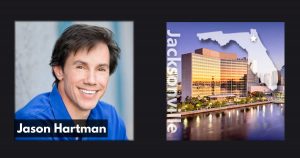
In this episode, Jason Hartman shares his thoughts on an article written by Nick Giambruno, The World’s First Cashless Society. He also talks about Arkansas, the most landlord-friendly market in the US. Then, Jason interviews Marshall Saunders, one of Swanepoel’s 200 most powerful people in residential real estate and a recipient of RISMedia’s 2013 Tech Titan award. Marshall talks a little bit about the history of crowdfunding and shares why it is a game-changer for investing in startups. They also discuss how banks and mortgage companies may respond to this investment type in the future.
Announcer 0:00
This show is produced by the Hartman media company. For more information and links to all our great podcasts, visit Hartman media.com.
Announcer 0:13
Welcome to the creating wealth show with Jason Hartman. You’re about to learn a new slant on investing some exciting techniques and fresh new approaches to the world’s most historically proven asset class that will enable you to create more wealth and freedom than you ever thought possible. Jason is a genuine self made multi millionaire who’s actually been there and done it. He’s a successful investor, lender, developer and entrepreneur who’s owned properties in 11 states had hundreds of tenants and been involved in thousands of real estate transactions. This program will help you follow in Jason’s footsteps on the road to your financial independence day. You really can do it on now. here’s your host, Jason Hartman with the complete solution for real estate investors.
Jason Hartman 1:04
Welcome, welcome. Welcome to the creating wealth show. This is your host Jason Hartman, Episode Number 601 601. We passed our 10th show with a flashback Friday episode with none other than the great David Allen Yes, the guy who will help you GTD get things done. He’s an organizational expert. And I hope you enjoyed that episode. Because a lot of people rely on getting things done technique, big corporations around the world use his stuff, and it’s really it’s really good, good stuff. We have got so many great shows coming up for you. Gosh, today our guest will be Marshall Saunders. He will be talking about various technology and some issues going on in the residential real estate world. And I think you’ll find that to be interesting. On Wednesday we have Andrew Schiller, the CEO, Dr. Andrew Schiller, sorry, he is a doctor. in geography. Yeah, geography. I was gonna say geology, geography. I don’t think I’ve ever heard of a doctorate someone with a doctorate in geography. I guess he just study the map all day, right. But no, he’s the CEO of neighborhood Scout, a tremendous research tool that can help us research the areas in which we invest the areas in which we might not want to invest in the areas to avoid. On Friday, we’ve got Harvey Mackay you’ve heard him multiple New York Times bestselling author, the swim with the sharks guy how to swim with the sharks without being eaten alive. And so many other great books on Monday, john Lieber, thumbtack sharing economy, that’s going to be really interesting. We’ve got Joshua Crum, coming up talking about inflation, deflation, and stagnation and bit gold and gold money. And then we’ve got a flashback Friday episode talking about evaluating housing versus office retail and commercial properties. Then, the following Monday, Jane route, talking about the 2000s a new reality. She is CEO of new topia, and discover networks, guys, so many other ones, Bobby monks uninvested, how Wall Street hijacks your money and how to fight back, and so many others. I mean, we’ve got so many shows planned out, it feels good. We’ve never had that many episodes planned out in advance a lot more after that, or even planned out. Amazingly, amazingly.
So today. Yeah, we’re going to talk about some good stuff. But before we get in with our guest, I want to talk to you about a Casey Research article. And I found this one to be really interesting. This is Nick gam Bruno, and we’ve had him on the show a few times. I’ve also had him on my jetsetter show, and I believe on my holistic survival shows as well. He’s out with a really good article last week, talking about the world’s first cashless society is here, a totalitarians dream come true. And you know, Nick is making some good points in this article, because cash is really a form of freedom, the ability to spend money, how you want it, and for that spending, which of course spending the ability to spend is is a way to cast a vote. It’s a way to exert power, that spending when it’s not secret, boy that gives the totalitarian overreaching intrusive government folks, a lot of power, a lot of power. So a cashless society, or every transaction is trackable and traceable, in my opinion is a dangerous thing. But Heck, totalitarians, dictators, socialists communists, and central planners they all love it, don’t they? central planet it be the war talks about it. Central planners around the world are waging a war on cash. In just the last few years, Italy Made cash transactions over 1000 euros illegal. So what is that about 1300 dollars. I mean, it’s illegal to use cash. Over 1000 euros in Italy, Switzerland proposed banning cash payments in excess of 10 of 100,000 francs. Russia banned cash transactions over $10,000, Spain banned cash transactions over 2500 euros. Mexico made cash payments of more than 200,000 pesos illegal Forgive me, I don’t know the conversion on the pesos, but probably not much because Mexico is at a lot of inflation.
Over the years, I remember when I was a kid hearing about Mexico’s rampant insane inflation, or gwy banned cash transactions over $5,000 in France made cash transactions over 1000 euros illegal down from the previous limit of 3000 euros. So, you know, the US government is doing the same thing. The article goes on to talk about says thanks to these made up words, the US government is imposing an increasing number of regulations on cash transactions, try withdrawing more than $10,000 in cash from your bank, they’ll treat you like you’re a criminal or a terrorist. Here’s a great example in the article and it talks about take the $100 note which it’s not $100 bill even though that’s the way we commonly refer to it, it’s a note it’s a Federal Reserve Note, again, doesn’t have any real, you know, real power behind it except the power of the US military, right, which is incredibly powerful. So all you gold bugs out there, be damned you’re you’re missing the point with gold bug issue. I used to believe in what you believe in, but I no longer do. Okay, so take the $100 note, for example. It’s the largest bill in circulation today. But this was not always the case. At one point, the US had a $500, a $1,000, a $5,000 and even $10,000 notes. But the government eliminated these large notes in 1969, under the pretext of fighting the war on some drugs. This is interesting, folks, do not dismiss this do not minimize it. It is important as government’s tighten the reins, and move us to a point where central bankers and governments control all value all symbols of value all currency, which it’s not, you know, they’re not. It’s not money. It’s currency. Right? Because it’s a made up thing. It’s a it’s done by Fiat. This is how they tighten the noose on their citizens by basically outlawing cash or making it very difficult to deal in cash.
Now, admittedly, you know, the criminals do deal in cash. I understand that. Okay. But you know, it’s kind of like gun control, right? Why are you punishing the good people for what a few bad players are doing? And of course, they maximize the bad players, and they, you know, put them all over the news and give them lots of attention. But they never tell you the good things that happen. They never talk about, you know, the flip side of it, the government oppression side, you know, governments have been really the ugliest players in all of human history, the most oppressive force ever, more so than religion or business. It’s always government government has killed and oppress more people than any other force on earth ever. Okay. I mean, just just in the last century, we can we can add about 200 million people to the death toll done by governments. Yes, under governmental systems that are so good that they have to force people to believe in them. Just ask Stalin, Hitler and Mao okay, right there, you got three guys that are probably responsible for the deaths of easily north of 150 hundred and 70 million people. So so you know, yes, terrorists and drug dealers, they do bad things too, but not to the kind of scale that government does them.
Alright, enough of that. So properties and by the way, I wanted to share that with you because, you know, we’re always talking about inflation, deflation, stagnation, monetary policy, how it affects us as investors and that’s why I thought it was important to share the cashless society push with you and just make sure make sure you’re thinking about that and watching for it. Okay. So here is a property you know, we’re always we have been selling so many properties, or I should say, people have been buying so many properties Through our network in places like Memphis and Atlanta in Indianapolis and Chicago land area, and so many others, right. But I haven’t talked in Orlando, you know, we just did a property tour there many of you bought properties are in Grand Rapids. Don’t forget Grand Rapids, Michigan, you know, the land contract stuff. You know, that’s kind of flying a little bit under the radar. I know not enough of you are checking that out. Be sure to talk to your investment counselor about the land contract opportunity in Grand Rapids. That’s pretty, pretty awesome. But one market we have not talked about in a while, is the most landlord friendly market in the United States. That’s Arkansas. Good old Arkansas. You know, we’re slick Willie, Bill Clinton, and his criminal wife Hillary came from, you know, it’s funny, like this election season, right? It’s so different, because usually the Republicans, they can’t come up with a decent candidate to save their life. Right. Those Republicans, they haven’t had a good candidate for quite a while, you know, I mean, they’ve had some good ones, but not a good candidate. They could actually win also, right? They could actually win an election. But this time you look at the Democrats, and they they’ve got they’ve got a communist and a criminal. That’s what they got. I mean, the democrats just don’t have anything good this year. I don’t know. I guess if I had to pick one. I’d pick good old Bernie the communists.
But I mean, Hillary is just wow, geez, that’s beyond the beyond her. Her rap sheet is so long, it’s just insane. But anyway, you know, they’re from good old Little Rock, right, Bill and Hillary. So here is a little rock property, let’s just analyze this one. Real quickly, we’ll get to our guests after this 1700 and 50 square feet, priced at 110. Nine, subject to qualifying, you need about $27,000 to buy this property with closing costs, projected rent 1200 per month. And that means that it should throw off cash flow based on our performance at Jason Hartman calm in the Properties section, it should throw off about 30 $500 a year just slightly under 30 $500 a year is what the performance shows, which gives you a 1.63 debt coverage ratio. And remember the debt coverage ratio is that that one that really conservative investors want to pay attention to? Because it’s really like saying, How likely Am I to ever get into trouble with this property? Well, with a 1.63 debt coverage ratio, you’re pretty safe, it’s very unlikely you’re going to get yourself into trouble with this property. And then a cap rate projected 8.2% 8.2 cash on cash return 13% annually. So if you can maintain the same income and expense ratio, and the property goes down in value, or it never goes up again, you will get 13% annually off your investment. Now, if it appreciates, at the you know, the arguable national average of 6% annually over time, and if the vacancy rate is one month per year, 8%. And the management fee is 8%. And the maintenance percentage is 5% of the income spent on maintenance to maintain the property, you know, if you don’t have any ugly surprises, right, it’s got a new hv AC system, new water heater, the roof was put on in 2008. So the roof is fairly new. Looking pretty good, right? your overall return on investment should be 44% annually. 44% annually. And you know what I will say? Even if it only goes half as well as projected, you’re going to get yourself 22% annually. Where else can you do that? 22% annually. That’s phenomenal.
I mean, just go to Jason hartman.com. Look at these performance, you know, we really believe in standardizing our data. So just make sure that you understand how to read that one page performance that will make you a very good investor. And also if you go to Jason hartman.com, and you click on the resources section, and you want to really do your homework, and you join property tracker. Okay, let’s see where it’s on the resources page at Jason hartman.com. If you scroll down toward the bottom, on the left hand column, it’s one up from the bottom it says Platinum property analysis and tracking system okay. You will get yourself a one month free trial for property tracker, which is a great little software. And it’s only 1995 A month after that. So it’s got a discounted rate after that, and then you don’t have the static performance. You can change the numbers, you can play with the variables, you can adjust things and see how it all looks okay, and see how your investment performs differently based on different things.
Of course, check out the properties in all of our markets. Now. Just to remind you, we have of course, the featured markets, there are seven of those, including Chicago, Orlando, Little Rock, Memphis, Atlanta, Birmingham, Indianapolis, right. But down below, if you scroll down the page at Jason hartman.com slash properties, you’ll see a map of the US. And there we even have more areas and all the dark green states. Okay. So take a look at that and enjoy it. Some great properties there. And by golly, you’ve been telling us they’re great because you’ve been buying properties like crazy through our referral network. So we appreciate your business. Thank you so much.
Be sure to use voxer one person already did one of our listeners from the Netherlands. And I will play that conversation for you on the air once we have the dialogue a little bit more. So it’ll be interesting to all of us the listeners. I asked for clarification on a point. That’s the great thing about voxer literally the best way to communicate ever. Vo x er it’s a free app for your smartphone. Go get it. Vo x er, I don’t own this company. I should because I love it so much. look me up. And I will answer your questions on the air. And you just go to get yourself a voxer app. And then look me up j Hart at eight j h AR t eight on voxer. Jason Hartman asked me your questions. Give me your comments. We’ll have a little discussion. I’ll play it on the air. A lot of other people have those same questions. So we thank you so much for participating there. Look forward to hearing them.
And of course Dubai is coming up. I cannot believe how inexpensive these rates are to go to Dubai. You can fly Emirates out of LA x. Few of us venture Alliance people are traveling together. This is President’s Day weekend ish area in February. And we are going to Dubai with a venture Alliance go to venture Alliance mastermind calm. It’s about 1300 dollars round trip for economy class on Emirates. Emirates is one of the best airlines in the world. Okay. I have never flown it. I’ve always wanted to, you know, they serve you cappuccino. And I mean really, you know, just just awesome. And of course you can fly business or first class as well. But fare starting at just about 1300 dollars from lax. It’s a direct flight to Dubai. If you want to join us and you’re flying through LAX, I think we’re going to take a car up from San Diego, probably. Let’s see you in Dubai join us. Okay, you can come as a guest for venture Alliance for just $2,000 your airfare is very inexpensive. And then you’ll just have your hotel. And other than that, we will have an awesome time in Dubai. We’ll probably do a side trip over to Abu Dhabi, as well. And wow, what a what a gem the gem of the Middle East so it should be a phenomenal time lavishly, rich, incredible place, Dubai, so I can’t wait to see it myself. My first time there. Of course meet the Masters is almost sold out. Okay. We’re not going to be talking about this much longer because it’s going to be sold out pretty soon. It’s getting close. So go to Jason hartman.com. Get your meet the Masters tickets in the events section. And let’s jump over to our guest here we go.
It’s my pleasure to welcome Marshall Saunders to the show. He is the co founder and managing partner of Saunders Daily, and he’s named one of Swanepoel’s 200 most powerful people in residential real estate and RISMedia’s Real Estate Tech Titan. Marshall, how are you?
Marshall Saunders 19:15
I’m very good. Glad to be here.
Jason Hartman 19:16
It’s good to have you here. So what is going on in the world of crowdfunding? I mean, this is just, you know, I I’ve long said that it’s such a game-changer. But, you know, it’s hard to tell how much adoption there really has been. Certainly, there are crowdfunding companies cropping up everywhere. That’s sort of the way things usually happen. When you know, laws change and new opportunities develop. You know, maybe you can give us some insight into what’s going on with it. I mean, is a lot of money really moving over to two crowdfunding-oriented investments? Is anyone really keeping track of it?
Marshall Saunders 19:53
I don’t think anyone’s really adequately keeping track of the amount of money going into crowdfunding. And you’re right. It is. extremely popular, it’s a very big buzzword. A lot of things are happening, a lot of laws are changing a lot of excitement. And momentum is moving there, how much the actual crowd is coming with it and and how much of the American population even really knows what’s going on, apart from people who are interested in it. That remains to be seen. I do believe it is fundamentally a game changer. That we’re This, I think, overused a lot. But it really is fundamentally true here. This is a game changer in how people invest in startups, invest in businesses invest in real estate, but I think it will take a long time for it to become part of the general American consciousness. And it will take a long time before it is is fully reaches its potential. But we’re at the precipice right now. With changes coming from the SEC. And and more and more crowdfunding companies out there every single day, I think we will see this be a major force in investing over the next decade or so?
Jason Hartman 21:11
Well, you know, Marshall, it kind of makes me think of democratization. I think that the world is becoming so democratized in so many ways. And you know, we can thank the internet for virtually all of it, whether it be news, media, whatever, there’s just so many areas, it’s, you know, the sharing economy, it’s not even worth going into, because it take it take an hour just to talk about them. But crowdfunding is part of that, you know, the SEC, otherwise known as the scoundrels encouragement commission, it has never been for the people, although that’s what they pretend to be. They’re really for the big, you know, Wall Street players. And they’ve helped them preserve semi monopolies for decades now, and make it very, very difficult for smaller players and new players to enter the market and, and raise capital and, you know, for a real estate deal or a business, you know, just just, you know, anybody listening out there, if you’ve got a company, a small, small to medium sized business, just try taking it public, good luck with that, see if you can manage the compliance and the expense. And, you know, the the attorneys and the accountants and the ongoing you know, it’s impossible, you just, you can’t play in that game. But crowdfunding has opened up the door to play in a different way, in that in that world, what are what are your thoughts on that democratization?
Marshall Saunders 22:33
I totally agree with you. It is a major democratization of the investing system and the and security system. But like with any, anytime, democracy is messy, democracy is annoying, democracy is loud. Democracy is kind of scary. Because there’s a lot of voices and a lot of different feelings, and it kind of looks, sometimes freedom looks a lot like chaos. And and I think that we’re going to that period with crowdfunding too, as this becomes more open to the general public and, and the requirements that the SEC has for accredited investors comes lowered, we’ll see tons of people out there screaming and yelling about crowdfunding. And some will say, it’s the Doom of doom of us all. Some will be out there scamming people in the name of crowdfunding. And it’s just going to be kind of a messy time. But that’s what freedom is. Freedom is messy. And if you’re in a totalitarian or fascist state, the trains run on time, and it’s clean, and it’s orderly, and everyone knows their position, and no one has personal freedom. So I do believe that crowdfunding is a major and I would say, unnecessary, democratic step in society. I really believe in kind of a cultural evolution. And I believe that the internet happened for a reason it came about almost as if we were starting on armor, or growing a leg or something like that. It came about because it can combine the efforts of hundreds of thousands if not millions, if not billions of people, and combined our efforts and, and, and allows us to leverage numbers to do something incredibly great. And so instead of having one person that needs to come up with $5,000 players, to give a little girl, a surgery, she can go out and she can raise stuff from 1000 people $5 that would have been impossible back before the internet, going door to door to door to door. She would have Need to get major news coverage or something of the sort. But she can do this now on her own in a matter of days. It’s leveraging the power of the eyeballs of so many people on the internet to leverage the numbers to do something great. Even though we’re all making very small contributions individually.
Jason Hartman 25:19
Yeah, it really is amazing. So tell us how this evolved through the FCC, not FCC, the SEC, and give us the the sort of the points, it started with the JOBS Act, right. And then what happened next, and what happened next? And what happened just recently?
Marshall Saunders 25:37
Right. Well, to the beginning, you know, crowdfunding was all over the place back in the early 1900s, Henry Ford started Ford Motor Company through crowdfunding going town to town to town, approaching people he didn’t know to try to give good money to start his company. And there were many, many crowdfunding efforts in the 1933. In 1933, you know, the fall of the national economy, people were being ripped off. And so they instituted the rule of accredited investor and said, Hey, if you’re if you don’t have money to lose, you simply can’t invest. It’s it’s against the law, unless it’s a sec approved our registered commodity. And that lasted for pepper, you know, like that was, you know, we’re approaching, you know, 80 to 100 years where that was the, that was the norm. In 2012, Congress passed, and President Obama signed the JOBS Act. And it was called the JOBS Act, because no one could, in a down economy, no one could vote against the JOBS Act, it was kind of a Trojan horse, because it was actually jumpstart our business startups. And, and what that did was titled to allowed five of 60 company like us, that’s what we do. If as long as you’re going to accredited investors, and you’re only seeking accredited investors, you can generally solicit, we can take out ads in the paper. And the most critical thing is, you can have a site
Jason Hartman 27:16
Hopefully, hopefully, you’re not advertising in the paper.
Marshall Saunders 27:19
Yeah, we are. We absolutely well,
Jason Hartman 27:22
That, that’s so old fashioned. But, go ahead.
Marshall Saunders 27:26
We’re also the internet company. But But what my point is, you know, it used to be that you had to know somebody, and you had to have a private personal relationship with the person running the investment to the person who is investing. You know, it’s kind of like the old boys club, right? It’s just about the, the personification of that. Well, this allowed general solicitation. So when you have a website, you don’t know who’s seeing that website. So that really is speaking to a general audience. Title three of the JOBS Act that was passed in 2012, allowed for true crowdfunding, where unaccredited investors could invest. And that law gave the SEC a certain period of time, which was pretty short, about 270 days to come out with their requirements. Like they could limit the amount of investment that a crowdfunding site was looking at, or limit the amount of investment, any individual could put in all those kinds of things. And it gave them pretty free rein to come up with those rules. Well, that was three and a half years ago. And, and they still haven’t come up with that rule. There. There is some idea that soon, rules will come out regarding title three, and that that title three will then be part of the national investing lexicon. And if you follow the rules very closely with the SEC will certainly make sure that you do. That you can have unaccredited people participating in crowdfunding countries.
Jason Hartman 29:13
Interesting. Okay, so just clarify that last one. So you can have an unlimited number of people participating, whereas before you couldn’t. Is that what you’re saying?
Marshall Saunders 29:25
Actually in in title three, we don’t know yet. Okay, the rules will come out. But that will probably allow unlimited number of people, but it will restrict the amount of money that you can raise from accredited and unaccredited investors. And it will restrict the amount that an unaccredited investor can give to a crowdfunding site. So it’s still going to be a little bit patronizing, right. It’s still gonna say, hey, if you make under $200,000, you need to be controlled. You can’t invest your Money where and when you want to or in the amount that you want to, because you’re obviously too dumb to understand that on your own. So we need to protect you. And so even though that patronizing does bother me, it’s a little bit of, you know, get our toe in the door, and let’s prove ourselves. And let’s prove that the system works and can be managed properly. And then over time, hopefully those, that door will widen, widen, widen, and maybe those restrictions will go away all together.
Jason Hartman 30:29
Hmm, interesting. Okay. Okay, so get your toe in the door, I get it. So is this a game-changer for real estate? I mean, tell us what you think this means to the real estate market? And let me just seed that question a little bit. Okay. Of course, it means access to bigger deals for little guy. Okay. Of course, it means like you say, freedom is messy. There’s going to be, I believe, tons of fraud. People will get ripped off, there will be criminals. There’s always been criminals. But now, you know, they they’ve got like a new platform. Right? So you can address that? I don’t know if it’s a fair comment. I mean, you’re a crowdfunding company. So you might want to say no, that’s not true. We’re great. Whatever you think, you know, we’re we’re audited, you know? So So say that if you want. And then here’s the here’s the angle that I don’t know, if many people are talking about it, you know, if this really, really takes off? Number one, does it mean there will be money, a lot of money moving away from the old school, Wall Street investments, and moving in to crowdfund in real estate and business investments, which will increase values of these properties. You know, it’s I mean, it’s the classic definition of inflation, right? A lot a big supply of dollars chasing a limited supply of goods and services. So, you know, not many people seem to be talking about that angle. Like is that’s gonna put push prices up because there’s more money coming at it?
Marshall Saunders 32:05
Well, first of all, I do agree. This will be an avenue for shysters and, and not even shysters. But people who come along and their investments would have been booted out the door by a bank, or a more savvy investor. But now because they have way more eyeballs looking at their possible investments, they can get funding where they couldn’t have it in a better market or in a different market. And that might mean that less desirable or more questionable investments get out there. Nonetheless, you know, that’s totally aside from the people who are actually just trying to rip people off. And like you said, the people who are just openly ripping people off, I guess, you know, they can do that now. So I’m not so sure that that’s going to be made much worse by crowdfunding.
Jason Hartman 33:00
Well, we’ll we’ll we’ll wait. Let’s just examine that for a moment. If we could, they can do it. Now. You’re absolutely right. And, you know, look, my thing is about direct real estate investing. I am fascinated with crowdfunding, I like being a direct investor, you know, I do this thing I call the 10 commandments of successful investing. And commandment number three is thou shalt maintain control, you know, but of course, as a direct investor, you have limitations. You know, you can’t, you don’t have access to some deals, right? If he, I mean, you know, if you’re only playing with your own money and buying your own properties directly, you have limitations. But at least the likelihood is you’re not going to get defrauded, because it’s just going to be you, you know, doing the deal, and you’re directly in control of it. And if you if you’re, if you’ve got some education about it, you know, you’re gonna make good decisions, most likely. But certainly a shyster can go out there and set up an LLC and say, hey, look, we’re gonna buy this building, and they can go around to the people they know, and raise money and then defraud them and rip them off, right? That’s what you’re talking about. But you know, with crowdfunding, it’s like, No, you got a big platform, you know, the whole world is your oyster now. Right. So it’s different in that way, isn’t it?
Marshall Saunders 34:10
I totally agree. I totally agree. And that’s, I mean, as much as we can, you know, have our frustrations with the FCC. That’s why they’ve taken so long to do this, because it takes a long time to get your arms around. How are they going to monitor this, and I got a feeling that there will be some sort of federal registration of all crowdfunding portals and investments, it will be somehow registered, you know, somebody’s got to keep track of what goes on here and who the players are, and whether this is a legit investment or not.
Jason Hartman 34:46
I know, but then then, are we gonna move into you know that? I mean, yes, that all sounds great. Right. But, you know, it could move us into the whole thing that we just described that we didn’t like the lack of democratization, right? Because, you know, undoubtedly, there’s going to be a new compliance burden. There’s going to be there, they’re gonna charge some fees. You know, and here we go again. Now it’s like doing an IPO. But it’ll be easier, obviously. I know.
Marshall Saunders 35:13
Yeah, it’s gonna be an IPO light and probably light, light light,
Jason Hartman 35:18
Through less filling than your regular ideal. Yeah, no, it’s probably gonna be very light. I get it. I got it.
Marshall Saunders 35:22
But I think the number that you pulled out there, I think it’s gonna be literally maybe a third to a to 20% of what you used to have to do. If it’s a complicated IPO, well, then, or a complicated crowdfunding venture, then, you know, it might be just as much. But you know, if you’re having a single building, like, we have a four Plex that we’re offering right now, on our site, if it’s a single building, we’re setting up one single asset LLC for that building, that people come onto our site, if they’re interested, they read our ppm, they read all of our background information and all of our documentation, they can even go out and see the property with us if they wish. And they say, Okay, I want to buy a share of that LLC. And they give us 20 $500 is the minimum investment in that particular property. And that would get them one share of that LLC. And, and then they are, they are on the state record, they are literal owner of that LLC. And the only thing that that LLC owns is that one property,
Jason Hartman 36:35
Single purpose, LLC,
Marshall Saunders 36:37
Yep, single asset LLC. And then and you know, and then they do, they do not have control every day decisions. We are the manager, we are the B shares, but we manage and we control the property. However, in every single LLC, we build in kind of catastrophic control, like if I, you know, just go crazy, or if I don’t show up, or I’m, I can’t be found all of the investors get the name and contact information of the other owners, obviously, and we even have ownership meetings and ownership parties. But they if 72% get together, you know, super majority get together and vote that yes, we are going to get together and we are going to wrest control of this LLC away from these people. They can do so. But it’s obviously different from everyday control. This is that’s catastrophic control. But yes, you know, the world is going to be you know, it’s going to take some settling down and, and some controls put into place. I do believe democratization, true democratization is in the future, but it might be kind of a measured approach, we might, we might not see the true democratization for a while until we can kind of get some rules under us, and some kind of protocols of how crowdfunding is done.
Jason Hartman 38:07
Okay. So what do you think about the prices? Did you really address that issue? The prices of real estate?
Marshall Saunders 38:12
No, I didn’t. I’m sorry.
Jason Hartman 38:13
I think that’s the part nobody’s really talking much about I don’t, I don’t really hear any, I feels like I’m the only one talking about that. But maybe I’m not.
Marshall Saunders 38:21
Well, I do agree that the more money the more buyers, it can kind of inflate the market. But I think one of the biggest aspects is what we’re going to see is more equity, that when these properties are bought, they aren’t bought with 10%, down 20% down, but they are bought with 50% 60% 100%. Sometimes. That’s why Initially, the larger banks and even the local banks were kind of against crowdfunding. And now they’re kind of seeing the other side of it really positive, because they can give a 50% loan to value ratio loan, they make money. And their risk is so much lower, because there’s so much more equity in the market. And I think that that’s a, that’s a huge, positive. One of the reasons that I started this company is I was a broker of a very large brokerage, back when the economy tanked and the housing market went into the went down. And what I saw was people were losing investment properties when the value went down by 10%. I mean, you know, an economy should be able to take and the housing market should be able to take a 10% hit and value, maybe even a 20% hidden value. Without seeing that sharp of a rise in foreclosure. We need more equity in not only the investment market but the single-family homeownership market. And, and I think that’s something that crowdfunding brings to the,
Jason Hartman 39:56
Well, you know, it’s an interesting point you make I mean, I totally get what you’re saying about that. Uh, you know, the crowdfunding deals? But how’s that going to change the single-family home market? I mean, yeah, you know, I love leveraged as an investor because, you know, it amplifies your returns and lowers your risk, it’s great. But, you know, for the overall economy, and, you know, the market being less volatile, I mean, I can definitely see the advantage there. And maybe for the solvency of the banks, or the government not having to print money to bail them out, how’s that gonna change the single-family home market?
Marshall Saunders 40:27
I think it might be big, this is where I leave what I’m actually doing and kind of talk more theoretically, or, or fantastically about the future. But there may be a time when a person is buying a single family home, and they go to a crowdfunding site to help them give, get the 50% down payment, or the 20% down payment, or maybe even the entire mortgage. You know, it, it provides that whole idea that you’re more in charge of the economy than just will the bank approve me Will the bank not approve me?
Jason Hartman 41:06
So, so how would that work? Like, just speculate on that? If you would, because I think, I mean, certainly you can go you can go on Kickstarter now and make a video of you sobbing and crying and say, I need a home for my family. And you know, you might get it right. Okay, you might, you know, people might fund your house. Certainly there. There’s everything on there. And I mean, I think it’s awesome. Like what a way to give to charity and do something for your fellow human being right. But I’m sure there’s some shysters out there doing those campaigns, too. But how would that work? Like would it say, you know, this is from an equity point of view, not a charity point of view, would you say like, Hey, I’m trying to buy a, you know, $300,000 house, for my family, blah, blah, blah, and we’ve got $20,000. But we need 10% down. So we need 30,000 plus closing costs. So we need about, you know, 40 say $45,000 just round it off. And you know, if we could just raise another $25,000 we can get a home for our family. And you know, maybe people throw 100 bucks each. To be you know, to be part of it. What would they do? Give them little equities pieces for hundred bucks each?
Marshall Saunders 42:15
Absolutely. Give them a, give them a second mortgage position, a second lien position, obviously the bank, the primary mortgage holder would have to be okay.
Jason Hartman 42:24
Debt, not equity. You know, that’s debt, but okay. Yeah,
Marshall Saunders 42:30
Yeah, sure. Yeah. And, and, and then Yep, they would be either a debt holder, because a lot of crowdfunding sites, real estate, crowdfunding sites are raising money for debt offerings. It might be a debt offering, and you say, Hey, listen, you know, I’m getting my primary mortgage for 4%. But I will pay 6% on this additional 10 $10,000, and pay everyone off balloon payment person or something like that, or maybe interest only payments, and then pay off the principal in four years. And then you go out, and you try to do that. And, and you go out on either, maybe a dedicated site for mortgages, or you’re going out and just saying that on a general crowdfunding site. Again, this is not something necessarily in my business plan. But as you kind of start seeing all the aspects of real estate, and all the aspects of crowdfunding. That reality, though, it seems so distant right now could become something real very, very soon. And I think it’s just an interesting facet of the business and and how it could and just think of the mortgage company, they probably wouldn’t care that much. Right. Okay. So now I have more equity, and I’m still in first position. So it’s a 70, you know, I’m giving a 70% loan rather than an 80% loan.
Jason Hartman 43:59
Right. As long as here’s, here’s the way the mortgage company views that though, the mortgage company and I know you know, this, I’m just sharing it for the audience’s benefit. But they want you as the actual borrower, usually, to have some skin of your own in the game. It’s great that their loan to value their LTV ratio is better. It’s more secure for the bank, but they still want you to some of your own skin in the game. You know, they don’t want you to raise it all crowdfunded. Because you walk away from everything, you know, you have nothing to lose, right?
Marshall Saunders 44:28
Oh, yeah, I would imagine that, I mean, it just works like that. Now, even when, you know, when a parent gives you money, or when a friend gives you a down payment. They might say, Okay, well you need more down though, you know, like, they might move their percentage from, you know, 80% financing to 70% financing if you’re getting that. And then I could I could definitely see a mortgage company making that requirement. Like hey, if you’re going to crowdfund we need a Higher down payments from you then, and you need to work harder.
Jason Hartman 45:03
I agree. I mean, you know, it would be great if the banks I mean, the banks are so stupid, I’m just gonna say it. They just don’t they don’t play ball with sensical things. I mean, I will bet you, you know, and this is a separate tangential issue, but I will bet you that of the millions and millions of people who intentionally chose to do strategic defaults during the Great Recession just a few years ago, okay? If the mortgage companies had real people answering the damn phone with a brain, who was not a Philippine call center, reading a script, if they actually had thinking people, okay, not script readers, you know, helping the borrowers, there would have been millions, less, fewer foreclosures, I’ll just bet you, you know, if they would think and talk and work things out and say, Okay, we’ll take a deed in lieu of foreclosure, you know, we want to work out a short sale with you B of A seemed to finally get smart about that toward the, toward the latter days of the, of the Great Recession. But I mean, it’s just idiotic, I mean, it’s mind boggling that it’s mind boggling that Apple can answer the phone, within a couple of rings, when I want to spend $200 and buy an iPod Touch, but but a mortgage company that has a $200,000 mortgage on one of my properties, can’t answer the phone with a person in the United States. That’s not reading a script, you know, and I got it takes 45 minutes, you know, what, why is that? That’s just so illogical to me, you know.
Marshall Saunders 46:46
I agree. And I saw a countless time again, I was a broker during that whole time and help agents do short sales, and then you know, kind of modify their business to go after that market. And the responses that you get from bankers were were just, there was no basis in reality. And I do, I do agree with the somewhat conspiratorial thought that I think a lot of them, they would prefer them to go into foreclosure, because then they were able to get mortgage insurance and, and they were able to count all of the payments as income. And sometimes it made much more sense for us to go into foreclosure, they made more money off of it than they did during a short sale. And, and so they were acting in a real counterintuitive way, because the system had been set up to incentivize them to go into foreclosure rather than short sale or deal with the real life people. And so it was kind of a just a bizarre system. And I lived in an area where a lot of my neighbors did strategic foreclosures, you know, in an area of about 80. Homes, about 20 of them did a strategic foreclosure. Yeah, I felt like a chump being the one paying my bill every month.
Jason Hartman 48:08
That’s the way I felt in the 90s. When I saw when I was when I was a traditional realtor, doing short sales for all these clients, I kind of felt like, Oh, these clients are a bunch of deadbeats, this really makes me mad, I’m a chump. Because I’m not taking advantage of this, you know, free money giveaway. And I’m paying all my mortgages. You know, it was just, yeah, it’s, you know, the world is doesn’t make any sense. A lot of times, and this is one of those times. But anyway, enough of that. Okay, Hey, good. We got to wrap up, give out your website, tell people where they can find out more and, and just any closing comments?
Marshall Saunders 48:41
Well, first of all, my website is www dot saundersdailey.com, which is S A U N D E R S D A I L E Y.com.
Marshall Saunders 48:55
And you can come to our site and look at real estate investments that you want to participate in. And I will just reiterate that, I think you’re right, this is a game changer. It is a huge impact to our economy. And I think we’re gonna move from the sharing economy, to the owner economy, where a person of pretty average means can walk down the street and say, Hey, I own part of that restaurant, I own part of that coffee shop, I own part of that building. And it will be very empowering and very interesting.
Jason Hartman 49:29
And hopefully, there will be some new ways to track all this stuff for there will be some standardizations that will be implemented. So people aren’t getting ripped off, you know, and like kind of like gap accounting and Sarbanes Oxley, but you know, maybe for the smaller world. So we’ll see. It’s interesting to as it develops. Marshall, thank you so much for joining us. Really interesting conversation.
Marshall Saunders 49:51
Thank you very much. It was very pleasant.
Announcer 49:55
I’ve never really thought of Jason as subversive, but I just found out that That’s what Wall Street considers him to be.
Announcer 50:03
Really? Now how is that possible at all?
Announcer 50:05
Simple. Wall Street believes that real estate investors are dangerous to their schemes? Because the dirty truth about income property is that it actually works in real life. I know.
Announcer 50:16
I mean, how many people do you know not including insiders who created wealth with stocks, bonds, and mutual funds? those options are for people who only want to pretend they’re getting ahead.
Announcer 50:27
Stocks and other non direct traded assets are a losing game for most people. The typical scenario is you make a little you lose a little and spin your wheels for decades.
Announcer 50:38
That’s because the corporate crooks running the stock and bond investing game will always see to it that they win. This means unless you’re one of them, you will not win.
Announcer 50:48
And unluckily for Wall Street. Jason has a unique ability to make the everyday person understand investing the way it should be. He shows them a world where anything less than a 26% annual return is disappointing.
Announcer 51:03
Yep. And that’s why Jason offers a one book set on creating wealth that comes with 20 digital download audios. He shows us how we can be excited about these scary times and exploit the incredible opportunities this present economy is afforded us
Announcer 51:17
We can pick local markets, untouched by the economic downturn, exploit packaged commodities investing and achieve exceptional returns safely and securely.
Announcer 51:28
I like how he teaches you how to protect the equity in your home before it disappears and how to outsource your debt obligations to the government.
Announcer 51:36
And this set of advanced strategies for wealth creation is being offered for only $197.
Announcer 51:43
To get your creating wealth encyclopedia book one complete with over 20 hours of audio go to Jason hartman.com forward slash store.
Announcer 51:52
If you want to be able to sit back and collect checks every month, just like a banker. Jason’s creating wealth encyclopedia series is for you.
Announcer 52:07
This show is produced by the Hartman media company All rights reserved for distribution or publication rights and media interviews, please visit www dot Hartman media.com or email media at Hartman media.com. Nothing on this show should be considered specific personal or professional advice. Please consult an appropriate tax legal real estate or business professional for individualized advice. opinions of guests are their own. And the host is acting on behalf of Platinum properties, investor network, Inc. exclusively.