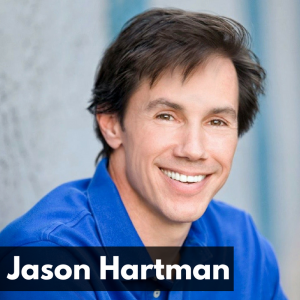
Jason Hartman starts the show by looking at the economic and the human rights standard of living in the US. He also shares his observation from the Tony Robbins Life & Wealth Mastery event in Fiji. Afterward, he talks to Pat Donohoe about technological changes. Their discussion also revolves around converging technologies, valuation of real estate, which may be impacted by adopting self-driving cars, Phillips curve, and robotics. Jason and Pat also share the books and information to stay plugged in, networked and prepared for the upcoming changes.
Announcer 0:02
This show is produced by the Hartman media company. For more information and links to all our great podcasts, visit Hartman media.com.
Announcer 0:14
Welcome to the creating wealth show with Jason Hartman. You’re about to learn a new slant on investing some exciting techniques and fresh new approaches to the world’s most historically proven asset class that will enable you to create more wealth and freedom than you ever thought possible. Jason is a genuine self made multi millionaire who’s actually been there and done it. He’s a successful investor, lender, developer and entrepreneur who’s owned properties in 11 states had hundreds of tenants and been involved in thousands of real estate transactions. This program will help you follow in Jason’s footsteps on the road to your financial independence day. You really can do it on now. here’s your host, Jason Hartman With the complete solution for real estate investors,
Jason Hartman 1:04
Welcome listeners from around the world. This is your host Jason Hartman episode number 695. And I am reporting to you today from Los Angeles International Airport LA x. If there’s a little bit of noise in the background, I apologize. It won’t last for long because we’re going to go to an interview I did on one of our venture Alliance members podcasts. And that is Mr. Pat Donahoe. I was on his show, a couple of months ago, we talked about some interesting stuff. And I want to share that interview with you here, as well. So we’re going to do that. And before we do, I’ll just tell you a little bit about my time in Fiji, I’m just heading back waiting to catch my flight to Phoenix was on a 10 and a half hour flight from Fiji. And before that, of course, we had to connect from one Fijian airport to the other and it’s been a long, long journey. So I’m very anxious to get home. You know how If you’ve ever done these long flights, they wear you out pretty well. So it’ll be great to get home. And it is July 3, and I gotta tell you, the announcer on the airline when we landed here at La X on Fiji Airways did a just a fantastic announcement. I wish I had a recording of it to share with you on the show, because it was really just poetic and inspiring and patriotic and nice. And it compared where we left to where we came to and talked about Independence Day in the fourth of July. And we’re kind of celebrating to independence days really because, of course we have the Brexit we talked about that on the prior episodes, Britain gained its independence, which I think is kind of an odd connection and considering that what is it 200 and I believe 240 years ago, right 200 and 240 America gained its independence from Great Britain. So it’s pretty odd or just kind of coincidental that that would happen like that. So close to our independence day. Very, very interesting stuff. And you know, I am so glad to be back home in the US. It is just amazing to me how, really how the standard of living when I when I go around the world, Fiji was my 80th country. I’ve been to 80 countries, some of those countries I’ve been to many, many times. You know, for example, France, I’ve been to many, many times many countries in Europe I’ve been to over and over. It is just really incredible what Americans take for granted. And I do it myself. I’m of course including myself in that when I when I say that, because just the most basic simple things that are adding up to create just a fantastic standard of living in the US are truly truly amazing. Now, when I talk about that, by the way, I’m talking about the economic standard of living, and maybe the Human Rights standard of living to I’m not talking about A happiness survey or anything like that, one would be welcome to make arguments as to what the happiest countries on Earth are and, and how much that relates to the amount of wealth those countries have. That is certainly open for debate. I am not addressing that issue. That is a more complex sociological issue and psychological issue. But just from an economic standpoint, and from you know, from a civil liberties standpoint, in a lot of ways, although all of this stuff is declining and diminishing, don’t get me wrong. I’m not Pollyanna. I’m not some crazy patriot that doesn’t see the problems because they we have many in the US, of course, we have listeners from 164 countries around the world. So I’m just kind of making some, some interesting observations here. But as America is largely, I believe in decline, it still has a long way to fall before it would lose its spot in the top countries from an economic and standard of living and quality of life perspective. Now, again, that quality of life thing could be argued in terms of happiness and say time and stress levels and healthcare. And one of the things that just bugs me, incessantly is the incarceration rate in America, the way we treat drug offenses and these non violent crimes that I believe should be treated as social problems and not not criminal problems necessarily. It’s just really quite fascinating. How that how it is when you look around the world and compare this. America scores very poorly on a lot of those things, but in so many ways, it scores so so well as well. So it is an amazing time to be alive no matter where you are in the world because As we’ve talked about many times on prior episodes, technology could save us all. From all the bad things that governments are trying to do. Or maybe maybe they’re not trying, maybe they’re just defaulting because they’re so poorly managed governments around the world, all of the stuff that they’re trying to do. The question is which force will win the game? Will technology win the game or idiotic government policies, government spending, debt levels, the financial criminal behavior that exists on Wall Street and other and other stock markets around the world, the derivatives bubble, all of these things which one will win? That is always the question what will be the more powerful force and I believe human ingenuity and technology will ultimately be a more powerful force. So we will see and we will keep the discussing these issues as they play out and what they mean to us as real estate investors or investors in general. And just one more point I wanted to make before we get to the main portion of our show today, and that is the event I just attended. So I attended Tony Robbins life and wealth mastery event. So it was really like two seminars and one in Fiji at his private resort in Fiji. It’s called tamale. It’s pretty cool. It’s it’s definitely a neat place. I, you know, one of the rooms I was switched to because, fortunately, I got lucky. In a way, my room had a leak. And so they switched me to another room and it was an 1100 dollar a night room, which I can’t imagine it would be worth 1100 dollars per night. But that’s how it is in developing countries. Everything is really expensive. It’s just is if inflation hit. So if you want to know what the future looks like, possibly around the world and in the US as we talked about. About the battle between the forces of inflation, deflation and stagnation, just look at developing countries and look at Europe, where everything is more expensive. The standard of living is lower. And that’s what you have less mature supply chains and more socialistic economic policies. So I’m not necessarily talking about just Fiji here, of course, I don’t think Fiji is big on socialism. You know, it’s a poor developing country, for sure. Certainly, you don’t have mature supply chains, you don’t have access to good equipment and good industry and so forth. And, and so that’s why things are expensive. And people are always asking me so many people at this event, were asking me about real estate investing. And there were people there from 15 countries around the world. And they were asking me about, you know, should I invest in the US or internationally? And again, I go back to the position that the United States has a very, very unique, very special real estate market that I cannot find rivaled anywhere in the world. Very inexpensive properties here, a very well developed market for financing and data, meaning you have the MLS here I had dinner with a realtor, a real estate broker from Australia just the night before last in Fiji. And she was talking about how they have no multiple listing service there. And if you want to see properties offered by another broker, you go to that broker and so you don’t have cohesive data. And in the US, that is a very important thing. You have really good public records. You have Zillow, Trulia, realtor.com, all of the different county recorders, the multiple listing service that give you really good valuation perspectives on properties in pretty much every country around the world. The data is just not good. There are all these, what they call off planned developments. And you just have no idea if you’re overpaying for a property, or what the real value is of something. So there are so many things that make the United States a really special real estate market, of course, the financing industry, so well developed here. Now, that’s I know, funny to say, given that we were ground zero for the mortgage crisis and the mortgage meltdown several years ago, but that’s not what I mean. I just mean that access to financing it’s been subsidized by the government since the Great Depression, and Hey, get your government subsidy. Don’t you deserve it too? Right? If you’re listening to the show, I’m sure you’re not a socialist. You’re probably not a Bernie Sanders fan. And you don’t get any handouts from the government. But you know, you do get a bit of a handout when you get a Fannie Mae or Freddie Mac loan subsidized by the government. And even if you don’t take a direct loan from them, if you go to the secondary market in some of these private equity groups, Offering financing because they have to compete with Fannie and Freddie, the the government sponsored entities, they have to be more competitive. So in a way, you’re still taking advantage of the subsidy. So pretty cool things. You know, the 30 year fixed rate mortgage is just not a phenomenon around the world. That’s a mostly American phenomenon. And it’s a great thing. So take advantage of it with your real estate investments. So just a couple comments about the event I attended. I saw Harry dent speak there. He’s been on the show several times. And I called my guest Booker from Fiji and said, hey, let’s book Harry dent back on the show again. So we’re gonna have him coming up. We’ve got a bunch of other great shows and great guests. The first half of the event was basically Life Mastery, and it was about mostly health. It was the first time in my life that I actually did a fast, a juice fast and then it turned into kind of a semi Fast were they, they picked out all of the, all of the thin people in the room. That was I was in that group. And they said, No, you have to eat you, you don’t get to fast completely. So they fed us these little meals where we got a little tiny piece of fish and a salad three times a day, that was breakfast, lunch and dinner. But it was really tasty, you know. And when you get in the habit of eating a light and eating healthy, it’s really good. It’s just totally satisfying. It takes about two days to get into that groove. And since I had never fasted before, and you listen, I don’t need to fast in the sense of weight, obviously. But I do need to fast in the sense of health occasionally. And if you look at pretty much every religious leader and religious book talks about fasting and the power of it, and I’m gonna do you know, I’m I just made a commitment that every quarter on a quarterly basis. I’m going to do a one day juice fast. I mean, I know some of you probably do three days five day and even longer fasts than that. But for me, hey, that would be an accomplishment. So I’m giving myself that little thing. And it was really interesting to get off of coffee and sugar. I didn’t have coffee for over, I think, nine days on the strip. And that was pretty amazing to kick the caffeine habit for over a week to kick the sugar habit, I didn’t have any added sugar of any kind or anything. So I wouldn’t recommend that to everybody listening. I think we all should do that once in a while, just to sort of reset our taste buds. That’s what it did. For me, I kind of reset my taste buds and kind of found I didn’t really need that stuff as much as I thought I did, you know, unpleasant again for a day or two, but after that, it’s the craving just goes away. It was pretty enlightening. Really. And the mind gets a lot clearer. That’s the other thing. Like a lot of these foods we create this sort of brain fog, if at least I noticed that and they they said Tony Robbins was talking about how that works. would be one of the positive benefits you would notice is that the brain fog would clear a little bit. And I did notice that so highly recommend that. The second part was wealth mastery. And you know, it was pretty basic. I didn’t learn a lot from it, it did not talk nearly enough about real estate. And when they did talk about real estate, they didn’t talk about real estate in any real prudent way that most of us could use unless we wanted to make chasing down deals and skimming the MLS and making 1000 offers to find that diamond in the rough that needle in a haystack property, and that’s a full time job. I wasn’t too impressed with any of that stuff there. But it was still interesting. And you know, what you realize is that’s that’s just the level of the knowledge of most people in the world. It’s just very elementary when it comes to finances. Fortunately, that is not you because you’re listening to the show. Anyway, I’ll talk more about this in upcoming times after I get home and have a chance to review my workbook. My notes a little bit, but in either case, just wanted to share some of that with you. Check out Jason hartman.com for the latest and greatest properties we have, and be sure to check out Hartman education comm Hartman education comm for some of our courses, feel free to connect with me on voxer and ask questions that will be aired on the show. And that’s Jay Hart 88 on voxer Vo x er just download the free app.
And let’s get to the main part of our episode today. My interview on one of our venture Alliance members podcast and that’s Mr. Pat Donahoe. So here we go.
Pat Donohoe 15:40
Morning, everybody. This is Patrick Donahoe, welcome to the wealth standard radio man, you’re in for a treat today. I know I say that sometimes quite often, but I mean it I mean it today. So I so I have a special guest in the in the office in the flesh. Jason Hartman. Jason, you were on a couple couple months ago. He was back end of end of last year, but you have an event here that you’re doing in Salt Lake on Saturday. And, and you stop by, yeah, by and hanging out.
Jason Hartman 16:10
Yeah, it’s great to be here. Pat, I gotta tell you, I am so impressed with your company and your office and your facilities. Wow, this place is amazing. It’s, you know, it’s good not to do everything virtually all the time, and to actually go out and, and see things. You know, we all want to be efficient and save our time. And so a lot of us are in our home office or in our commercial office, and we’re not out seeing things. So you know, I remember like, in the old days, I used to go out and see people more and now, I just tried to be more efficient. And so I’m doing a lot of stuff over Skype and with all the great tools we have, and you’re super efficient and well, I don’t know about that. We’ll, we’ll see on that one. But no, it’s it’s really great to meet your staff and your team and you know, just see your operation. I’m very impressed and, and you’re so humble. Like it’s ridiculous. You know here’s here’s Pat pokes listeners just so you know yeah I make like half a billion dollars a year or whatever and now I’m struggling yeah that’s not true but close 499 million a year just kidding.
Pat Donohoe 17:13
No, it’s Yeah. I love I love our office mean it’s kind of like there’s a there’s an energy here that you know it’s really uh it energizes me it’s hard for me to like sit in my home office and do do stuff by myself. I love being in love being in groups
Jason Hartman 17:26
but anyway, well you’re you’re a people person and you’ve got a great team and people so it’s it’s great to come here and you know I worked here most of the day yesterday and just kind of being your office drop in today a little bit and you brought your you brought your your sidekick. Well, yeah, I brought my laptop but I brought my dog and my dog is having fun in your office. That was funny. Yesterday, she she came in and just like took off and started running around. Yeah, that was amazing. She was nuts. I was so afraid. She was gonna break something. Everybody was thinking. Oh my God, that’s gonna kill me. She didn’t break anything though.
Pat Donohoe 17:57
She did awesome. She Great. Well, amazing. Amazing. God Okay, so today we can you and I can talk for probably eons, which is a curse, which is a curse.
Jason Hartman 18:05
Yeah, let’s give some value to your listeners. Let’s talk about. Let’s talk about disruption. I mean, we are at this inflection point in history, I believe. And, you know, maybe everybody thought this before, maybe everybody thought this back when the steam engine was invented, or when, you know, when they just I guess this is not an invention, it’s more of a discovery discovered how to make fire. Okay, certainly, that’s completely possible. But there are, we are at the convergence of so many technologies right now, and attribute this mostly to the internet and the network net world. And of course, you know, the concept of the network by who’s the person that escapes me who invented the ether net? Of course, I know this. I can’t just can’t think of it right now. The ether net. Yeah. Which was Al Gore. No, it wasn’t the Al Gore. That was the internet but I forgot it but but I Actually, when, you know al gore invented global warming, and then and then when that didn’t quite work out and there were too many skeptics, he invented the internet. joking of course. But yeah, Al Gore takes credit for a lot of snow. No kidding. No, but it isn’t quite right.
Pat Donohoe 19:14
I came. It was the open source idea was one of those things where, you know, I think it was like a it was a it was a mining company and they open they gave kind of like their the land that they own and they opened everything up so that people would developers can go and they won some like a million dollar prize where we have people all over the world taking the data from his mining company and showing like where weirdness
Pat Donohoe 19:35
right yeah, that’s and that and
Pat Donohoe 19:36
that idea. I mean, look at who it’s worked for, like Salesforce has an open, you know, open back end where you can go in there’s a lot of other companies are saying like, here it is develop for me, right?
Jason Hartman 19:46
The app stores right, you know, when Apple open their app store for the iPhone A long time ago, that was an amazing change. And I recently purchased a Tesla, and I’m not by the way, I should make the disclaimer, I’m not really necessary. A believer in the concept of the electric car. But I am totally a huge believer in the self driving car. So that’s the reason I dropped 110 grand for that car. But the Tesla is is about to open an app store. And so that car is really it’s called a computer on wheels. And so when I look at that screen in my car in the console section of the car in the middle, there’s an app store there that they are about to open, why not start developing all kinds of third party apps for a car. And this is a totally new concept. And of course, the self driving car is a giant revolution. I mean, I tell you, folks, I don’t think anybody has really come to grips with how big a deal the self driving car is. And it is around the corner. This is happening so quickly. I recently moved from the Socialist Republic of California to Arizona, and I flew back to pick up my Tesla and basically I want to say drove back to Arizona with the car but it drove me It drove you. It’s amazing. I mean, going around windy roads through the mountainous area in the desert at at 85 miles an hour and the car is literally driving. I mean, it’s freaking trippy. It’s hard to trust, only three times now, in driving that car, have I taken the wheel away from the computer? It’s, it’s driven all the rest of the time. And it’s an amazing time to be alive. Mentally do i mean that and that’s so that’s a great point because disruption, I mean, disruption has been a part of human you know, human existence, right? It’s and there’s all there’s obviously degrees of disruption, but it’s always happening and always will happen just because of what’s driving human beings. Now, the driving side of things pretty gradually before now it’s like exponential. Yes, it’s in the exponential time as Peter Diamandis says, and it’s, it’s this convergence of all the technologies with the concept of the network, and you know, that saying The Ethernet inventor was the value of a network increases by like the square of each node on the network. And each node is a person connected to the internet, right? And so, like you said, the mining company that open sourced its mining operation, and so many things where people are crowdsourcing investment capital, where they’re crowdsourcing ideas, or they’re crowdsourcing, how to, you know, decode the genome. It’s mind boggling. And if you want to read an incredible book, not directly on this subject, but sort of indirectly but very powerful, and she has a TED talk to Jane but McMonagle who wrote reality is broken. And it’s about the gamification of everything. And Pat, I mean, it is an amazing time to be alive. It’s incredible.
Pat Donohoe 22:49
And I look at you know, you drive you know, getting being driven by buyers, or Yeah,
Jason Hartman 22:54
and and I put a chauffeur out of business.
Pat Donohoe 22:57
Well, the, the idea
Pat Donohoe 22:58
that I didn’t have a chauffeur as you were talking talking through that I was thinking that you’ve talked this on about this on your podcast, but when you were talking, I was like, I don’t know how it would react if something was driving me because you’re, you’ve been so conditioned to drive and be in control now.
Jason Hartman 23:15
That’s the thing. And so as this disruptive technology becomes a part of society, I mean human beings right now. They don’t like it. Some people like change, some people don’t. But I think if you really want to be able to take advantage of what’s coming down the pipe as far as society is concerned, whether it’s business or any type of wealth building, you need to understand change, and you need to be okay with change. Yeah, you need to be you really need to embrace change. You know, I mean, we can go so many directions with this. You want to talk a little bit about the self driving car. It’s interesting, because one of the predictions I have made, and you know, I’m a real estate guy, okay? I help people invest in income properties nationwide, really conservative approach. You know, we’re all about income. If appreciate comes as the icing on the cake. But let me make a prediction on pricing and evaluation of real estate. Because this is hugely important for our economy, the impacts are so wide ranging. So the the cardinal rule of real estate since the beginning of time, from the days of prehistoric humans living in caves was location, location, location, and it still is the driving thing that that drives real estate values. But if transportation becomes the sort of non issue, if if the concept of a commute becomes compressed into it being sort of a meaningless thing that doesn’t really impact you, or you don’t have to drive or you can sleep while the car drives you, or you can work, you can literally do yoga while the car drives you. You know, you could do whatever you could play with your dog play with your kids. I’m sure people will drive around making love. Okay, kinds of things that this means, right? So it’s a giant impact. And in the past couple of decades, there’s been this new movement and resurgence in real estate markets around the country. Because America is really the founder of the concept of suburbia. Okay, in the post World War Two baby boom generation, the suburbs became this very iconic American ideal Levittown baby boomers coming back from the war, the two bedroom not the three bedroom usually, but the two bedroom, one bath house in the suburbs with a white picket fence. Maybe it was in Lakewood, California. Maybe it was anywhere in America, anywhere America became the American dream. That was the end. And that’s because of the romance built around the automobile in the 50s. And, you know, fuel was cheap cars. America had the auto industry, you know, the world’s auto industry. In fact, if you go to Cuba, where progress stopped in 1959, it’s like going back to In 30 days old cars they have their that are still held together with bubblegum and duct tape. And but the interesting thing is my prediction is that there will be a a renaissance in the other direction in the suburbs, because living in the suburbs has its benefits, right? You know, you can have a yard and a dog and, you know, it’s kind of a nice environment in many ways. Now the three block radius around everybody’s house still really matters. The school districts will still matter to those who have children. Okay, definitely important. But, you know, do you really need to live in an expensive area? If If commuting is not an issue, why can’t you live 45 minutes or an hour away from your employment, and maybe your employment won’t even be a commute. I mean, for a lot of us it is more we we literally walk across the hallway to our home office. And so this is a big change. telling you, I’m not exactly sure how it will play out. Nobody is. But it’s a big deal. Real estate is the biggest asset class on planet Earth. Okay, and this matters, the self driving car matters. So a lot of things come into play here. Number one, what’s known as packing density of cars on highways and freeways, because the cars can be packed at a ratio of six times what they are now, when are self driving cars once they’re well, not just self driving, but network together. Okay, because when the cars start to communicate with each other, then why can’t they drive 90 or 100 miles an hour, two feet off each other’s bumper, right? Because if if one stops a mile ahead, all the cars will know to stop. Now, this is all great until somebody hacks your car, or God forbid that Microsoft makes the software because that would be a mess. So obviously an apple fan but but the packing density matters. So that lessens the need for building new roads and highways so much for Obama’s shovel ready myth of the jobs you know that he promised eight years ago right? And so that that’s a big deal. The whole idea that commute is compressed that doesn’t become meaningful anymore. You could live in low priced areas like Phoenix and if you love the beach and love the ocean, your car on Friday evening at midnight you can get in your car maybe wait and wake up at the beach next morning. Yeah, refreshed at 7am and you can go surfing you can hang out at the beach you know maybe it’s a self driving motorhome. It is a game changer. It’s huge.
Pat Donohoe 28:37
Well, I think looking you know, again, how things are gonna play out probably not gonna be exactly how we how we put it because you have human beings are always behaving reacting and a lot of it’s irrational. So it’s it’s one of those things where paying attention to this type of disruptive technology, whether it’s a self driving car, whether it’s network cars, and whether it’s other technology, it is going to it’s going to change the way that we live. If it’s gonna change the way that we invest is going to change the way that we ourselves behave. But I think all the points that you’ve made are incredibly valuable. But so looking at you know, I posed this question to you yesterday, because you’re the you’re the real estate guru. But looking at right now, there is a tremendous drive toward living in an urban area, right? I gave you I like that. But
Jason Hartman 29:21
yeah, I like the mixed use idea. I love the walkable communities. Yeah. So I’m a fan of that.
Pat Donohoe 29:26
But you made you made great points, because you know, a lot of what’s driving that as a younger generation, but as the younger generation, right now, there’d be trying to be efficient, right? Because they’re starting out there trying to find their career. They’re paying off a load of student loan debt, trying to be very, you know, cognizant of where money is coming in where money is going. And but looking at as they pay off that debt as they progress in their careers. You made a great point, which is that behavior is going to change and what are they going to do next and that’s where suburbia I mean, they’re be having the convenience I like this guy’s I only live a few minutes around out of out of town or out of the city. But I like that because I’m close to everything. It’s convenient. Okay, if I need to go here, here here, I can do that but you made a great point, which
Jason Hartman 30:11
is a really expensive area. Okay? And so, like take Southern California where I spent most of my life in a Socialist Republic, okay. Love to bash California. I live in Scottsdale, Arizona now, by the way, just so everybody knows, but most of my life paying taxes to the corrupt socialist government of California. And in in that area, you know, when I lived in Orange County, California, I lived in Irvine in Newport Beach, two areas there. And the cheap real estate was out in Riverside, San Bernardino comparative to the west, right. And a lot of people had to commute. They would buy a house out in Riverside San Bernardino counties, and they would commute into Orange County or Los Angeles for jobs. And they would spend their life on that freeway and it would it would be terrible. Now that’s that’s Gonna Change Do you really need to have an expensive home in Newport Beach when you can have a much less expensive home in Riverside and that commute issue is largely gone. Now the cost of energy is one of those considerations but the cost of energy is plummeting. We’ll see if this is a big deal and I think it’s going to put downward price pressure on expensive real estate that is based on location heavy valuations. And it’s going to put upward price pressure on lower price real estate where land has historically been less expensive because it doesn’t have location location. Okay, she’s
Pat Donohoe 31:38
going for us Let me throw me throw maybe a couple other ideas or wrenches wrench
Jason Hartman 31:42
wrench in my head
Pat Donohoe 31:44
because so looking looking at you know, again the improvement of technology what people don’t, it’s really the it’s it’s what is driving a person to do it which is they want it they want more with less, they want better they want progress they want you know the the iPhone seven and eight and 910 and 11 They want the new new new and for less less cost. So if you look at, you know, real estate in general, and specifically real estate prices, what are what are some of the forces right now that are emotion that are drive they’re going to be driving down, whether it’s construction prices, whether it’s the commodity that go into homes, whether it goes to the energy, what are
Jason Hartman 32:20
what are some of those forces, which will affect real estate prices and maybe even affect rents? Eventually? Yeah, great question. So we’ve got these conflicting forces going on. Technology is quite obviously deflationary. Okay. It makes things less expensive than it makes them better. And we all know this. We don’t have to you know, my first cell phone cost 30 $200 I actually financed it as a 19 year old kid but when I bought it, and it weighed 14 pounds, okay. And now you can buy a much better cell phone it does a lot more for a lot less, obviously. But the the control fleeting force with technology. The countervailing force is government and central banks. And so as great as all this technological innovation is, the governments and the central banks really all around the world are doing their best they can to screw it all out, because they’re they create lots of inflationary pressure. And so the thing we don’t understand is Who will win? Which force is more powerful? Is it central banks and governments? Or is it technology? And I don’t know the answer. Nobody does. It’s impossible to predict nobody could predict this. Certainly, Janet Yellen at the Federal Reserve doesn’t know either. Nobody knows. But the way the government spends is Ronald Reagan said it was great quote, he says, to say that the government spends like a drunken sailor is an insult to drunken sailors. So that’s a good good, so so we’ve got those inflationary forces out there, government spending is inflationary, no question and then we Got the deflationary forces of technology? And, you know, in the cost of housing to directly attack that question. I don’t know, you know, there’s all this stuff about the 3d printed houses, and yes, a few of them have been built, but they’re kind of weird. The thing people don’t understand is even if the construction becomes easier and faster to build the house, it still uses the commodity of land. And it most definitely still uses the commodity of building materials. Something goes in the 3d printer, like petroleum based product or wood. Yeah. Wood 3d printed out Yeah. Tell me about that.
Pat Donohoe 34:38
Well, well won’t be all wood, but certain wood can be assembled by a robot or it could be cut automatically by
Jason Hartman 34:45
Well, that’s not 3d printing or 3d printing.
Pat Donohoe 34:47
You could 3d print concrete, you can 3d print, you know, petroleum based composite stuff, but yet still, the assembly is going to be a lot more efficient. No question about it can’t read. You can’t like create trees out of nothing.
Pat Donohoe 34:59
Not yet.
Jason Hartman 35:00
Look at we created a meatball in a lab.
Pat Donohoe 35:03
Okay, so who knows,
Jason Hartman 35:04
who knows if we can create, you know, genetically engineered trees, of course, you know grown out of nothing into something. So we’ll see where this all goes. But that the house still takes materials and the difference between robotic manufacturing. And the specific robotic manufacturing called 3d printing is that 3d printing is what’s known as additive manufacturing. So it’s ideal for petroleum based products, because the plastic genre of materials is very good at additive. Yeah, you know, where it adds, adds, adds and builds it and adds to it and creates something like that. So how’s it still take building materials until the day when we live in a force field? And maybe we come home and push a button or think a thought and our house appears as a force field around us and it’s not really made? Matter, I’ve noticed a lot of that that’s that’s that I’m
Pat Donohoe 36:03
going way on your way. Now I know but that but again, everything, your everything you’re saying, again, what is initiating that and it’s really that human driving force to get better to get cheaper to get more efficient. But it’s fascinating because you do have that opposite for us, which is government, right or just the nature of economy, we’ve had this, you know, conditioned idea that we need growth every year growth, growth, growth, growth, growth, and if we don’t have and growth is all measured in increasing prices, which that doesn’t that is not the only way to measure growth. But in the end, that’s what their initiative is. And that’s what they’re driving toward.
Jason Hartman 36:37
When you say that you’re talking about governments and central banks. Yeah, yeah. Well, they’re, they have a target inflation rate dictated by what’s called the Phillips curve, which is, you know, the the thought that and I’m not explaining this perfectly, but go to Wikipedia and look up Phillips Curve, but the idea is that the government wants to target you know, two or 3% inflation because if they don’t get that, then The economy doesn’t grow properly, and unemployment increases. But the thing I don’t know that we should talk about another show, because it’s a long subject is the whole concept of robotics and what that means to employment. I mean, this is giant. And folks, this is not here is the critical thing, listeners. This is closer than you think. This is not far off. I’m talking three to five years before you see huge impacts from what we’re talking about. This is not 1015 years away, and it’s not a quarter century away. It is right around the corner. And there’s another big thing that we should also talk about in the future. And that’s I started about a year ago hosting a new show called the longevity and biohacking show in addition to my popular real estate show called The creating wealth show. But we are on the verge, I believe of giant advances in life expectancy. And Pat that has Such a big impact on the economy. Because what happens to Social Security if people live 2530 years longer social security was designed for people to live 6567
Pat Donohoe 38:11
years old,
Jason Hartman 38:13
to like live four years after retirement. Okay, and then die, you know, die at 6925, not 30. And so we already are struggling with that problem. look at Europe, which is a absolute disaster. I mean, Europe is a mess. China’s a mess of for kind of the opposite side of that problem, because they don’t have enough. You know, because their one child policy is just route going to ruin China. You’re already seeing a little bit of that list
Pat Donohoe 38:36
sort of gotten to the second they allow a second trial now.
Jason Hartman 38:39
Yeah, I know. But it’s too late. But it’s Yeah, it’s so over game over the huge impacts here. And so the question is, what does that mean for unemployment? What does it mean for government budgets? What does it mean for inflation and central banks and monetary policy? The impacts are ginormous. We should tackle that along with robotics on another episode, and
Pat Donohoe 39:00
More of the I think the reason why we like talking about this is, is as you look, as you look toward the future, first, as I said before, it’s not gonna, it’s not going to be the exact, you know, description that we think it’s going to be right, there’s always going to be different changes, and it’s timeframes and so forth. i, you and i agree on a lot of things. And I agree on I agree, it’s going to becoming very quickly because the speed at which we’re accelerating toward that is is is exponential. And so I always look at, okay, why is that going to happen? And what does that mean for me? What does that mean for business? What does that mean for opportunity? And if I think more people would start to ask themselves, those questions. Now they’re going to read differently, they’re going to, you know, pay attention to certain things differently. And I think
Jason Hartman 39:40
that’s very powerful, bring a different self, to the environment. And when you start thinking about all of these disruptive technologies, you think, how does that impact my business? One of the things you know, one of my very early mentors, fortunately was Earl Nightingale, along with Jim Rohn Denis waitley, Zig Ziglar. Those guys changed my life at 17 years old and One of the things Earl Nightingale used to talk about is he used to say, the thing you’ve got to do is every day, ask yourself how your business, your company or profession will be done differently in five years or 10 years. And now that old Earl Nightingale thing in Earl Nightingale died back in 1989. Okay, so this is, you know, old thinking, you know, he was popular and what the 60s the 70s 50s 50s? Even Yeah, it was way before my time, I’m glad to say, but, you know, I still loved his work and still do. And now that’s just massively compressed, and the impact is massively increased. So it’s not a question of how will this impact your your world in 10 years, it’s how will it impact it next year in the year after, and the impact is so much greater. I mean, this is not a linear change anymore. It is exponential times and we’ve got to be prepared for that. And so many people are still asking the question, you know, Who Moved My Cheese? Right? When is the famous I had Ken Blanchard on my show. And and so you know that that that cheese is getting moved around a lot faster. I think
Pat Donohoe 41:13
that’s one of the human I mean, one of the deficiencies I think we have as humans is we come to a conclusion and we are so set in our ways and unwilling to change it’s kind of ego side of things. So I would say you know, what I’ve tried to do lately and what I try to observe is not coming to conclusions not saying this is absolute This is absolute. This is absolute is just saying, Okay, well, is it absolute and or could it change? And I think if people thought that way, they’d have much less disappointment cuz I think people when they come to certain conclusions, and they expect things to be a certain way, and that doesn’t happen, it’s like life life is over. It’s never There’s hardly been any type of absolutes that have that have occurred in throughout human history. So it’s more of because of where we’re at in the state of our society. It’s, it’s paying attention, it’s looking for the opportunities, it’s, it’s networking, it’s building on that momentum, and not getting Stuck in your ways,
Jason Hartman 42:00
no question about it. But I don’t think we should beat ourselves up too much for being that way. Because if you think about it, it served us for all time until really the last couple of decades when that acceleration of change happens so much faster. Because in the old days, thinking in that sort of consistent linear way, was the way the world worked. And we that was our survival skill back then. But now because things are changing so quickly, we need a new set of survival skills and interest to not be stuck to the past. And so it’s a it’s a whole new world.
Pat Donohoe 42:40
Well, that’s that’s an understatement.
Jason Hartman 42:42
That’s the understatement of the the century maybe but, you know, maybe we’ll wrap this up with a great Yogi Berra quote. And you know, he had such funny, awesomely insightful quoting. And the one one I like a lot is, he said, the future ain’t what it used to be.
Pat Donohoe 43:01
That’s short sweet and to the point where you’re right and I and I, I love I love reading I love seeing what people are thinking but maybe as we end what are what are some ways in which you keep up with with a lot of this where would uh, books, blogs people you follow that where you try to get keep plugged in to? Because you’re obviously you have multiple podcasts you’ve your well network your well played and what are some of kind of like the top books or the top blogs or fees or sites that you’re consistently looking at?
Jason Hartman 43:31
Yes. So I think one of the most important things is that you you want to really consciously choose your relationships, your friendships, and that’s one of the reasons mastermind groups are so powerful, you know, good old Napoleon Hill back in what the 20s or 30s of 1900 by the way, because I better say that, you know, he talked about the power of the mastermind group and so You want to hang out with people who are maybe thinking more broadly than you doing more than you earning more than you don’t be the smartest guy in the room, you know, constantly challenge yourself to be one of the dumbest people in the room because that means you’re in a really powerful room. stretched. Yeah, you’re in, you’re gonna get stretched. So I’d say that’s the first thing listening to you know, good podcasts are very important, of course, and books. Gosh, I mean, the era of books is changing so much in the era of publishing is changing so much. You know, I love great books. One that I just finished Gosh, I got to look it up on Audible to get you the exact title. This was an audio book. I just did and it
Pat Donohoe 44:48
well, you Yeah, and that’s when I remember the one of the first times we we had a pretty lengthy discussion. We were comparing our audible libraries because that’s sitting down and reading a book that’s that is difficult for us. For me, it’s multitasking but I find a huge amount of value in being able to be active while listening to books. And that’s why audible you know in two or three x speed is as powerful
Jason Hartman 45:08
I like to read too but you know, it’s reading is not a portable activity, listening to audio once you
Pat Donohoe 45:14
have like your network self driving cars and you know that then
Jason Hartman 45:17
you can read again, you can read again, still bumped around until it levitates. And that’s probably come into when what is the flying car gonna be here? You know, I remember watching the Jetsons and that just hasn’t happened yet. So this book, really interesting. It’s called originals, how non conformists move the world. And it’s by Adam Grant really interesting book, zero to one by Peter Thiel was a recent one. There, there are just so many great books out there. But the problem again with books, and I mean, this industry has obviously changed so much is if it goes through traditional publishing channels and not being self published, by the time you’re getting that book, it’s two years old. If not older, so in a world of that’s why podcasting.
Pat Donohoe 46:04
That’s why podcasting is immediate right podcasting? It’s Top of Mind tip of tongue. Yeah, it’s it’s the current events. It’s what’s going on right now. Yeah. What So do you have any any podcasts that you that you’d like listening to that kind of keep you plugged in? keep you engaged, keep you stimulated intellectually, besides your own.
Jason Hartman 46:19
Yeah, well, I like all my own podcasts quite well. I love that I get to ask the questions of all these experts I interview. And so I’ve got 21 different shows. Oh, my God, I can just search my name on iTunes or whatever podcast platform, find those so little shameless self promotion there. But I like your podcast because you’re a forward thinker, obviously, and I know your listeners can tell that. And I I like just some of the news sources. You know, like Newser is a great little news app. I like really quick to paragraph news. Business Insider is pretty good too. But there’s a lot of clickbait out there too, which frankly, the title is so compelling, but the article itself is like Telling I’m not criticizing Business Insider, I just thought of that concept, but they do it to
Pat Donohoe 47:03
do this is a forward thinking before thinking.
Jason Hartman 47:08
FWD thinking podcast? I like that one too because they talk about technology even talked about that
Pat Donohoe 47:16
no, have we, but we topic for next time.
Jason Hartman 47:20
That’s a good podcast. I like that one. Yeah.
Pat Donohoe 47:21
But I think Yeah, and there’s a lot out there and sometimes you’ll gravitate toward one person than another. But there are so many out there. It’s just more of finding, finding, you know, what really keeps you engaged, keeps you interested, because in the end, I think technology is one of those things that everybody needs to start paying attention to, because it could totally throw a industry out of balance, it can throw your career out of balance, it could throw your investing out of balance. So I would say getting plugged into that the disruption that’s going to occur is definitely going to change the world and I’m excited, I’m excited. I’m optimistic that it’s gonna you know it it’s gonna improve It’s gonna improve life despite a lot of the naysayers and the doomsayers that are out there that are taking, you know a lot of what’s going on to the negative extreme and saying how the world is going to implode, I never like to look at that.
Jason Hartman 48:10
Well, look, it’s a mixed bag. I mean, you know, everything is a mixed bag, there are always people that win and lose every time things change. But overall, I agree with you, Pat, I think it’s an amazing time to be alive. That’s kind of my quote for the last couple of years. It’s an amazing time to be alive. Just keep up with it, everybody. And I think you’ll experience some amazing things that you’ve just never even dreamed possible before. So it was great talking with you today.
Pat Donohoe 48:36
We had like, likewise, we could go on and on and on about this. So we’ll do we’ll definitely do it again. All right, Jason. Thank you. Thanks for being on the show today.
Jason Hartman 48:41
Thanks for having me. And happy investing and embracing change.
Announcer 48:49
I’ve never really thought of Jason as subversive, but I just found out that’s what Wall Street considers him to be.
Announcer 48:57
Really now. How is that possible at all
Announcer 48:58
Simple. Wall Street believes that real estate investors are dangerous to their schemes. Because the dirty truth about income property is that it actually works in real life.
Announcer 49:09
I know I mean, how many people do you know not including insiders who created wealth with stocks, bonds and mutual funds? those options are for people who only want to pretend they’re getting ahead.
Announcer 49:21
Stocks and other non direct traded assets are a losing game for most people. The typical scenario is you make a little you lose a little and spin your wheels for decades.
Announcer 49:32
That’s because the corporate crooks running the stock and bond investing game will always see to it that they win. This means unless you’re one of them, you will not win.
Announcer 49:41
And unluckily for Wallstreet Jason has a unique ability to make the everyday person understand investing the way it should be. He shows them a world where anything less than a 26% annual return is disappointing.
Announcer 49:57
Yep. And that’s why Jason offers a one book set on creating wealth that comes with 20 digital download audios. He shows us how we can be excited about these scary times and exploit the incredible opportunities this present economy has afforded us.
Announcer 50:11
We can pick local markets, untouched by the economic downturn, exploit packaged commodities investing, and achieve exceptional returns safely and securely.
Announcer 50:22
I like how he teaches you how to protect the equity in your home before it disappears and how to outsource your debt obligations to the government.
Announcer 50:30
And this set of advanced strategies for wealth creation is being offered for only $197.
Announcer 50:37
To get you’re creating wealth encyclopedia book one complete with over 20 hours of audio, go to Jason hartman.com forward slash store.
Announcer 50:46
If you want to be able to sit back and collect checks every month, just like a banker. Jason’s creating wealth encyclopedia series is for you.
Announcer 51:01
This show is produced by the Hartman media company All rights reserved for distribution or publication rights and media interviews, please visit www dot Hartman media.com or email media at Hartman media.com. Nothing on this show should be considered specific personal or professional advice. Please consult an appropriate tax legal real estate or business professional for individualized advice. opinions of guests are their own and the host is acting on behalf of Platinum properties investor network, Inc, exclusively.