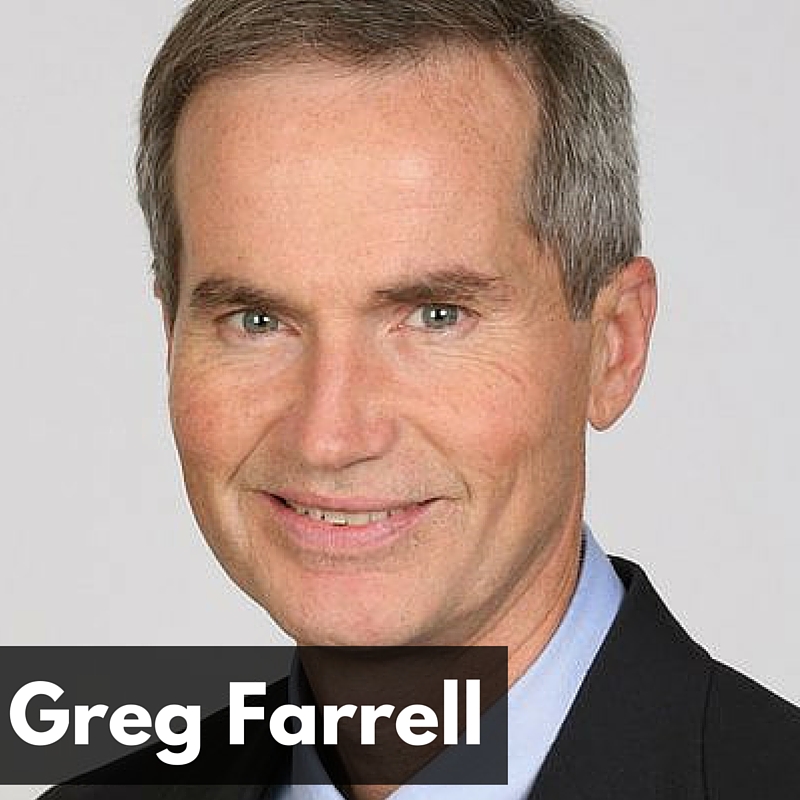
On this Flashback Friday episode, Jason Hartman talks to Greg Farrell, author of Crash of the Titans: Greed, Hubris, The Fall of Merrill Lynch, and the Near Collapse of Bank of America. Their discussion revolves around Wall Street and the specific financial group that does reckless and risky business to give the impression of higher rates of returns. They also discuss the economic crash and the resulting bailouts, and some of the inside dealings with some of the major banks, such as the buyouts by Bank of America.
Announcer 0:03
Welcome to creating wealth with Jason Hartman. During this program, Jason is going to tell you some really exciting things that you probably haven’t thought of before and a new slant on investing fresh new approaches to America’s best investment that will enable you to create more wealth and happiness than you ever thought possible. Jason is a genuine self made multi millionaire who not only talks the talk but walks the walk. He’s been a successful investor for 20 years and currently owns properties in 11 states and 17 cities. This program will help you follow in Jason’s footsteps on the road to financial freedom, you really can do it. And now here’s your host, Jason Hartman with the complete solution for real estate investors.
Jason Hartman 0:55
Thank you for joining me today. This is your host Jason Hartman on episode number 250 Seven of the creating wealth show and boy, we’ve got a great show for you today. I don’t have time to talk to you for too long myself, which you may consider a good thing. Who knows? I hope I’m kidding when I say that, but but you can decide. Anyway, we’ve got Greg Farrell today he is the author of a fantastic book entitled crash of the Titans. And it’s all about really some interesting stuff, high level Wall Street stuff, you know, we kind of try to mix this up for you and make one episode practical real estate advice type stuff. And another one will be more on the big financial world, Federal Reserve Wall Street, whatever economics and kind of switching back and forth. So if you’ve noticed any kind of pattern in the last 256 episodes, that’s one that we very loosely try to follow for you. But yeah, this is a really interesting story. It’s all about well, I’ll just redo the subtitle for the book, which by the way on amazon.com got excellent reviews. And it’s entitled crash the Titans greed hubris. The Fall of Merrill Lynch and the near collapse of Bank of America. And I know Bank of America is the company that everybody in america practically loves to hate. So you’ll like this story, because you’re going to hear about a lot of the inside stuff. It’s pretty darn interesting. So we will have Greg on in just a moment. But before we get to that, I want to thank listener, Brian Massey, for posting this on my Facebook page today, actually, he said, This will bring you some Monday morning cheer. And you know, it does.
It’s a Fox Business article that says us homeownership rates slides to 15 year low. And I tell ya, I don’t know if there’s anybody else other than myself in the real estate business who actually thinks that’s a wonderful thing. Because most people in the real estate industry and I’ve been in a long time, you know, that they want to talk about making homeownership rates higher. And you know, all the politicians want to talk about that too. But I actually think that some people just aren’t capable of owning a home and the rest of the people just really don’t want to own a house. You know, maybe they want to be mobile so they can move where jobs are or where life changes are, etc. And so the appropriate homeownership rate. I don’t know what it is, but I’ll just take a stab at it personally for America, I think the appropriate homeownership rate might be around. Oh, let’s say 50 to 55%. Okay, so what is it at now? You ask? Yes. Well, the article says the share of privately owned us homes fell to a 15 year low in the first quarter. government data showed on Monday suggesting that falling house prices are discouraging Americans from being homeowners. Well, hooray, hooray for that. You know, when the homeownership rate falls, that’s just more customers for us. For us investors, US landlords, and remember, what’s the equation? Well you know if you’ve been listening or if you’ve been to our meet the masters of bounce out every 1% drop in homeownership rate equals approximately 1 million new renters. So just huge, huge, wonderful benefits for us as landlords. It says the homeownership rate slipped to 65.4%, the lowest level since the first quarter of 1997.
The Commerce Department said the rate was 66% in the fourth quarter, so Wow, homeownership was lowest in the West, while higher rates were reported in the Midwest and talks about how home prices dropped about 32% from their peak at the end of 2005. Leaving millions of Americans with houses worth far less than their mortgages and pushing many into renting. And another thing this article says it’s interesting here it says the residential vacancy rate and by the way, the statistics on this I just have to tell you are not very good. Why are they not very good? Well They’re better for large institutional apartment buildings, but they’re not very good for single family homes. Because Where do you get the single family home vacancy rate from? Well, you know, there’s a few sources. I know that any of us as landlords, we’re not reporting that rate to any centralized database, right. So you could try and cobble it together from well, utility companies, every 10 years, you’ve got the census. That’s handy that that’s actually a pretty good one. But it’s only once a decade, right. So that doesn’t help the post office, you know, you can kind of try and cobble it together from the post office, the MLS systems, which are totally disjointed and very hard to work with. So it’s pretty hard to get this data but these are all estimates anyway. It says it dropped 8.8% in the first three months of the year from 9.4%. In the fourth quarter it says growing demand for rentals is boosting rents, with the median asking rent for an unknown occupied property in the first quarter at $721, the highest since the first quarter of 2009. That compared with $712 in the fourth quarter. So you see, like I’ve been saying, income property is a multi dimensional asset class, rents are rising. And this is just for so many reasons, such a wonderful time to be a income property investor to be a landlord, Phoenix. I’ve been talking about my new hometown, Phoenix, Arizona. Well, it’s not quite a year, so I’m calling it new still.
So I’ve been talking about how prices have been going up here how this is becoming a very difficult market in which to do business. I’ve been talking about and you know, what you’re what you’re seeing in Phoenix, is just really the flagship for what you’re seeing in all of our markets. It’s happening in all of the markets in which we do business or seeing the same trends. We’re seeing reduced inventory, or seeing the quality of inventory go down, or seeing where we have to adjust our expectations. Because the deals just, they just ain’t as good as they used to be folks. They’re better than they were many years ago, but they’re not as good as they were a year or two ago, that’s for sure. So this article and I touched on the pretty much the same story last week. This is a different article. So you know, they kind of not last week but last episode, so they say it differently, right. But it says home prices in Phoenix area up 20% in the past 12 months. Home prices are surging in metro Phoenix planning 8% in March alone, and 20%. In the last 12 months, the median price of a house in this region climbed to $134,900. According to a report by WP Carey School of Business at ASU, Arizona State University the trend is projected to continue throughout the year although at a slower pace. Now Mike or who I really need to get on the show. I’ve been thinking about that. He says that metro Phoenix housing appreciation rate for 2012 for this year, or reach 25% by September, so if it continues after September for another three months, finishing out the year, what are we going to hit 30% appreciation or or regression to replacement cost is as as it were. In Phoenix. Maybe it says fewer foreclosures means in fewer inexpensive homes for buyers. The number of homes taken back by lenders in metro Phoenix is down 60% from March 2011. So foreclosures down 60% in a year. And it also says that frustrated real estate agents have buyers ready to sign contracts, but can’t find houses for them. So this is true of all the markets we’re doing business in. more so in Phoenix Phoenix is sort of a flagship market. So it’s not true of those markets, but it is for Phoenix. Okay, last thing before we get to our guests, well, you probably know what one of them is Meet me in St. Louis in just a couple of weeks.
Okay, I want you to be there on March 18 through the 21st. So you can join us for the creating wealth in today’s economy boot camp, a whole bunch of you have registered so far. We want to have more people there. This is the furthest away event we’ve ever done. We’re usually on the on the western side of the country. So meet us in St. Louis, creating wealth boot camp, property tour of St. Louis, and a bonus property tour of St. Robert and by the way, those of you who have registered please touch base with your investment counselor at my company and let them know if you’ll be joining us for the st. Robert tour as well on the following Monday because we need to get sort of a head count for that and see how many people are going to that one okay. So be there register Jason Hartman calm now got a got a question. Good one, by the way. And this really tied in with our last episode, as we talked about self directed 401, K’s and, and self directed IRAs, or I really should have said solo 401, K’s and the great opportunities there with self direction so you can be in control of your investment portfolio. So you’re not leaving your financial future to somebody else who does not have your best interests at heart.
So listener Henry emailed one of our investment counselors actually a little while ago about this. And it’s a great question. So Henry, thank you so much for asking. He says longtime listener to the creating wealth podcast and a possible investor at some point in the future. Thanks for all of the info you put out there sometime recently, I believe you said you were going to do a podcast on self directed IRAs. If you do, may I suggest that you address how to handle rmds required minimum distributions. That’s what that means. rmds Okay. I’ve heard folks talk about self directed IRAs. Raise, but no one seems to address how rmds are handled with mutual funds. It’s easy. You sell however many shares you need in order to satisfy the IRS regulations. However, if your IRA holds property, it’s not like you can just sell quote, part unquote of the property. At best, I can assume you’d have to sell the property and take some of the proceeds to satisfy the RMD for that year. The issue of course, is that it may or may not be a good time to sell. Thanks again for all the work you do.
Henry Henry, that is a fantastic question. And folks what Henry is getting out there and I have no idea how old Henry is but if you are 59 and a half, you can start taking distributions from your retirement plan, right we most of us notes, but the the other question is, when are you required by the IRS to take distributions from that plan and I’m pretty sure that is 70 and a half years old. So when you’re 70 and a half, and you are required to start taking distributions out of your plan, if you have property in your plan, the property is not very divisible. Is it? So guess what? That is such a great question. And really, nobody has ever asked me that question. So I went to Brian, who we had on the last show. And I asked him that question. I said, you know, this is a great question, what do you do? Here’s what you do, you actually deed. If you have to take for example, if you have to take a if the property value is $100,000, and you want to take a distribution of say, $10,000, you literally just deed 10% of that property to yourself personally, and the other 90% of the property stays in the plan. And then if the rent is $1,000 per month, $900 of that rent goes to your plan and $100 goes to you personally. Because you own 10% of the property, then the following year, you just take another 10%. And you keep doing that. And that’s how you take your required minimum distributions. And it’s actually quite easy to do that. It is not a complicated thing to just simply do a little deed transaction with your plan and yourself. For more information, you can contact your tax advisor, or you can contact Brian, who we had on the last episode about that episode number 256. So with that, that’s a great question.
Thank you and listeners, please put in your questions. You can put them at Jason hartman.com on our Facebook page, whatever. We’ll try to address those for you either directly with myself or your investment counselor, or here on the show. Let’s go to our guest today. And let’s talk to Greg Farrell about crash of the Titans. We’ll be back with that in just a moment. Are you aware that the largest transfer of wealth in human history is underway? Are you concerned about protecting your income savings or Home Equity? All these bailouts benefit the Wall Street crooks and the Washington elites while costing the middle class experts are predicting difficult times ahead. The only question is Where will you and your family end up with the haves or the have nots? My name is Jason Hartman with Platinum properties investor network for two decades I’ve made a small fortune in the most historically proven wealth creator Don’t be the victim of Wall Street fat cats who line their pockets with your pension funds. We can teach you how to protect yourself and your family in these wildly turbulent Financial Times. Create and protect your nest egg the same way 85% of America’s wealthy do if you’re interested in the most innovative financial education around it’s urgent that you register for our next event. Learn more about this outstanding event Get Your FREE CD Jason hartman.com. That’s Jason Hartman calm or call one 840 Jason that’s one 845 2766 your investments could be gone tomorrow. Protect yourself and act today.
My pleasure to welcome Greg Ferrell to the show. He’s the author of crash of the Titans, not Clash of the Titans crash of the Titans, greed hubris, the fall of Merrill Lynch, and the near collapse of Bank of America. And you’re going to learn some interesting stuff from kind of a fly on the wall perspective about what happened here a couple of years ago. And Greg, welcome. It’s great to have you on the show.
Greg Farrell 15:24
Hi Jason. Thanks so much for having me.
Jason Hartman 15:26
My pleasure. Well, you are a correspondent with Bloomberg News. So you’ve certainly got the inside track on things. When I heard I remember it was over a weekend, right in the midst of the financial crisis. And it was like on a Monday morning, or I think a Sunday even
Greg Farrell 15:43
Late Sunday night when the deal was hashed. But that’s right. It was Monday morning.
Jason Hartman 15:45
that I heard BBVA bought Merrill Lynch and shortly before that, they purchased countrywide or, I guess I should say took over countrywide. And I thought, Man B of A is in trouble. They are they bought two losers. And what what happened, what were sort of the inside dealings here that were going on, and this was during bailout mania and so forth. Tell us more.
Greg Farrell 16:05
Okay. Well, thanks for setting the stage on that. And and thanks also for bringing up countrywide. Let’s, let’s talk about that. You had, I think the key element here, and one of the reasons the financial crisis of 2008, you know, hit so precipitously had such a harsh or had such harsh consequences is that a lot of the, you know, the people that the top bankers in the country, on Wall Street and elsewhere and at the top of bank of america misjudged, really underestimated the the depth of the problems they were facing. And when you look at Bank of America, that is a pivotal moment in the history of that bank, Bank of America had been taken a couple of decades for this band of aggressive ambitious bankers in Charlotte, North Carolina to build and construct the largest retail bank in the country. And they had aspirations to, to move into Wall Street in a big way as well. However, what they they lost The CEO of Bank of America at the time, Ken Lewis, I don’t think had a full grasp of the seriousness of the issues his bank was facing. So when he bought countrywide, it fit in with the long term, you know, multi decade strategy of the Charlotte Bank of whenever you see an asset, and where you know, you can expand into a new area of business, it’s worth buying it and even if you’re, it seems like you’re overpaying now, in time, it will look smart. That had been true for more than 2025 years. It stopped being true in 2008. And so the two purchases that were made in August is when the countrywide deal closed, and the deal in September to acquire Merrill Lynch in an all stock transaction was valued at 50 $50 billion. I think Ken Lewis was confident that over time, these would be great deals. He wasn’t aware if you follow Bank of America’s internal announcements. It wasn’t until October a few weeks after that, that I think when he looked at his own bankster core earnings, he realized that the credit crisis was hitting the consumer as well. And this was going to be a particularly bad period. And many went to the markets to try to raise capital. And of course, you know, the book details different frenzied activity at Merrill Lynch and Bank of America in the fourth quarter of 2008. And how at a certain point, Bank of America tried to get out of this deal, only to be virtually forced to buy other than treasury secretary, Hank Paulson.
Jason Hartman 18:23
Paulson forced them to it. Yeah. So at the time, then you’re saying they they overpaid for both of these companies? Right.
Greg Farrell 18:30
Yeah. So but but here’s the real difference. And in the long term, I think Ken Lewis will be the ken Lewis, his legacy at Bank of America is a it’s a complex thing. But I think in the long term despite having overpaid for Merrill Lynch, it was an excellent acquisition for Bank of America for the following reason, first of all, remember was all stock transaction so we they didn’t really have to pony up the cash. Secondly, it gave Bank of America an excellent asset You know, the best or best known franchise in terms of the financial advisory business? I guess I would look at it this way in terms of a simple metaphor. Ken Lewis, you saw this what to him seemed like a fantastic car, automobile and paid agreed to pay top dollar for it. It wasn’t really worth, you know, the top dollar that he agreed to pay, but but it’s a vehicle runs really well and has helped the bank in the last few years. In fact, the earnings from the Merrill Lynch portion of the business carried Bank of America in 2009 in March of 2010. In contrast, countrywide has been an unmitigated disaster. countrywide cost only a couple of billion dollars. But the folks that countrywide should have paid Bank of America to take it over, right. It’s cost the bank shareholders 10s of billions of dollars, I think in the area of $40 billion in losses associated with countrywide acquisition, terrible, horrible deal, a spectacular misjudgment of the underlying problems in the mortgage business in the US at that time.
Jason Hartman 20:00
No question. You know, when we talk about these, these three companies, I mean, the criminality or they complete neglect whichever or the complete stupidity I say it’s criminality, but everybody’s entitled to their own opinion that took place in all of these companies is amazing. I mean, think of it. Let’s start with Merrill Lynch. I mean, I’m sure it was happening long before I knew anything about it or became aware of this. But back to the Orange County bankruptcy, because I’m from Orange County, California, in 1994. I think it was, Merrill Lynch was at the center of that scandal. They weren’t the center of the conflict of interest with investment bank, doing investment banking, pumping, pumping stock. Yeah, you know, to clients, and the research was not impartial at all. It was a total conflict of interest. I mean, it’s like countless scandals with Merrill Lynch, and then we’ll talk about countrywide and Anthony mozilo and how he got his get out of jail free pass, and then we can go into BFA And how their CEO got a big raise just recently for six times the prior years package, I guess, and the shareholders lost half their value. But where do you start?
Greg Farrell 21:12
Yeah. Where do you start? Well, a couple of things. One is, in order to in my book is focused primarily on the Bank of America, Merrill Lynch deal and the fourth quarter of 2008. However, in order to set the stage, I had to do a lot of research on Merrill Lynch, the history of Merrill Lynch and how Merrill Lynch got to the point where it had once been the safest sound is to franchise on Wall Street, but where they basically blew themselves up, and your reference to Orange County, the reference to the research scandal, these all grew out of, you know, Merrill Lynch’s attempts to you know, become more like Goldman Sachs become a bigger player in the investment banking side of Wall Street, because at the Charlie Merrill, who created what is known as Merrill Lynch, in the thundering herd of financial advisors, that was a fantastic growth business, not huge growth. But very, very solid growth in the second half of the 20th century. And it helped reintroduce a lot of Americans who’ve been burned at the mercy of the Great Depression. Back to the, you know, the upside of Wall Street and investing for the long term. By the end of the day by the 1990s 80s and 90s. Merrill Lynch’s leaders had aspirations to become much more likely other Wall Street banks and getting into much riskier businesses. And this was just not their sweet spot. So you have what is in the case of Merrill Lynch, this this huge organization that wants to be in the middle of everything, without the expertise that you had at some of the competitors in Wall Street, notably Goldman Sachs, and therefore they wind up in a lot of the scandals or implosions that occurred in the 80s and 90s. It’s sort of like the it’s sort of the they were big enough that they ended up getting touched by a lot of these things are winding up in the middle of it.
Jason Hartman 22:48
But not now. To be they were really out of their league, so to speak.
Greg Farrell 22:52
Definitely and when it came to, you know, getting into the complex, structured products, fixed income collateralized debt obligations, you know, they, they like Citigroup got in over their heads, they, they thought, well, this is easy money to make, and instead of, you know, focusing a lot on how they could get burned, and, and, and being very careful about their exposure, they, you know actually got sucked right in it’s like it was easy money, they want to increase their earnings every year and they just double down. And for few years things seem to go really well until they didn’t and when it didn’t pick up, burned very, very badly on that, and therefore ended up having to lose their attendance.
Jason Hartman 23:30
What year did it really all change? I mean, I think in general, well, Wall Street in general, maybe we’ll talk about that, and then we’ll talk about Merrill specifically, but it seems that wall street in general, and again, I I’m glad to say I’m too young to know all this, but from my readings and research and the guests I’ve had on the show, it seems like Wall Street really had a big significant change in the 80s where it went from the concept of telling its clients to Bye bye, stop. That paid dividends to where it became a speculative frenzy to where the the financial services firms started going public and when they were public, they had different pressures. They started acting differently. There was a real sea change on Wall Street at one point wasn’t there?
Greg Farrell 24:16
Yes. Yeah, absolutely right. If you get up to the 50,000 foot level, and want to look back over the decades, the 1980s were a big inflection point on Wall Street. And that’s a number of reasons. One is computerization. So trades, etc, can be done much more quickly and efficiently. The company I work for now, Bloomberg played a large role in that by basically bringing real time bond prices, you know, into almost to the area where real time equity stock prices were, which it basically revved up the business of bond trade and gave buyers and sellers more confidence of bonds, institutional buyers and sellers that they were getting a good price, but this is all fits under the rubric of computerization. investments in technology. So you’ve got that the facility the ability to trade much more quickly and much more accurately, you have also the profusion of, you know, mutual funds and a whole generation of baby boomers now who are starting to approach retirement age with money to invest. So you have this, this huge influx of money that’s going to come in looking for places to invest a larger group of characters in Wall Street, we’re more than happy to help invest that stuff and look for, you know, more exotic higher return products in which to invest. And layered on top of that, which I think gets overlooked is a transformation of compensation practices on Wall Street. And then beyond this, where is it where the bonus culture really took hold? there? I think there’s always been, you know, a bonus culture and Wall Street but with the there was a change in the federal law in the it actually in the early 90s. Were any compensation, over $1 million in cash or salary? For $1 million, Congress decided in its wisdom would be taxed at a normal rate rather than, you know, the way it had been, you know, a lack of taxes up until a million dollars. So the idea of Congress was idea in 1993, I think when this was passed, and Bill Clinton signed it was to basically limit CEO compensation which at the time, people thought were was out of control, like Detroit, automakers were making lots of money, whereas the products they’re producing, weren’t selling, and the Japanese automakers were were selling you know, not being paid nearly as much only a fraction of that but but they’re producing much better cars. Now. Any well intention, why had a negative effect?
Jason Hartman 26:39
I’m not sure I’m clear on the compensation issue. I just want to make sure the listeners understand that. Are you saying that the base compensation being under or over a million dollars was the thing Congress was attacking but what they did to get around it is just created these huge bonuses because most of these CEOs are paid based on the bonus culture as you say,
Greg Farrell 26:58
Exactly. So what am i Sorry for going back so far in history, but basically, it’s an obscure law. But what it did was by penalizing any cash salary over a million dollars, what you did was drive Okay, well, you weren’t penalized, they weren’t going to there was going to be no tax penalty on incentive compensation. So way of getting around the limit, or the ding that you’d self sustained if you paid a CEO of a company more than a million dollars is to put a significant amount of his or her package, mostly his incentive costs IE a bonus. And on Wall Street, this when became rampant and massive bonuses, so that, you know, bonuses for traders. For many years in the past decade, traders were the best paid guys on Wall Street better than the CEOs, you know, the top earners at Goldman Sachs or Bear Stearns, or any of the big trading firms. Lehman Brothers were the traders, they’ve making 10s of millions getting bonuses, you know, in excess of 10s, you know, 10s of millions of dollars a year when you put that kind of money in front of someone and the same with the CEO goes, it really encourages an all or nothing bad on the company because if you win, you get 50 or 100 million dollars. If you lose, someone else loses you still got your 50 or 100 million from last year. Do you know what I mean? It doesn’t they don’t suck it out of you. So in the Buddhist culture encouraged the short term minded risk, all or nothing, you know, it’s all about it’s all about my tenure. It’s about the next quarter the next year, versus the overall health and strength and welfare of the company and its shareholders. Exactly. This is not about long term investment to help the company this is about a short term investment. Tell me my bonus at the end of this fiscal year. That’s that’s what by you know, 2008 2007 that’s if I bring this up. I think you’ve hit on the point. That’s what Wall Street had morphed into and still largely is but but but it hit its high point or low point, if you will. I remember clearly in the fourth quarter of 2016. That was a record setting year for bonuses all across Wall Street. Every all five of them. Wall Street banks reported record earnings and it’s that’s that’s against the the the the course of gravity you can’t have all of them have been great years at once, but it was then raw feasting on this, you know, combination home including a, you know, a bubble, the real estate market that was just then peaking and their bonuses tied to selling exotic products with no long term upside. Only short term upside.
Jason Hartman 29:22
Yeah, yeah, it’s really too bad. You look at people like john sain, who was head of Merrill Lynch at the time of the sell out to be a VA and he spent over a million dollars decorating his personal office. He I think his his take from the company from the losing company, okay. was over $70 million in the course of a year or something. It was just ridiculous.
Greg Farrell 29:44
Okay, let me let me address that because that’s an important part in the book as well. The incentive part and saying to be quick, did not get that head or anything near that he signed when Stan O’Neal was pushed out of Merrill Lynch at the end of 2007 for creating this massive exposure and not telling him And how bad things were. Jonathan was brought in, he had been a top executive of Goldman Sachs, where he’d made well over 100 million dollars when Goldman Sachs went public. He had been CEO of the New York Stock Exchange and helped, you know, successfully bring that public and made a good amount of money there. He came in and had an agreement. And I think he was another blue sky like, like most of his colleagues on Wall Street, figured this would be a short dip, things would get a lot better in 2008. And his package was such that if Merrill stock bounced back to where it had been before, yes, he would get in the area of $70 million. Fast forward nine months, things turn out to be much worse than he thinks, and Bank of America has to offer. This actually helped Marilyn shareholders, he had no, there was no bonus for him to sell the company. He never envisioned that he would fail to save Merrill Lynch. And as a result, he was going to get nothing because all of his stock options were going to be underwater outside of his base salary, which in itself was pretty good. But he wouldn’t get near the $70 million and as a result Yes, he’s on the losing end of this. He strikes an agreement to sell to Bank of America. And then he spends the next few months trying to negotiate a bonus from Merrill Lynch as much as $40 million in a losing year, when the company was on its way to losing $28 billion. Eventually the Merrill Lynch board stood up to him and realize it would be politically impossible for them to get on board any kind of bonus to fame for that, but you should know the things you’re not getting massive bonus out of Merrill Lynch, he ended up a lot of bank of america stock, but he did not get a big bonus for that. He wanted one. Anyway, I go into great detail men.
Jason Hartman 31:35
Right, right. What’s he doing now? Just out of curiosity.
Greg Farrell 31:38
e heads up a middle market finance company, CIT, and I think he’s doing a good job at it. CIT Financial, which also ran into problems in the financial crisis. taters, too. They hit a sweet spot in terms of loans to small and medium sized businesses that the big banks overlook. So it’s it’s several rungs down from what he was doing as a top executive at Goldman Sachs and has CEO of Merrill Lynch but he’s still in the financial services business and is doing a good job there.
Jason Hartman 32:05
Well, so so you’re not very critical of saying that so many people are you?
Greg Farrell 32:10
Right? I’m not very critical of him because he didn’t cause it is his biggest problem. He Stan O’Neal, his predecessor of Merrill Lynch is the guy who blew Merrill Lynch up and stand on you walked away with 100 $60 million.
Jason Hartman 32:22
Fair enough. Fair enough.
Greg Farrell 32:24
That’s that’s where the real we said, something’s wrong with this picture occurred was was prior to things rival saints failed to save it. And yes, he spent a million bucks. That poorly advised thinking that he was going to come back on rehabbing his office. But that’s no crime compared to what went before if you know what I mean.
Jason Hartman 32:43
Fair enough. Fair enough. No, I agree with you. I know that all the the reasons for failure were set in motion before john sain came aboard. I’m only critical of how much money he made as the company was going down. Which you you mentioned the bonus culture a few minutes ago. I’m a capitalist look. I don’t mind bonuses at all. I hope these guys make fortunes. It’s just long as it’s commensurate with the shareholders and what they were. And then not really just the shareholders, but the stakeholders where they’re not burning the government through, you know, with that bailout money or the the vendors of the company by, you know, as companies, they leave so much devastation in their wake, their vendors go under there, they’re just their vendors are in bankruptcy because of what these companies do to them sometimes, you know, they’re just such big octopuses. You know, that’s incredible.
Greg Farrell 33:32
So one of my favorite parts of the book, I benefited from the fact that there was so many investigations, both the New York State Attorney General and Congress into this whole deal that got all sorts of great stuff from depositions of board members, etc. One One of them is this there’s there’s a scene that takes place in the fourth quarter of 2008, after Thane has agreed to sell Merrill Lynch for a very good price to Bank of America, but he’s going to no longer be CEO and his new colleagues Not the CEO of Bank of America, but the head of HR from Bank of America and I can’t do the southern accent properly. But he comes to New York to visit with thing they talk about, okay, what bonuses are you going to pay to your subordinates to make sure they’re happy and they stay on board because that’s what we’re buying. We’re buying the people. And he says this cow get x tech out get y. And this fellow who’s a southerner turns to dances, what about you where you going to get and thanks is expecting to get $40 million. And this guy from Charlotte, North Carolina, says, you know, that’s, you know, warrants, you know, if you really want to go far in our organization, that’s really not going to go down well at all, because at Bank of America, we pay we don’t pay for the deal. We pay when the deal pays off for shareholders. And it’s, you know, a lot of the guys in New York and Wall Street look down on you know, the suppose it’s Southern Hicks and Charlotte, but those guys had absolutely right, you know, that wall street had just gotten totally out of whack in terms of bonuses. Now, don’t get me wrong. The folks in Charlotte who paid very well, but at Charlotte levels They’re not paid at last astronomical Wall Street levels. They were, you know, allergic to that. And they, they cut back on a lot of bonuses. And then of course they had to because they were had to accept money from the government 40 $45 billion in TARP funds so that constrained their payment levels. But the one of the biggest elements of the culture clash between Bank of America, in North Carolina and Merrill Lynch on Wall Street was what, you know, whose idea of what a good bonus was, and the folks at Merrill Lynch, he was just, you know, staggeringly off the charts. The idea that you could think, you know, in that environment, that you’d be worth a $40 million bonus was just totally off the planet or
Jason Hartman 35:36
Well, and I agree with them. I mean, is that who you’re calling the Charlotte Mafia?
Greg Farrell 35:40
Yes, well, yeah, yes. And this guy, the head of HR steel, alphen was a real interesting character because he, you know, basically made a lot of he was Ken Lewis, the CEO, his right hand man, and it was his job to help make these, you know, these deals work to you know, get everybody together, decide who’s going to run which division etc, but He’s one of those guys who if you were mall Street, a lot of Merrill Lynch guys sort of chuckled at him behind his back because they thought he was a southern Heck yeah, I’m not phrasing this properly, but they they, you know, not at their level, but he absolutely articulated the right. You know, he was absolutely right about this that it should be about when the shareholders, you know, when the deal pays off for the shareholders, that’s when you get your money, not life, not the Wall Street investment banking model, which is, as soon as the deal is signed, you get a check. No, it should be it should pay off. It should make sense. After the long term for the company before anybody gets rewarded. That was the real clash of cultures. Between the two organizations.
Jason Hartman 36:37
Yeah, Wall Street just thinks that you you get your bonus no matter what. Regardless.
Greg Farrell 36:43
Doesn’t matter. Deals good. You get the deal. I want my money now.
Jason Hartman 36:46
Unbelievable greed. It’s just disgusting. So okay, so we’ve talked a lot about Merrill, maybe just to touch quickly on countrywide. It’s kind of old news by now but I mean Anthony mozilo and they
Greg Farrell 37:00
Angela,
Jason Hartman 37:00
Angela is in the chunk loans they were making, I mean, just Unbelievable. Unbelievable. He pays a token fine, which to nobody else. It’s not token to anybody else. But to him it’s token
Greg Farrell 37:15
And you know, and you know why a 67 million fine is in fact a token find him because most of it is paid for by Bank of America. Because with directors and officers insurance, he was indemnified. And as a result of, you know, a fine, it would be staggering to you and me and most of your listeners, it doesn’t hurt that much, because the amount of money you took out, and how much of his fine was was paid for by other people. So Mozilla when you talk about, there’s been a lot of criticism of the Justice Department for not being more aggressive going after the supposedly malefactors on Wall Street. One is it’s very difficult to build these cases and the one case that the Fed did try to bring against couple of Bear Stearns salesmen a couple years ago blew up when you know lawyers did a very good job, I think confusing the jury, and the guys were acquitted. And they pay. They’re ultimately, you know, embroiled with the SEC in a simple case. In the case of Angelo mozilo, he was being investigated by the Justice Department. He eventually was investigated and settled with the SEC, in a civil case. His lawyers, I think we’re very good, because, you know, they were, he sold a lot of stock through an automatic, you know, he had altered a number of times, but through an automated stock sale plan in the run up to the crash, the fact that no prosecution brought to him meant a prosecutor didn’t see that there’s a strong case against him, or convinced by his warriors that there wasn’t, but for a lot of people weren’t very close to it. It looked like that would have been a guy who somebody would have gone after. Do you know what I mean? Let me take a brief pause. We’ll be back in just a minute.
Announcer 38:53
What’s great about the shows you’ll find on Jason hartman.com is that if you want to learn about some cool new investors saw Where there’s a show for that. If you want to learn why Rome fell, Hitler rose and Enron failed. There’s a show for that. If you want to know about property evaluation technology on the iPhone, there’s a show for that. And if you’d like to know how to make millions with mobile homes, there’s even a show for that. Yep, there’s a show for just about anything, only from Jason hartman.com or type in Jason Hartman in the iTunes Store.
Jason Hartman 39:35
So now now moving forward to be B of A, which is a conglomeration of the three companies. BMA is arguably the most hated company in America. Maybe outside of at&t when your iPhone drops a call. But Is that a fair? Is it fair or is BMA just they kind of made two bad deals two huge bad deals, or is it fair to hate B of A. We have a tough question
Greg Farrell 40:03
First of all, I think one one really bad deal countrywide. The other deal ended up putting them in the newspaper in the wrong in the wrong way for an entire year and in the wrong time. wasn’t wasn’t that bad, frankly, what I think has generated the antagonism towards Bank of America is neither. It’s it’s the countrywide deal and trying to collect it, not Merrill Lynch deal aspects of the countrywide deal were before closures and the way they’ve handled the foreclosures has been terrible. The Robo signing scandal, you know, debt collection, also, they’ve been since there’s such a large retail bank. A lot of people who interact with them feel they’re getting gouged or nickeled and dimed or FIFA, this a fee for that. That’s what generates a lot of antipathy towards it’s not like, Oh, they bought Merrill Lynch, therefore, I hate them. Just the opposite. I think it’s, you know, how come every time I go to write a check, or every time I do that, they ding you for this for you for that fee, and I think it what they suffer from is most of the big banks do this. They’re the biggest CIO or at least the biggest retailer. So they end up with the lion’s share of the ill will, if you will. Having said that they haven’t helped themselves. There’s been a couple of public relations snafu or misfires, the way they’ve rolled out some of these fees or manage them. And they’re the most frequently targeted by these YouTube videos when someone is either getting foreclosed on their house wrongly, or some other, you know, improper fines that are being imposed by the bank. There have been several instances of YouTube videos going viral, you know, just, you know, castigating Bank of America for doing that. All this has contributed to the sort of sense that bank of america isn’t really hated. I mean, Goldman Sachs has very few friends as well, but it’s not as widely disliked, because it’s not as large of an institutional player. Exactly. You and I, for the most part, most Americans don’t interact with Goldman Sachs at our local bank. All of us do practically with Bank of America, you know, it’s on every street corner in the country. So that has contributed to the level of dissatisfaction and low opinion of the bad.
Jason Hartman 42:00
But I think also with BFA is that you have this like massive level of incompetency and bad customer service. Now, granted, they took over countrywide, you know, a huge, huge loan portfolio. But these banks and it’s not just be vague, but of course, like you say, they’re the biggest so they suffer the most Oh, well, they take the bailout money. They say, Okay, look, we’re going to use this. We’re going to, we’re going to loan to small business. We’re going to help distressed homeowners, we’re going to do loan modifications, you know, we’re going to do short sales, and just try getting a loan mod from BFA. I mean, just try it. I own a real estate investment company. And I hear the stories constantly. And it seems like what they really did it almost it I hate to follow like a conspiracy theory here. But it seems like they they basically said, Look, you know, we’ll set up these departments to do this. They got the call centers in India. Now granted, they’ve moved a lot of that or maybe all of it back to us now. Thank God, but you can’t get anywhere. I mean, it’s just amazing. lievable the, the the dozens and dozens of hours people have wasted talking to Indian call centers and BFA that are just these do nothing outfits that are like window dressing to get government assistance if you ask me. I mean, that’s kind of on a different side of it, then you may be familiar with, but I assure him because I hear it from our clients.
Greg Farrell 43:21
Yes, we’re in your business if you’re with Right, absolutely, you’d have a lot more stories. I don’t, but I’ve heard and read anecdotally, about a lot of issues that do tend to be more with be evaded than their competitor banks. I can’t give you you know, good specific insight on that. I can’t say that, you know, with their 300,000 employees. It’s a real, you know, it turns out it’s like talk about turning an ocean liner around in the middle, trying to get everybody you know, they clearly have had real challenges in, in, in folding because Bank of America used to be known for very good service. I just think in some ways, it’s gotten so big that that’s a real monster of a job and obviously, they’re not doing very well of getting everybody to roll in the same direction. Oh, You know, issuing an order and eat it from Charlotte, but it’s not getting carried out or carried out poorly. And that’s trying to be charitable to them assuming that they are trying to carry it out properly. So like I say, I don’t have any good insight at the retail level as to why that that that is by her the same stories you have.
Jason Hartman 44:16
Just before you go a couple chapter titles in your book, Crash the Titans, that just find interesting and I wanted to ask you about project Panther. What is project Panther?
Greg Farrell 44:26
Oh, actually, it’s a relatively small episode in the grand scheme of things. But as I mentioned, the beginning of this conversation in September 2008, having just bought countrywide can lose a bank of america decided by Merrill Lynch for $50 billion. And thinking that, you know, the economy, the worst is over and things will get better soon. A few weeks later, in early October, the earnings for third quarter come in, and now they’re much worse than he thought. So he realized it’s time to raise some capital. So he tasked he delegated. He got one of these guys that his own smaller investment bank in New York to put together fundraising project to go raise some money for Bank of America. And this guy because everybody in Charlotte, North Carolina loved their football team, the Panthers, who were playing that Sunday, you know, came up with basically project Panther was the plan to raise capital I focused on in the book, because the folks at Merrill Lynch, who’s supposedly had real expertise in raising capital, john, Bain and company got involved in this and didn’t really contribute much. It was an early sign that this marriage is not going to work necessarily work out that well, where the help from john Thane and some of the folks at Merrill Lynch didn’t really, it didn’t really improve the capital raising initiative, that bank like bank remembers buying an investment bank so they can, you know, among other things, help raise capital for the company. And, you know, the first the first effort of this, I wouldn’t say it’s a dismal failure, but does it doesn’t come off, you know, extremely well. Sure, sure.
Jason Hartman 45:52
Who’s the Boston Mafia?
Greg Farrell 45:54
The Boston mafia, they are, I guess, the people in charge now, Brian Moynihan and a bunch of other executives and board members who came to bank of america came to Charlotte as part of the acquisition of sweet financial in 2004. So this is actually interesting the, the real DNA of the Charlotte bank. And before America was nation’s bank, they acquired you know, San Francisco based Bank of America and took the better known name, but it wasn’t Charlotte back. And they kept tight control through local board members and executives who’d come up through the organization and it was an excellent organization. They, they one of the reasons it got so big was by acquiring other banks and Ken Lewis acquired bank, the largest bank in New England, fleet financial in 2004. Brought a number of executives in most of the top ones washed out but a few survived, including Brian Moynihan and team around him. And you know, the whole you know, the subplot, the the the the, basically the same, that chapter the final chapter is how when Ken Lewis was essentially pushed out or hounded out of his job for all the, you know, the money that he needed to close Merrill Lynch And all the you know, the governmental inquiries into this. He became, you know, you know, the target of so much, you know, media attention that was not healthy for the bank, there was a real scrub to see who can replace him. It’s one of the plum jobs or at least it seemed in, in banking in the US and one was in, you know, a middle aged fellow who is a deal guide. And Yeomans, Brian went ahead and have fleet financial and morning, his team. I think you did a very good job maneuvering, putting him in position for that job. And he was actually selected to replace Ken Lewis. So the first time in history, the Charlotte bank, you and we refer to as an outsider running the bank, and outsider only insofar as he’d been with the bank for five years as opposed to 15 or 20 years. He was not a career guy with the Charlotte bank. So that’s a shorthand version of what the Boston mafia stands for. And they still have a couple of board seats are still there. You have much less of a presence of the board members, a lot of the board members who came from the southeastern us, who were brought in for geographical ties to that region, were pushed out in 2009 and replaced with other folks with banking expertise. But a core of the the Boston directors, if you will, are still in place.
Jason Hartman 48:14
Yeah. And and, you know, in AP news released March 28. So So recently, I got to just share it. Bank of America gave its CEO a pay package worth $7.5 million last year, which is six times larger than 2010. And the raise came while the company’s stock lost more than half its value. And the bank lost its claim to the biggest in the country. It’s no longer the biggest in the country, at least as a retail bank, I guess maybe city now has that spot? I’m not sure. But yeah, it’s really amazing. I mean, what is the future look like for BFA with with these two companies that are absorbed and all of its challenges?
Greg Farrell 48:51
I think the future Bank of America is closely very closely correlated to the future of the US economy, the bank the acquisition of Merrill Lynch in the UK. countrywide is a double down bet on the US economy. So as the US economy goes, I think Bank of America will go. And so now we get into what’s your view of our 2.5%? You know, GDP growth per year? will it continue? Will it will it grow more? If it does, Bank of America will will will grow with it. They’re very heavily exposed here. I think, you know, the bank has suffered because the US economy has in the last couple of years as well. So a lot of there are a lot of things Brian Moynihan, the CEO can and can’t do, that it can do to help the bank and he sold off assets, etc, which contributed to making it smaller. There’s a lot of things you can’t do. They’re just beyond its power. There are the economy is what it is, if you will, there are much bigger forces, no question about it. Yeah, exactly. And, you know, some of them you can get out in front of others. You just have to take your medicine and they’ve been, you know, you know, ingesting medicine from country wide now for three, four years, and it’s been painful. I think the future them it when they when they get countrywide behind them, and when you know it from when they get the workout to workout down and they real estate starts coming back a bit and in a meaningful way. Then, you know,
Jason Hartman 50:13
It’ll relieve a lot of the pressure. Sure, no question. You know, I’ve got to ask you just in closing, Greg, what is your opinion of the future of the stock market and the US economy, broader economy in general? I mean, you know, when you mentioned 2.4% growth that’s anemic. Obviously, unemployment is much higher than the government tells us it is. We’ve got massive debt. Obama is the drunken sailor of spenders of all of all time. And I mean, inflation was like,
Greg Farrell 50:41
its predecessor was good at spending as well.
Jason Hartman 50:43
Well, I agree. I agree. Yeah, I agree. But it was worse. Yeah. But it seems like we’ve got inflation coming our way in pretty significant doses. What’s your outlook on things?
Greg Farrell 50:54
Ah, boy, this is.
Jason Hartman 50:56
Just a quick question. Yeah. Just a quick question.
Greg Farrell 51:01
I think I’m, you know, because I write about companies, I studied what happened to companies. I’m not a good macro economist, but but writing about all these these folks on Wall Street, who are convinced that, you know, the early months of 2008, at the dawn of the financial crisis was actually we were in the seventh inning or the eighth inning and things would get better soon. And these guys are at the top of their game and should know better, they were way wrong. So, you know, this is obviously you know, this, you’re in the real estate business. We’ve all grown up with up until three years ago, this premise that, you know, yes, there are dips, but things always bounce back and, you know, it’s the people who invest during the depths who end up doing best and what’s been really shaking in terms of confidence in the last few years has been you know, I think this this sort of this faith that yeah, it’s gonna bounce back is not is no longer there. It’s no longer a given. It’s, you know, a thing that we still in the second inning, we’re in the fifth inning of the of the rebound of the recovery. We’re really are in terra incognita in terms of our life. times you have to go back almost a century to a point in time where things drifted in such a strange way and yes, unemployment, the number keeps looking better each month. But But yet, it’s got to be far worse than the actual number being put out by the government so much that doesn’t get measured, you know, people just give up and looking forward. So, you know, I guess the problems in Europe are, you know, no one should take any joy in looking what’s happening in Europe, except it makes this economy seem healthier. You know, seeing how bad the problems could be. I guess I’ll leave it at that.
Jason Hartman 52:30
Yeah, yeah. And the fact that we’ve got the biggest military, the biggest economy and the reserve currency, at least for now.
Greg Farrell 52:37
They’re counting Exactly. You can’t and you can ask me how much we benefit just by that fact. And, and God help us if that ever ceases being the case, and we’ll lose to that vote of confidence.
Jason Hartman 52:47
That’s for sure. That’s for sure. Greg Farrow. The book is crash of the Titans greed hubris in the fall of Merrill Lynch in the near collapse of Bank of America. Of course, it’s available on amazon.com with excellent reviews. You have an individual website For the book as well.
Greg Farrell 53:00
And because it’s such a popular title, it’s crashing the Titans book.com. So, crash at the Titans book.com is the website. And yeah, I really appreciate this. You know, the fact that bank of america continues to be in the news, I think has kept my book sort of in the public eye a little longer than I thought. So that’s, that’s good.
Jason Hartman 53:17
Absolutely. Well, hey, congratulations on a great work. And thank you again for joining us today. Appreciate it.
Greg Farrell 53:22
Jason, thanks so much for having me. I appreciate it.
Announcer 53:27
You know, if any, sometimes I think of Jason Hartman as a walking encyclopedia on the subject of creating wealth,
Announcer 53:34
well, you’re probably not far off from the truth bridge. Jason actually has a six books set on creating wealth that comes with over 100 hours of the most comprehensive ideas on investing in business. They’re in high quality digital download audio format, ready for your car, iPod, or wherever you want to learn.
Announcer 53:54
Yes, and by the way, he’s recently added another book to the series that shows you investing the way it should be. This is a world where anything less than a 26% annual return is disappointing.
Announcer 54:05
Jason actually shows us how we can be excited about these scary times and exploit the incredible opportunities this present economy has afforded us.
Announcer 54:15
We can pick local markets that are untouched by the economic downturn, exploit packaged commodities investing, and achieve exceptional returns safely and securely.
Announcer 54:25
I like how he teaches us how to protect the equity in your home before it disappears and how to outsource your debt obligations to the government.
Announcer 54:34
He’s recorded interviews with Harry dent Peter Schiff, Robert Kiyosaki, Pat Buchanan, Catherine Austin Fitz Dr. Denis waitley, t harv, eker, and so many others who are experts on the economy, on real estate and on creating wealth,
Announcer 54:49
and the entire set of advanced strategies for wealth creation is being offered with a savings of $385.
Announcer 54:57
Now to get you’re creating wealth, encyclopedias series complete with over 100 hours of audio and six books. Go to Jason hartman.com forward slash
Announcer 55:08
store. If you want to be able to sit back and collect checks every month, just like a banker Jason’s creating wealth encyclopedia series is for you.
Announcer 55:28
This show is produced by the Hartman media company All rights reserved for distribution or publication rights and media interviews, please visit www dot Hartman media.com or email media at Hartman media.com. Nothing on this show should be considered specific personal or professional advice. Please consult an appropriate tax legal real estate or business professional for individualized advice. opinions of guests are their own and the hostess. acting on behalf of Platinum properties, investor network, Inc. Exclusively